Introduction
Caregivers often perform repetitive kitchen tasks while assisting individuals with limited mobility. This guide explores ergonomic principles, safe lifting techniques, and product solutions that minimise back strain. Readers will learn how to organise workspaces, apply body mechanics, and select tools that enhance comfort and safety. The information presented combines scientific evidence with practical recommendations for everyday use.
Background and Context
Back injuries among caregivers are frequently linked to awkward postures, excessive reaching, and improper load handling. Research indicates that cumulative micro‑trauma can develop into chronic pain if preventive measures are ignored. Understanding the anatomy of the lumbar spine and the biomechanics of lifting provides a foundation for effective injury avoidance. This section summarises the key concepts that underpin ergonomic kitchen design.
Ergonomic Kitchen Layout for Caregivers
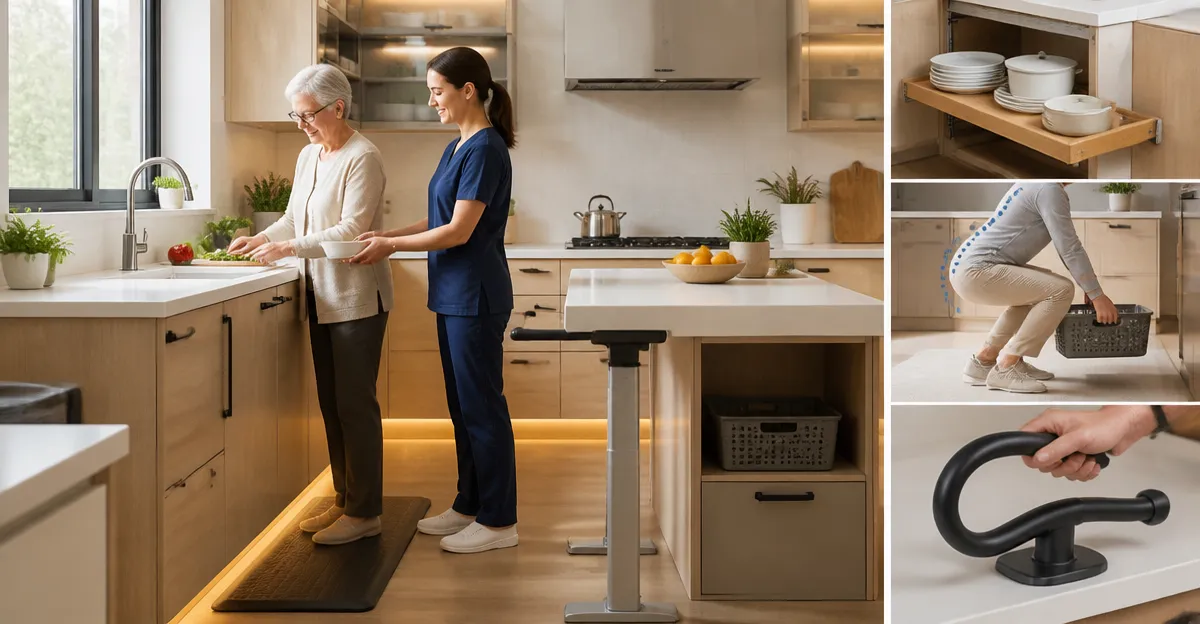
An ergonomic kitchen arranges work zones to reduce unnecessary bending, twisting, and reaching. Counter heights should be adjustable or set between 34 and 38 inches to accommodate both standing and seated caregivers. Frequently used items such as spices, cutting boards, and utensils belong within an arm’s reach, ideally 18‑24 inches from the body. Incorporating pull‑out shelves and lazy‑susans can further minimise lateral movements.
When space permits, a dedicated prep island at waist level allows caregivers to work while maintaining a neutral spine. Lighting plays a critical role; bright, shadow‑free illumination reduces the tendency to lean forward. Non‑slip flooring material prevents sudden loss of balance, which can otherwise lead to compensatory twisting motions.
Safe Lifting Techniques
Proper lifting begins with assessing the weight of the object and planning the movement before initiating the lift. Caregivers should adopt a stable stance, feet shoulder‑width apart, and engage core muscles to stabilise the spine. The load must be kept close to the body, and the lift should be performed using the legs rather than the back.
When handling heavy cookware, it is advisable to use assistive devices such as pot‑lifts or rolling carts. If a load exceeds the caregiver’s comfortable capacity, delegating the task or breaking the load into smaller components reduces the risk of acute injury. Continuous education on body mechanics reinforces safe habits over time.
Product Recommendations to Enhance Ergonomics
Tools that provide leverage, grip, and reduced force requirements can dramatically lower strain during routine tasks. The ERGO OPENER is a patented three‑pack water‑bottle opener designed for individuals with arthritis, weak hands, or carpal tunnel syndrome. Each unit costs $8.99, carries a 4‑star rating from 1,198 reviewers, and fits standard bottle caps measuring 25.5‑28 mm. The ergonomic twist‑off mechanism supplies additional grip and leverage, allowing caregivers to open bottles without excessive wrist extension.
The JAYVAR Onion Holder addresses repetitive slicing motions that often cause hand fatigue. Constructed from 304 stainless steel, this device features ten long needles that secure the onion while a large handle provides a stable grip. Priced at $7.98 with a 4.5‑star rating from 4,695 reviews, it reduces the need for forceful knife handling and minimises tear‑inducing compound release. The holder also accommodates tomatoes, lemons, and thin‑sliced meats, expanding its utility across meal preparation.
For caregivers who stir, fold, or scrape non‑stick cookware, the ChefAide Silicone Spatula Set offers heat‑resistant, food‑grade silicone tools. The five‑piece collection costs $8.99, enjoys a 4.8‑star rating from 9,207 reviewers, and withstands temperatures up to 600 °F. Its seamless one‑piece design eliminates crevices where food can lodge, simplifying cleaning and reducing repetitive scrubbing motions that strain the wrist. The ergonomic handles distribute pressure evenly, supporting caregivers with limited hand strength.
Comparison and Selection Guide
| Feature | ERGO OPENER | JAYVAR Onion Holder | ChefAide Spatula Set |
|---|---|---|---|
| Primary Use | Bottle opening | Onion and vegetable slicing | Stirring, scraping, folding |
| Material | Durable polymer with metal core | 304 stainless steel | 100% food‑grade silicone |
| Price (USD) | 8.99 | 7.98 | 8.99 |
| Average Rating | 4.0 (1,198 reviews) | 4.5 (4,695 reviews) | 4.8 (9,207 reviews) |
| Ergonomic Feature | Twist‑off lever for extra grip | Ten needles with large handle | Ergonomic silicone handles |
| Best For | Arthritis, carpal tunnel, seniors | Reducing tears, stable slicing | Non‑stick cookware, high heat |
Caregivers should match product selection to the specific task that generates the most discomfort. If bottle opening is a daily challenge, the ERGO OPENER provides the greatest leverage benefit. For repetitive chopping of onions or other vegetables, the JAYVAR Onion Holder reduces wrist extension and tear‑inducing exposure. When stirring thick batters or scraping delicate pans, the ChefAide Spatula Set offers heat resistance and a gentle touch that protects both the caregiver’s hands and the cookware.
Best Practices & Tips Beyond Products
- Maintain a neutral spine by keeping shoulders relaxed and avoiding forward‑head posture while cooking.
- Use a step‑stool or adjustable countertop to align work surfaces with the caregiver’s elbow height.
- Implement micro‑breaks every 20‑30 minutes to stretch the lower back, hamstrings, and shoulders.
- Store heavy pots on the lower shelves of cabinets to minimise lifting height.
- Employ a rolling cart for transporting multiple items from pantry to prep area, reducing the number of lifts.
Frequently Asked Questions
- What is the most important body mechanic for lifting a pot? The caregiver should bend at the hips and knees, keep the load close to the torso, and avoid rounding the back.
- Can ergonomic tools replace proper lifting technique? Tools such as the ERGO OPENER reduce hand strain, but they do not eliminate the need for correct posture during larger lifts.
- How often should a caregiver reassess kitchen layout? At least annually, or whenever a new appliance or mobility aid is introduced, to ensure continued ergonomic alignment.
- Are silicone spatulas safe for high‑heat cooking? Yes; the ChefAide silicone spatulas are rated for temperatures up to 600 °F, preventing melting or deformation.
- What should a caregiver do if persistent back pain develops? Seek professional medical evaluation, incorporate targeted core strengthening exercises, and review ergonomic practices for potential adjustments.
Conclusion
By integrating ergonomic kitchen design, safe lifting principles, and thoughtfully selected assistive tools, caregivers can substantially lower the risk of back injury. Consistent application of neutral spine posture, proper load handling, and regular micro‑breaks creates a sustainable environment for both caregiver and care recipient. The featured products—ERGO OPENER, JAYVAR Onion Holder, and ChefAide Silicone Spatula Set—address common sources of hand and wrist strain, complementing the broader ergonomic strategy. Implementing these recommendations empowers caregivers to perform daily kitchen tasks with confidence and reduced physical burden.
Products Featured in This Guide
ERGO OPENER
Price: $8.99 | Rating: 4.0 out of 5 (1,198 reviews)
Featured because it provides a twist‑off lever that reduces wrist torque for seniors, arthritis sufferers, and caregivers with weak hands.
JAYVAR Onion Holder
Price: $7.98 | Rating: 4.5 out of 5 (4,695 reviews)
Featured because its ten‑needle design secures vegetables, minimising hand fatigue and tear‑inducing exposure during repetitive slicing tasks.
ChefAide Silicone Spatula Set
Price: $8.99 | Rating: 4.8 out of 5 (9,207 reviews)
Featured because its heat‑resistant, ergonomic silicone tools reduce wrist strain while protecting non‑stick cookware during high‑temperature cooking.