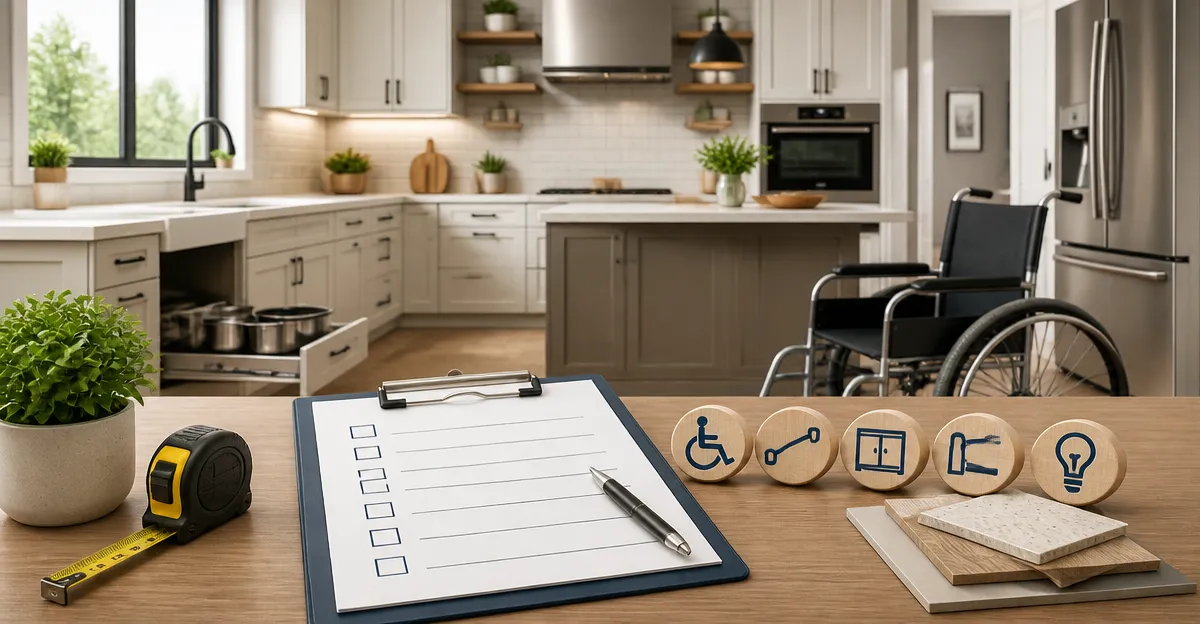
Kitchen Accessibility Audit Checklist: Free Printable Guide & Step‑by‑Step Assessment for an ADA‑Compliant, Senior‑Friendly Kitchen
Introduction
The modern kitchen often assumes that users possess full strength, dexterity, and mobility. For seniors, individuals with arthritis, or anyone who uses a wheelchair, those assumptions create barriers that limit independence. This guide explains how to conduct a systematic accessibility audit, provides a printable checklist, and recommends adaptive tools that enhance safety and convenience. Readers will learn practical assessment methods, understand key design principles, and discover products that address common challenges without compromising style.
Background and Context
Accessibility in the kitchen is governed by the Americans with Disabilities Act (ADA) and by universal design principles that aim to serve the widest range of users. Core concepts include clear floor space, reachable work surfaces, easy‑to‑operate hardware, and safe, non‑slip flooring. Research shows that simple modifications—such as lowering cabinet heights or installing a one‑handed jar opener—can reduce the risk of falls by up to 30 percent for older adults. Understanding these foundations enables homeowners to prioritize changes that deliver the greatest impact.
Assessing Layout and Reachability
The first step in any audit is to evaluate the kitchen’s floor plan. Measure the width of pathways; a minimum of 36 inches is required for wheelchair passage, while 48 inches is ideal for a companion caregiver. Verify that the sink, stove, and refrigerator are positioned so that the front edge is no more than 48 inches from the nearest wall, allowing a seated user to approach comfortably. Check that countertop depth does not exceed 25 inches, because deeper counters increase the reach distance for users with limited arm extension.
Reach zones are divided into three vertical ranges: low (0‑15 inches), mid (15‑34 inches), and high (34‑48 inches). Frequently used items—such as dish soap, cutting boards, and utensils—should be placed within the mid zone. Items stored in the high zone, like baking trays, should be placed on pull‑out shelves or at a height that can be accessed with a small step stool that includes a handrail.
When evaluating cabinet hardware, replace traditional knobs with lever‑style pulls that require less grip strength. Lever pulls can be installed on existing doors without structural changes, and they are available in a variety of finishes to match existing décor.
Optimizing Countertops and Storage
Countertop material should be non‑slip and easy to clean. Quartz and solid‑surface materials provide a smooth, hygienic surface while remaining resistant to chipping. For users with limited hand strength, consider adding a silicone edge guard that prevents knives from sliding off the work surface. Edge guards also reduce the chance of accidental cuts during food preparation.
Pull‑out pantry units and drawer organizers improve accessibility by bringing items forward, eliminating the need to reach deep into cabinets. When selecting organizers, choose those with clear labeling and tactile markers for visually impaired users. Transparent bins with raised lettering are an inexpensive solution that complies with both ADA and universal design standards.
Under‑cabinet lighting is essential for users with reduced vision. LED strips that activate with a motion sensor provide consistent illumination without requiring the user to locate a switch. Ensure that the light switches are placed at a height of 48 inches or lower, within easy reach for seated individuals.
Adaptive Tools for Opening Containers
Opening jars and bottles is a common source of frustration for seniors and individuals with arthritis. A one‑handed, under‑cabinet jar opener eliminates the need for excessive grip strength and can be installed within arm’s reach of the most frequently used pantry shelves.
The EZ Off Jar Opener features a non‑slip grip, double‑sided adhesive, and optional screws for a secure mount. It is rated 4.6 out of 5 stars by 28,593 reviewers and costs $17.99. Users praise its ability to open both small condiment jars and large pickle jars with a single motion, making it a valuable addition to any senior‑friendly kitchen.
For an alternative design, the Delfori Jar Opener employs razor‑sharp high‑carbon steel teeth that bite into the lid, reducing the torque required by the user. Priced at $14.97 and holding a 4.7‑star rating from 1,352 reviews, this model includes a high‑strength sticky pad and screws for permanent installation. Its lightweight construction (0.27 lb) ensures that the cabinet is not burdened by excess weight.
Both products are installed under the cabinet, keeping the countertop clear and preserving aesthetic continuity. When selecting a jar opener, consider the type of lids most frequently encountered; the EZ Off model excels with vacuum‑sealed lids, while the Delfori model performs best with standard metal caps.
Cutting Boards and Food Preparation Aids
Preparing meals with one hand requires a stable surface that holds food securely. The SENDAR One‑Handed Cutting Board integrates ten stainless‑steel spikes that grip vegetables, fruits, and meats, allowing the user to slice without the food sliding away. Constructed from acacia hardwood with silicone feet, it offers a non‑slip base and is rated 4.4 stars by 116 reviewers. At $49.99, it is a premium solution for users who have undergone wrist or shoulder surgery.
For users who prefer a lightweight, flexible option, the Goodluck Flexible Cutting Boards come in a five‑piece, color‑coded set. Each board measures 14.65 × 11.02 inches, providing ample surface area while remaining easy to bend for transferring chopped ingredients into pots. The boards are BPA‑free, dishwasher safe, and feature a non‑slip lattice pattern on the underside. With a 4.5‑star rating from 6,843 reviews and a price of $6.74 for the set, they are an economical choice for households seeking color‑coded food safety.
When selecting a cutting board, prioritize a board that offers both stability and easy cleaning. Boards with built‑in spikes reduce the need for a separate food‑holding device, while flexible boards excel in multi‑task environments where quick transfer of food is essential.
Sink Organization and Drainage Solutions
A cluttered sink area can impede safe movement, especially for users with limited reach. The Cisily Sink Caddy provides a stainless‑steel, self‑draining holder that separates sponges, brushes, and soap dispensers into three compartments. Its 304 stainless steel construction prevents rust, and the sloped design ensures water does not pool, reducing mold growth. Customers rate it 4.5 stars out of 5 based on 5,058 reviews, and it is priced at $11.69.
The caddy’s ergonomic divider design maximizes countertop space, while the automatic drainage system frees the user from manually drying sponges. Installation requires only the placement of rubber pads to prevent sliding, making it accessible for users with limited hand strength.
Complement the caddy with a pull‑out trash bin that sits beneath the sink, allowing waste to be disposed of without bending. A bin with a foot‑pedal operation further reduces the need for hand use, aligning with ADA recommendations for hands‑free functionality.
Comparison and Selection Guide
| Feature | EZ Off Jar Opener | Delfori Jar Opener | SENDAR Cutting Board | Goodluck Cutting Boards | Cisily Sink Caddy |
|---|---|---|---|---|---|
| Price | $17.99 | $14.97 | $49.99 | $6.74 (set of 5) | $11.69 |
| Rating (reviews) | 4.6/5 (28,593) | 4.7/5 (1,352) | 4.4/5 (116) | 4.5/5 (6,843) | 4.5/5 (5,058) |
| Installation | Under‑cabinet adhesive or screws | Adhesive pad + screws | None (stand‑alone) | None (stand‑alone) | No assembly beyond rubber pads |
| Weight | Durable plastic | 0.27 lb | Acacia hardwood, heavy | Lightweight plastic | Stainless steel, moderate |
| Best For | General household jars, seniors | Hard‑to‑open metal caps | One‑handed food prep | Color‑coded food safety, portability | Organized sink area, drainage |
When choosing between the two jar openers, consider the type of lids most frequently encountered. The EZ Off model excels with vacuum‑sealed and sticky lids, while the Delfori model provides superior bite on standard metal caps. For cutting boards, the SENDAR board offers built‑in spikes for one‑handed use, whereas the Goodluck set provides flexibility, color coding, and ease of cleaning at a lower cost. The Cisily Sink Caddy is the optimal choice for users who need a rust‑proof, self‑draining organizer that requires minimal installation.
Best Practices & Tips
- Conduct a walk‑through with a wheelchair or a stool to identify obstacles such as low‑lying appliances or protruding handles.
- Label cabinet interiors with high‑contrast, tactile stickers to assist users with low vision.
- Install lever‑style faucet handles that can be operated with a light push or pull.
- Maintain clear floor space by storing rarely used appliances in upper cabinets or on rolling carts.
- Use anti‑fatigue mats in front of the sink and stove to reduce strain for users who stand for extended periods.
- Periodically test the stability of under‑cabinet devices, such as jar openers and the sink caddy, to ensure that adhesive bonds remain secure.
- Provide a printable version of this checklist (PDF) for caregivers and family members to reference during renovations.
Frequently Asked Questions
- What is the minimum floor space required for a wheelchair‑accessible kitchen? The ADA recommends a clear width of 36 inches for a single wheelchair and 48 inches for a wheelchair with a companion, measured at the most restrictive point.
- Can I install an under‑cabinet jar opener myself? Yes, both the EZ Off and Delfori models include adhesive pads and screws; a basic screwdriver and a level are sufficient for most users.
- Do cutting boards with spikes meet food safety standards? The SENDAR board uses food‑grade stainless‑steel spikes and an acacia hardwood surface, both of which are approved for direct food contact and are easy to sanitize.
- How often should I clean the sink caddy’s drainage system? Rinse the caddy after each use to prevent buildup; a monthly deep clean with mild soap and a soft brush will maintain optimal drainage.
- Is it necessary to replace all cabinet hardware for accessibility? Replacing high‑use handles with lever pulls provides immediate benefit, but it is not required to replace every knob if budget constraints exist.
- What lighting level is recommended for seniors with reduced vision? Aim for at least 500 lux on work surfaces; under‑cabinet LED strips with motion sensors are an efficient solution.
- Can I use the flexible cutting boards for raw meat? Yes, the boards are BPA‑free and dishwasher safe; however, it is advisable to designate specific colors for raw proteins to prevent cross‑contamination.
Conclusion
Creating an ADA‑compliant, senior‑friendly kitchen involves a systematic audit of layout, reach zones, hardware, and supportive accessories. By following the printable checklist, implementing the recommended design adjustments, and selecting adaptive products such as the EZ Off Jar Opener, Delfori Jar Opener, SENDAR Cutting Board, Goodluck Flexible Cutting Boards, and Cisily Sink Caddy, homeowners can dramatically improve safety, independence, and enjoyment in the kitchen. The principles outlined in this guide remain applicable as users’ needs evolve, ensuring a resilient and inclusive cooking environment for years to come.
Products Featured in This Guide
EZ Off Jar Opener
Price: $17.99 | Rating: 4.6/5 (28,593 reviews)
Featured for its one‑handed operation, non‑slip grip, and lifetime warranty, making it ideal for seniors and users with weak hands.
Delfori Jar Opener
Price: $14.97 | Rating: 4.7/5 (1,352 reviews)
Featured for its razor‑sharp teeth, lightweight construction, and easy installation, providing a cost‑effective solution for stubborn lids.
SENDAR One‑Handed Cutting Board
Price: $49.99 | Rating: 4.4/5 (116 reviews)
Featured for its stainless‑steel spikes and stable hardwood base, enabling safe one‑handed food preparation for individuals with limited mobility.
Goodluck Flexible Cutting Boards
Price: $6.74 (set of 5) | Rating: 4.5/5 (6,843 reviews)
Featured for its color‑coded, BPA‑free design that promotes food safety and flexibility, ideal for varied kitchen tasks and travel.
Cisily Sink Caddy
Price: $11.69 | Rating: 4.5/5 (5,058 reviews)
Featured for its stainless‑steel construction, automatic drainage, and three‑compartment design that keeps sponges and brushes organized and dry.