Introduction
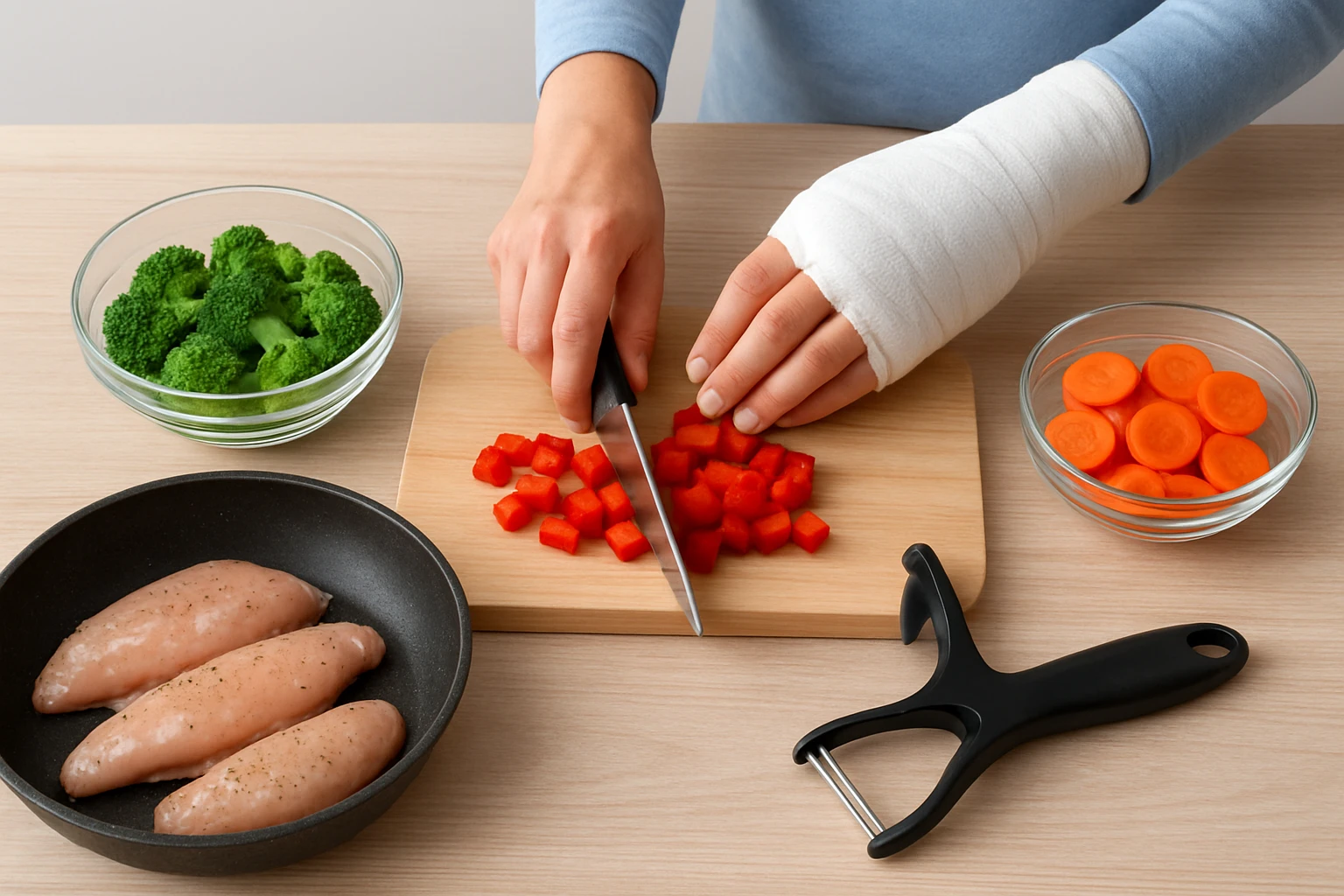
Recovering from hand surgery often means regaining independence in the kitchen while protecting the healing tissue. This guide explains how to plan, prepare, and enjoy nutritious meals using one‑handed techniques and adaptive tools. Readers will learn which utensils reduce strain, how to modify common recipes, and what safety practices speed recovery. By following these instructions, one can maintain a balanced diet without risking re‑injury or excessive fatigue.
Even without purchasing specialized equipment, the strategies outlined here are effective for anyone with limited grip strength or tremors. However, certain products dramatically improve stability, control, and speed, allowing the user to focus on nutrition rather than frustration.
What You’ll Need
- Adaptive eating utensils for stable grip
- One‑handed cutting board with anti‑slip surface
- Rocker‑style knives for slicing and chopping
- Meal‑prep containers with easy‑open lids
- Basic pantry items (pre‑washed greens, pre‑cooked proteins, canned beans)
All recommended adaptive tools are listed in the final section with direct Amazon links, prices, and user ratings.
Step 1: Set Up a Safe Workspace
Begin by clearing a section of the countertop and placing a non‑slip mat to prevent the board from shifting. Position the Fanwer One‑Handed Cutting Board in the center; its built‑in spikes hold produce steady while the bread stops allow one‑handed peeling. The board costs $41.99 and holds a 4.2‑star rating from 88 reviewers, indicating reliable performance for adaptive cooking.
Arrange your adaptive utensils within arm’s reach, ensuring the enlarged handles are oriented for a natural grip. This layout minimizes unnecessary reaching, which can strain the surgical site. Keep a bowl of pre‑cut vegetables nearby so that you can transfer items without lifting the cutting board.
Step 2: Choose One‑Handed Cutting Tools
When it is time to slice fruits, vegetables, or cooked proteins, the YOTAN Rocker Knife provides a curved blade that amplifies downward force. Priced at $19.99 with a 4.4‑star rating from 35 reviews, this knife allows a user to press the blade forward while the vertical grip reduces wrist strain. The rocker motion replaces the traditional back‑and‑forth slicing motion that requires two hands.
For herbs, soft vegetables, or salad ingredients, the Checkered Chef Salad Chopper Knife works well. It costs $9.99, carries a 4.5‑star rating from over 7,400 reviewers, and includes a protective sheath that prevents accidental cuts while storing. The mezzaluna design enables a smooth rocking motion, which is ideal for users who cannot grip a traditional chef’s knife.
Step 3: Use Adaptive Utensils for Eating and Mixing
After cooking, transferring food to a plate can be challenging with standard silverware. The Nourislif Adaptive Utensil Set includes a fork, knife, tablespoon, and teaspoon, each featuring a contoured, enlarged handle that prevents slipping. At $9.99 and a 4.6‑star rating from 1,241 reviewers, the set offers durability through rust‑proof stainless steel and dishwasher safety, reducing the need for hand‑washing.
When mixing salad or stirring a sauce, hold the utensil by the wide grip and use a rocking motion rather than a wrist twist. This technique distributes force across the forearm, protecting the surgical incision. The set’s built‑up handles also provide a tactile cue, helping users maintain a consistent grip even if tremors are present.
Step 4: Prepare One‑Handed Recipes
Choose recipes that require minimal chopping and can be assembled with a single hand. A simple quinoa bowl, for example, uses pre‑cooked quinoa, canned black beans, and pre‑washed spinach. Use the YOTAN Rocker Knife to dice a ripe avocado in one motion, then scoop the flesh with the adaptive spoon. Combine ingredients in a shallow bowl, then toss gently using the adaptive fork.
Another easy option is a baked salmon fillet with lemon slices. Place the salmon on the cutting board, use the Checkered Chef mezzaluna to slice lemon wedges, and then drizzle olive oil with the adaptive tablespoon. The board’s spikes keep the fish stable while you season, eliminating the need for a second hand to hold the fillet.
Step 5: Store and Clean Efficiently
After each meal, place used adaptive tools in the dishwasher; all recommended products are dishwasher safe, saving the user from manual scrubbing. Store the Checkered Chef mezzaluna in its protective sheath to keep the blade sharp and prevent accidental cuts when reaching into drawers. The Fanwer board can be wiped clean with a damp cloth; its wooden surface benefits from occasional mineral oil treatment to maintain durability.
Label meal‑prep containers with large‑print stickers to avoid opening them with a weak grip. Using containers with snap‑on lids that require a simple press rather than a twist further reduces hand strain.
Tips & Pro Tips
- Arrange all tools on a single side of the cutting board to keep the working hand free.
- Warm the cutting board briefly in the microwave (10‑15 seconds) to make dough or cheese easier to slice with a rocker knife.
- Apply a thin layer of mineral oil to the Fanwer board weekly; this prevents the wood from drying and reduces splinter risk.
- When using the adaptive fork, hold the handle near the base to maximize leverage and reduce wrist flexion.
- Set a timer for short cooking intervals (5‑10 minutes) to avoid prolonged exposure to heat, which can cause swelling in the operated hand.
Troubleshooting
Problem: The cutting board slides despite the anti‑slip base.
Solution: Place a silicone mat underneath the board; the added friction prevents movement while keeping the board level.
Problem: The rocker knife feels too sharp for delicate foods.
Solution: Use a thin piece of parchment paper between the blade and the food; this reduces cutting force while still allowing a smooth motion.
Conclusion
Preparing meals after hand surgery does not have to be a daunting task. By organizing a safe workspace, selecting one‑handed cutting tools, and employing adaptive utensils, individuals can maintain a nutritious diet while protecting their recovery. The recommended products—Fanwer One‑Handed Cutting Board, YOTAN Rocker Knife, Checkered Chef Salad Chopper Knife, and Nourislif Adaptive Utensil Set—offer ergonomic advantages that streamline cooking and reduce strain. Implement the tips and troubleshooting advice to create a sustainable, independent kitchen routine.
Products Mentioned in This Guide
Frequently Asked Questions
What adaptive tools are essential for one‑handed meal prep after hand surgery?
A stable grip utensil set, a one‑handed cutting board with anti‑slip surface, rocker‑style knives, and easy‑open meal‑prep containers are the basics.
Can I prepare balanced meals without buying specialized equipment?
Yes, using pre‑washed greens, pre‑cooked proteins, and canned beans reduces prep time and strain, allowing nutritious meals with minimal tools.
How do I safely chop vegetables with one hand?
Place the food on a one‑handed cutting board, then use a rocker‑style knife, rocking the blade back and forth while the board’s suction holds the ingredient in place.
What safety practices help prevent re‑injury while cooking?
Work on a non‑slip surface, keep tools within easy reach, avoid excessive force, and take frequent breaks to reduce fatigue.
Are there any quick‑open containers that make storing meals easier?
Meal‑prep containers with snap‑fit or lever‑type lids open with a single hand, keeping food fresh without twisting or gripping tightly.