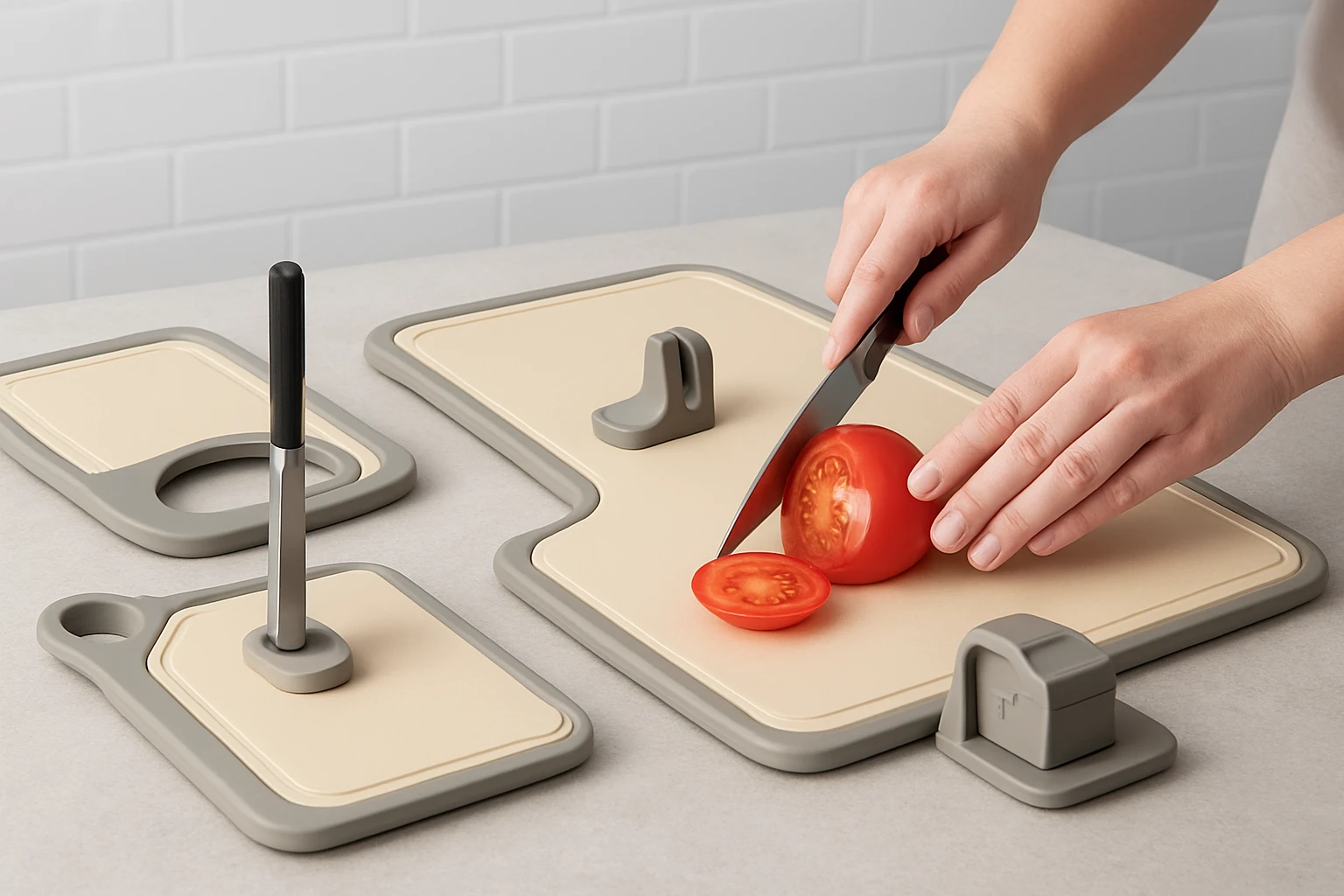
Adaptive Cutting Boards for Limited Dexterity: Complete Guide to Essential Features, Safety, and Buying Tips
Introduction
Preparing meals can be a rewarding activity, yet individuals with limited dexterity often encounter obstacles that diminish independence. This guide explains the critical characteristics of adaptive cutting boards, safety mechanisms, and complementary accessories that empower users to cook confidently. Readers will learn foundational concepts, compare leading products, and receive actionable best‑practice advice. By the end of the article, one will be equipped to select tools that match specific physical needs and kitchen environments.
Background and Context
Limited dexterity may arise from arthritis, stroke, age‑related muscle loss, or temporary injuries. The loss of fine motor control affects grip strength, wrist stability, and the ability to apply consistent pressure while chopping. Adaptive kitchen tools are engineered to mitigate these challenges by providing larger handles, non‑slip surfaces, and ergonomic lever mechanisms. Understanding how these design elements interact with human biomechanics is essential for making informed purchasing decisions.
Key Concepts and Product Recommendations
Adaptive Cutting Boards: Core Features
Adaptive cutting boards prioritize stability, surface texture, and ease of cleaning. A sturdy perimeter trench collects liquids, preventing them from pooling and causing the board to shift. Non‑slip edges grip countertops, reducing the need for constant readjustment. The KitchenAid Classic Cutting Board exemplifies these attributes with its 11 × 14‑inch plastic surface, dishwasher‑safe construction, and a rating of 4.5 stars from over 3,500 reviewers.
Materials such as high‑density polyethylene (HDPE) provide a balance between durability and gentle interaction with knife blades, extending the life of both board and knife. Boards that are lightweight yet rigid allow users to reposition them without excessive force, a crucial factor for those with weak hand muscles.
When selecting a board, consider the size of typical ingredients, countertop space, and whether a dual‑sided design is required for separate meat and vegetable preparation. The KitchenAid board’s generous dimensions accommodate most home‑cooking tasks while remaining manageable for storage.
Additional safety is achieved through integrated non‑slip mats that sit beneath the board. The CatTongue Non-Slip Kitchen Mat offers double‑sided traction, waterproof construction, and a recyclable HDPE composition, earning a 4.3‑star rating from 267 customers. Its 8 × 12‑inch footprint complements standard cutting boards, providing a stable foundation without adhesive residue.
Ergonomic Cutting Tools: Complementary Solutions
While a stable board reduces the effort required to maintain position, an ergonomic knife further enhances independence. The IMPRESA One-Handed Kitchen Knife features an extra‑wide stainless steel blade and a textured grip that enables a rocking motion using a single hand. Rated 4.6 stars from 71 reviews, the knife is dishwasher safe and includes a safety ledge that prevents accidental contact with the user’s fingers.
Users with limited wrist extension benefit from the knife’s broad blade, which requires fewer strokes to complete a slice. The ergonomic handle distributes pressure across the palm, reducing strain on individual fingers. This design is particularly advantageous for seniors and stroke survivors who may lack fine motor precision.
Pairing the IMPRESA knife with a non‑slip mat and a stable cutting board creates a cohesive system that addresses both grip and stability challenges. The combined use of these three products allows users to perform a full range of chopping, slicing, and dicing tasks without assistance.
Each product is affordable, with the cutting board priced at $15.11, the non‑slip mat at $14.99, and the dual‑knife set at $24.99, providing a cost‑effective solution for households seeking adaptive kitchen equipment.
Comparison and Selection Guide
| Feature | KitchenAid Classic Cutting Board | CatTongue Non-Slip Kitchen Mat | IMPRESA One‑Handed Kitchen Knife |
|---|---|---|---|
| Primary Function | Cutting surface with trench for liquids | Under‑board anti‑slip pad | One‑handed slicing tool |
| Dimensions | 11 × 14 inches | 8 × 12 inches | Extra‑wide blade, overall length ~9 inches |
| Material | Food‑grade plastic (HDPE) | Recyclable HDPE | Stainless steel blade, textured polymer handle |
| Safety Features | Non‑slip edges, perimeter trench | Double‑sided traction, waterproof | Safety ledge, textured grip |
| Dishwasher Safe | Yes | Yes | Yes |
| Price (USD) | 15.11 | 14.99 | 24.99 (2‑pack) |
| Average Rating | 4.5 / 5 (3,553 reviews) | 4.3 / 5 (267 reviews) | 4.6 / 5 (71 reviews) |
When evaluating which combination best suits a user, prioritize the most limiting factor. If the primary challenge is board movement, invest in a high‑quality non‑slip mat such as CatTongue. If grip strength is insufficient, the IMPRESA knife provides a single‑hand solution that works on any stable surface. For users requiring both stability and ergonomic cutting, the trio offers a comprehensive approach.
Best Practices & Tips
- Secure the cutting board to the countertop using a non‑slip mat before beginning any chopping activity.
- Place the board on a dry surface; moisture can reduce friction even with textured edges.
- When using the IMPRESA One‑Handed Knife, employ a rocking motion that keeps the blade in constant contact with the board, minimizing the need for excessive force.
- Regularly clean the non‑slip mat to remove debris that can diminish traction; a simple rinse or dishwasher cycle is sufficient.
- Rotate the cutting board periodically to avoid uneven wear, especially when using a single side for meat and the other for vegetables.
- Store knives in a protective sheath or sleeve to maintain blade sharpness and prevent accidental cuts.
- Consider adding a bright‑colored handle grip or tape for users with visual impairments, as contrast aids in locating the tool quickly.
Frequently Asked Questions
1. What makes a cutting board “adaptive” for limited dexterity?
An adaptive cutting board incorporates non‑slip edges, a stable base, and often a built‑in trench to manage liquids. These features reduce the need for the user to constantly adjust the board, conserving hand strength.
2. Can I use a regular cutting board with a non‑slip mat?
Yes. The CatTongue Non‑Slip Kitchen Mat is designed to work with most standard boards, providing additional grip without adhesive, which is ideal for users who prefer removable solutions.
3. How does the IMPRESA One‑Handed Knife differ from a standard chef’s knife?
The IMPRESA knife has an extra‑wide blade that allows a single‑hand rocking motion, a textured grip for secure handling, and a safety ledge that prevents the blade from contacting the user’s fingers during a cut.
4. Are these products safe for use with hot foods?
All three items are dishwasher safe and constructed from heat‑resistant materials. However, it is advisable to avoid exposing the non‑slip mat to direct flame or extreme temperatures, as prolonged heat can affect the HDPE composition.
5. How often should I replace an adaptive cutting board?
Replacement is necessary when the surface shows deep cuts, warping, or loss of non‑slip functionality. For most high‑quality plastic boards, a lifespan of five to seven years is typical with regular care.
6. Do these products accommodate left‑handed users?
Yes. The symmetrical design of the cutting board and the ambidextrous grip of the IMPRESA knife make them suitable for both left‑ and right‑handed individuals.
7. Is the CatTongue mat recyclable?
Indeed, the mat is made from recyclable HDPE plastic, allowing it to be processed through most municipal recycling programs.
Conclusion
Adaptive cutting boards and complementary accessories transform the cooking experience for individuals with limited dexterity. By focusing on stability, ergonomic design, and material durability, users can maintain independence and safety in the kitchen. The recommended products—KitchenAid Classic Cutting Board, CatTongue Non‑Slip Kitchen Mat, and IMPRESA One‑Handed Kitchen Knife—provide a balanced solution that addresses the most common challenges faced by this audience. Applying the best‑practice tips and selection guidelines outlined in this guide will ensure a confident, enjoyable cooking environment for all.
Products Featured in This Guide
IMPRESA One-Handed Kitchen Knife
Price: $24.99 | Rating: 4.6/5 (71 reviews)
Featured because it provides a reliable one‑handed slicing solution with an ergonomic handle, safety ledge, and dishwasher‑safe stainless steel blade, essential for users with limited hand strength.
KitchenAid Classic Cutting Board
Price: $15.11 | Rating: 4.5/5 (3,553 reviews)
Featured for its non‑slip edges, perimeter trench, and dishwasher‑safe construction, making it a versatile base for adaptive cooking tasks.
CatTongue Non-Slip Kitchen Mat
Price: $14.99 | Rating: 4.3/5 (267 reviews)
Featured because it offers double‑sided traction and waterproof, recyclable HDPE construction, enhancing board stability without adhesives.