Adaptive Kitchen Tools for Rheumatoid Arthritis vs Osteoarthritis: The Complete Guide to Choosing the Best Aids for Pain‑Free Cooking
Introduction
Cooking is a daily activity that can become a source of frustration when joint pain limits hand strength and dexterity. This guide explains how rheumatoid arthritis (RA) and osteoarthritis (OA) affect kitchen tasks, and it provides evidence‑based strategies for selecting adaptive tools that reduce strain while preserving independence. Readers will learn the physiological differences between RA and OA, the ergonomic principles behind assistive kitchen equipment, and how specific products such as the Dext Ergonomic Ring Pull Can Opener and the Ergonotic L Shaped Knife Set can alleviate common pain points. By the end of the article, one will be equipped to make informed purchasing decisions and adopt best‑practice cooking habits.
The information presented combines clinical insights from occupational therapy with real‑world product performance data. It is intended for adults who have been diagnosed with RA or OA, their caregivers, and health‑care professionals who recommend home adaptations. The tone remains professional and authoritative, ensuring that the content is trustworthy for an intermediate audience.
Background and Context
Rheumatoid arthritis is an autoimmune condition that causes symmetrical joint inflammation, often affecting the small joints of the hands and wrists. Inflammation leads to swelling, stiffness, and reduced grip strength, especially in the morning. Osteoarthritis, by contrast, is a degenerative wear‑and‑tear disease that typically presents asymmetrically and progresses slowly, causing osteophyte formation and joint space narrowing. Both disorders can produce pain during gripping, pinching, and rotational movements required for common kitchen tasks such as opening cans, slicing vegetables, or turning knobs.
Understanding the biomechanical demands of cooking helps identify which adaptive features are most beneficial. Key factors include the amount of force required to initiate a motion, the angle of the hand relative to the tool, and the surface texture of the grip. Tools that reduce the required force, maintain a neutral wrist position, and provide a larger contact area are generally preferred for both RA and OA.
Occupational therapists often recommend a hierarchy of adaptations: first, modify technique (e.g., use a rocker‑style can opener), second, incorporate ergonomic tools, and third, reorganize the kitchen layout to minimize reach. This guide follows that hierarchy while focusing on two high‑rating products that exemplify best‑in‑class design.
Adaptive Tool Categories and Their Relevance
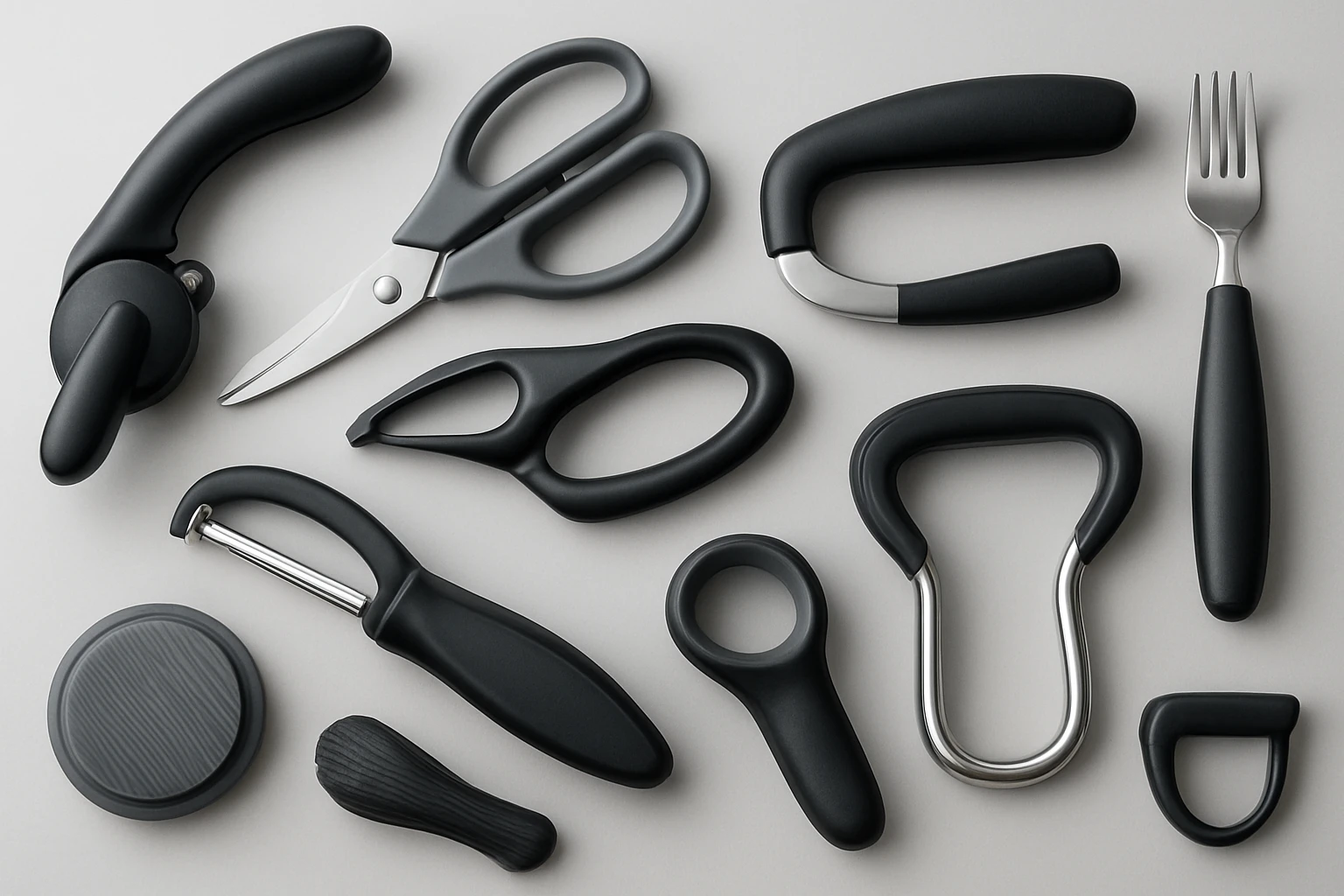
Adaptive kitchen tools can be grouped into three primary categories: grip‑enhancing devices, leverage‑based implements, and stability‑improving accessories. Grip‑enhancing devices feature enlarged, textured handles that distribute pressure across a larger surface area, reducing localized stress on painful joints. Leverage‑based implements use mechanical advantage—such as a longer handle or a pivot point—to decrease the force the user must apply. Stability‑improving accessories, including non‑slip mats and suction bases, prevent unwanted movement of containers, thereby reducing the need for corrective grip adjustments.
When selecting a product, consider the specific joint limitations of the individual. For someone with severe thumb pain from RA, a tool that eliminates the need for a pinching motion, such as a ring‑pull can opener, will be more effective than a traditional lever opener. Conversely, a person with OA in the distal interphalangeal joints may benefit from a knife with an angled handle that keeps the wrist in a neutral position, reducing extension stress.
The following sections evaluate two representative products that address these distinct needs, while also illustrating broader design principles applicable to other adaptive tools.
Product Spotlight: Dext Ergonomic Ring Pull Can Opener
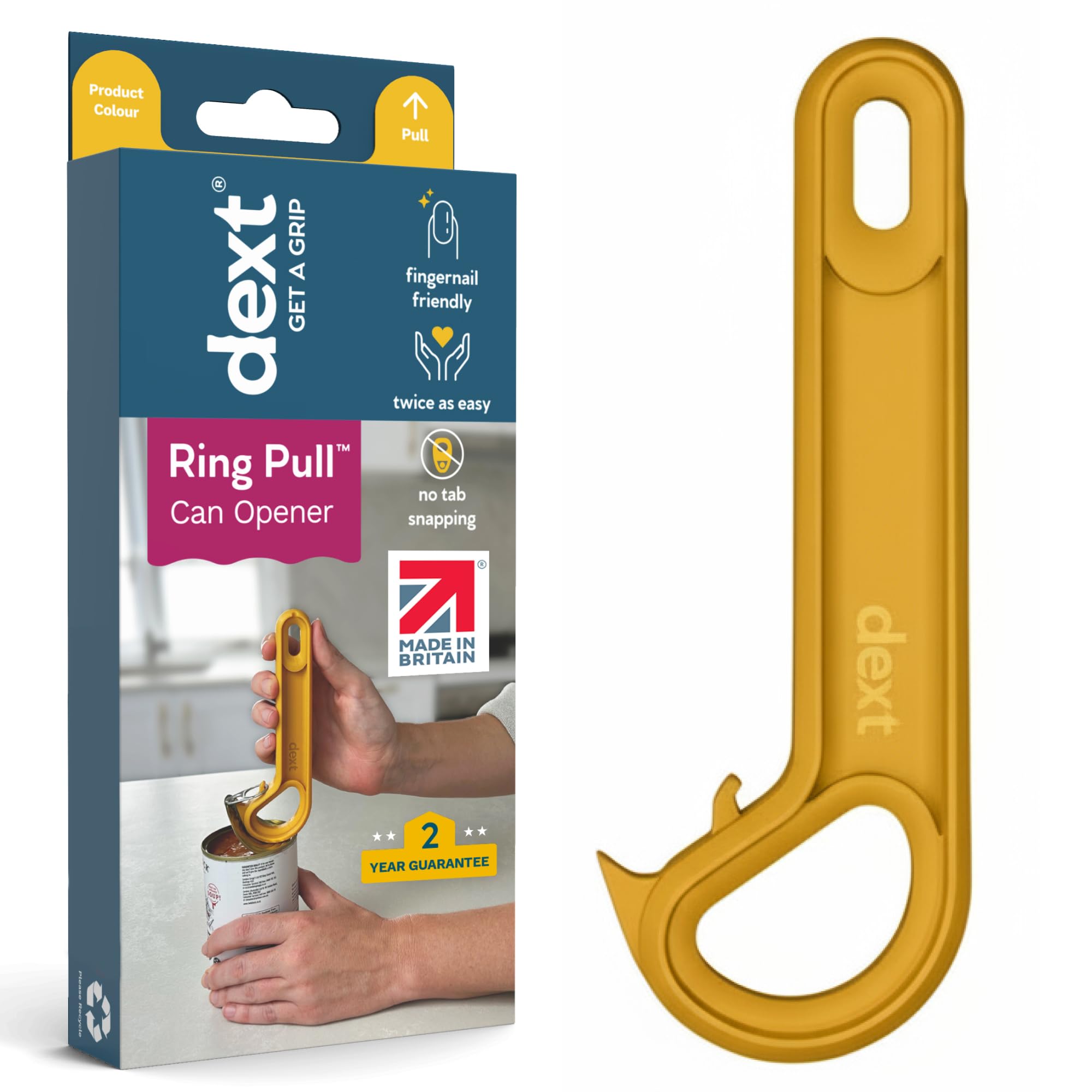
The Dext Ergonomic Ring Pull Can Opener is engineered specifically for individuals with limited hand strength, making it a valuable aid for both RA and OA sufferers. Its key features include an easy‑open ring pull that enables a gentle, precise peel of the can tab, and a wider, curved ergonomic handle that distributes pressure evenly across the palm.
- Enhanced Ease & Control: The ring‑pull mechanism requires minimal thumb pressure, reducing strain on inflamed joints.
- Minimal Strength Required: Users can open standard soda, beer, and pet‑food cans within seconds, eliminating the need for excessive grip force.
- Comfortable to Use: The smooth, curved handle minimizes discomfort and protects nails, which can be fragile in RA patients.
- Innovative Design: The tool reduces the risk of the can tipping over, preventing spills that could cause additional stress.
- Unique Arthritis Gadget: It serves as a thoughtful gift for seniors and individuals managing chronic hand conditions.
Performance metrics are impressive: a 4.7‑star rating from 870 reviews indicates broad user satisfaction. Priced at $14.99, the opener offers a cost‑effective solution for daily meal preparation. Its compact size also makes it easy to store in a drawer, supporting a clutter‑free kitchen environment.
Product Spotlight: Ergonotic L Shaped Knife Set
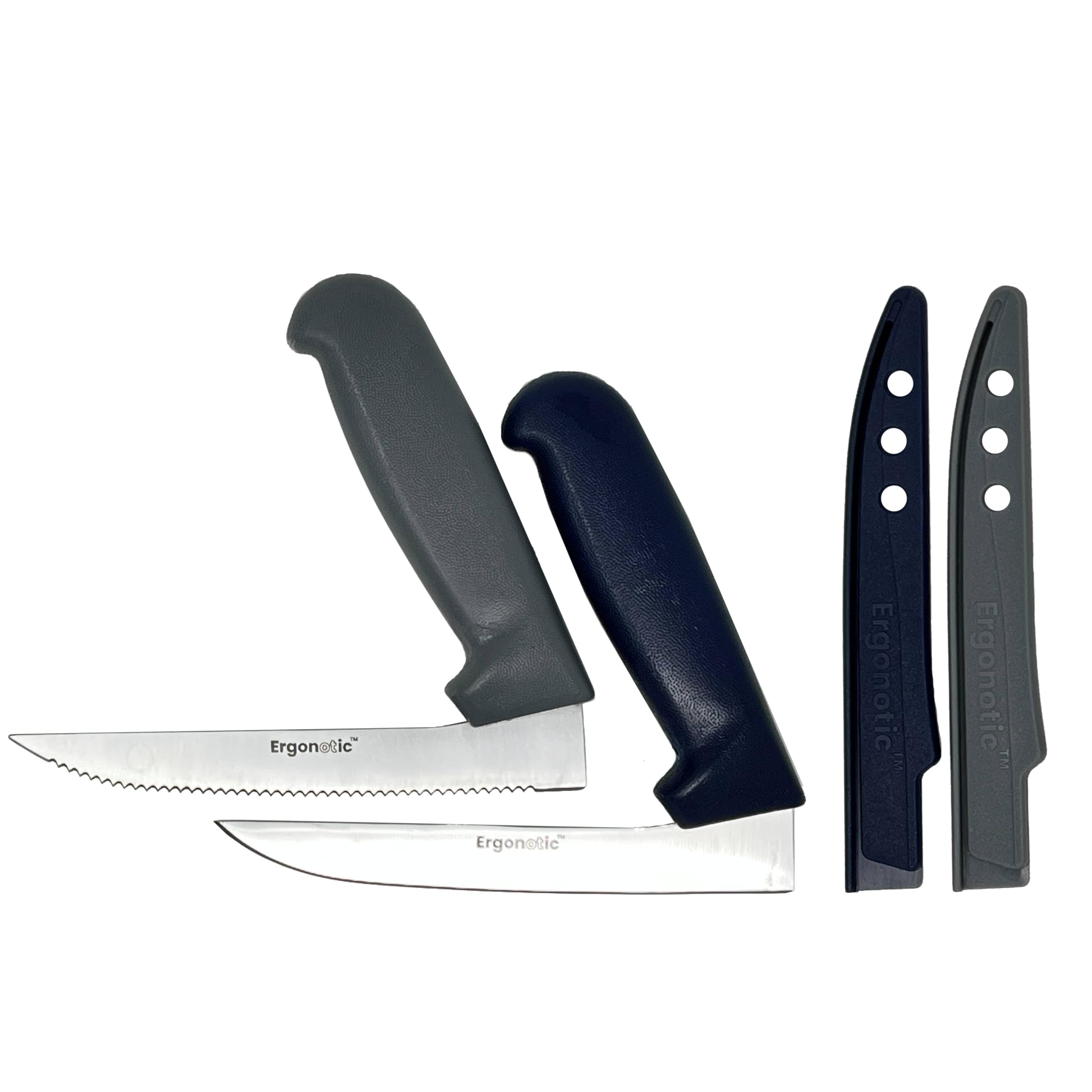
The Ergonotic L Shaped Knife Set comprises two right‑angle knives designed by a certified occupational therapist. The L‑shaped handle aligns the wrist in a neutral position, decreasing extension and ulnar deviation that commonly aggravate OA and RA symptoms. The set includes a serrated blade for bread, steak, and tomatoes, and a flat chopping blade for fruits, vegetables, and tender proteins.
- Ergonomic L Shaped Design: Angled handle reduces wrist strain and promotes a comfortable grip.
- Two Blades for Versatility: Serrated and flat blades address a wide range of cutting tasks.
- Empowering Independent Cooking: Ideal for users with arthritis, hand injuries, or limited range of motion.
- Durable & Easy to Clean: Made from 6‑inch stainless steel; dishwasher safe for convenience.
- Professional & Inclusive Design: Engineered for control, confidence, and inclusive cooking experiences.
The knives hold a 4.4‑star rating from 41 reviews, reflecting consistent performance among users with hand limitations. At $26.99 for the pair, they represent a modest investment in long‑term kitchen independence. Their dishwasher‑safe construction also reduces the need for prolonged hand exposure to water, which can exacerbate joint swelling.
Comparison and Selection Guide
| Feature | Dext Ergonomic Ring Pull Can Opener | Ergonotic L Shaped Knife Set |
|---|---|---|
| Primary Joint Relief | Thumb, index, and grip strength | Wrist, finger extension, and grip |
| Force Required | Very low – ring pull mechanism | Low – angled handle provides leverage |
| Versatility | Cans, bottles with pull tabs, pet food | Bread, steak, tomatoes, fruits, vegetables |
| Price | $14.99 | $26.99 |
| User Rating | 4.7/5 (870 reviews) | 4.4/5 (41 reviews) |
When choosing between these tools, consider the specific cooking tasks that cause the most discomfort. If opening cans, soda bottles, or pet‑food packages is the primary challenge, the Dext can opener provides a direct solution with minimal hand effort. If cutting, slicing, and chopping are more problematic, the Ergonotic knives address wrist positioning and grip strength simultaneously. In many households, both tools complement each other, offering a comprehensive adaptive suite.
Best Practices & Tips for Pain‑Free Cooking
- Organize Workstations: Keep frequently used items within arm’s reach to avoid overstretching. Use pull‑out shelves or lazy Susans to minimize bending.
- Use Adaptive Cutting Boards: Boards with built‑in clamps hold food steady, reducing the need for a firm grip.
- Employ Heat‑Resistant Gloves: When handling hot pots, gloves protect the skin and allow a looser grasp.
- Take Micro‑Breaks: Pause every 10–15 minutes to stretch the fingers, wrists, and forearms, which helps maintain joint lubrication.
- Maintain Tool Cleanliness: Residue buildup can increase friction; clean adaptive tools promptly to preserve smooth operation.
- Rotate Tasks: Alternate between chopping, stirring, and plating to avoid repetitive strain on the same joint group.
Integrating these habits with the recommended adaptive tools creates a synergistic effect that maximizes independence while minimizing pain. For individuals with fluctuating disease activity, such as RA flare‑ups, having a ready set of low‑force tools enables continuation of cooking even on high‑pain days.
Frequently Asked Questions
1. Can adaptive tools replace professional therapy?
No. Adaptive tools complement occupational therapy by providing practical solutions for daily tasks. They do not substitute for personalized therapeutic exercises.
2. Are these products covered by insurance?
Some health plans consider adaptive kitchen equipment as durable medical equipment, but coverage varies. It is advisable to consult the insurer and provide a prescription from a therapist.
3. How do I clean the Dext can opener without aggravating my joints?
Rinse the opener under warm water and wipe with a soft cloth. The smooth surface requires minimal scrubbing, preserving the ergonomic grip.
4. Will the Ergonotic knives fit in standard knife blocks?
The L‑shaped handles are slightly bulkier, but most standard blocks accommodate them. Alternatively, store them in a dedicated drawer insert to avoid accidental damage.
5. Which tool is better for someone with severe thumb pain?
The Dext Ergonomic Ring Pull Can Opener is specifically designed to eliminate thumb pinching, making it the superior choice for severe thumb involvement.
6. Do these tools work for left‑handed users?
Both products are ambidextrous; the can opener’s ring pull can be operated with either hand, and the knives’ angled handles accommodate left‑handed grips comfortably.
7. How often should I replace adaptive kitchen tools?
Replace tools when the grip surface shows wear, the mechanism becomes loose, or the blade dulls beyond safe cutting. Regular inspection ensures continued safety.
Conclusion
Adaptive kitchen tools empower individuals with rheumatoid arthritis and osteoarthritis to maintain culinary independence while reducing joint stress. By understanding the biomechanical differences between the two conditions, selecting ergonomically designed products such as the Dext Ergonomic Ring Pull Can Opener and the Ergonotic L Shaped Knife Set, and implementing best‑practice cooking habits, one can achieve a pain‑free kitchen experience. The combination of evidence‑based recommendations and real‑world product performance creates a roadmap for sustained, enjoyable cooking regardless of joint health.
Products Featured in This Guide
Dext Ergonomic Ring Pull Can Opener
Price: $14.99 | Rating: 4.7/5 (870 reviews)
Featured because it provides a low‑force, ergonomic solution for opening cans, directly addressing thumb and grip challenges common in both RA and OA.
Ergonotic L Shaped Knife Set
Price: $26.99 | Rating: 4.4/5 (41 reviews)
Featured because its angled handles reduce wrist extension and provide leverage, making chopping and slicing tasks more comfortable for users with arthritic hand conditions.