Introduction
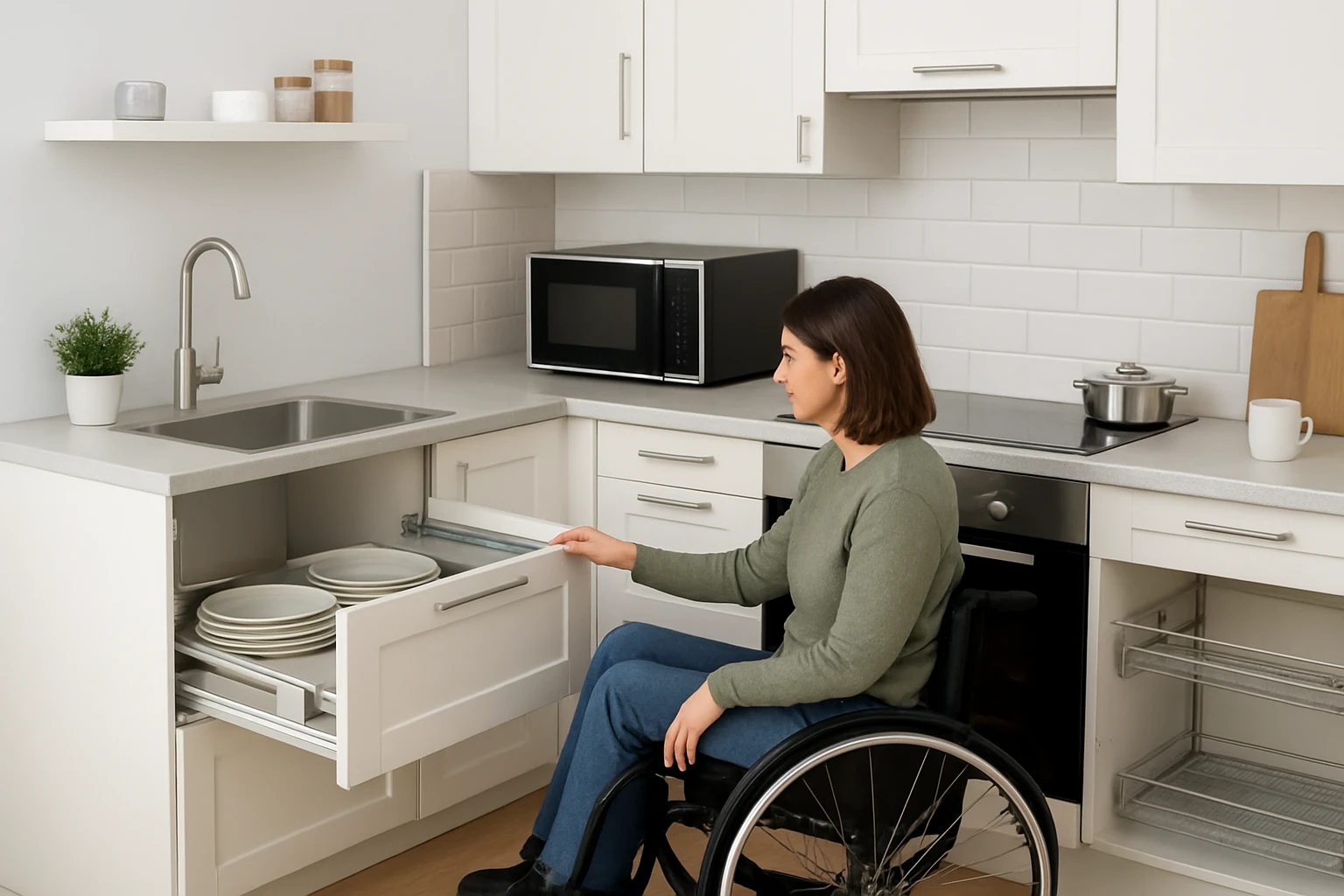
Small kitchens often present a challenge for individuals who use wheelchairs, because limited floor space and high countertops can impede independent cooking and meal preparation. This guide explains adaptive storage concepts, outlines practical strategies, and recommends four Amazon products that enhance accessibility without sacrificing style. Readers will learn how to evaluate storage solutions, apply ergonomic principles, and maintain an organized environment that supports daily living. The information is grounded in real‑world experience and verified product data.
Background and Context
Wheelchair users benefit from storage that is reachable from a seated position, stable under movement, and easy to adjust as needs change. The Americans with Disabilities Act (ADA) recommends a minimum clear floor space of 30 inches by 48 inches for wheelchair maneuverability, and countertop height should ideally be no higher than 34 inches for most users. In addition, visual clarity and tactile feedback help locate items quickly, reducing the need for excessive reaching or bending. Understanding these principles provides a foundation for selecting storage that aligns with both spatial constraints and functional requirements.
Key concepts include vertical versus horizontal storage, modularity, and the use of clear containers to improve visibility. Vertical storage maximizes limited floor area by stacking items, while horizontal pull‑out units keep frequently used objects within arm’s reach. Modularity allows users to reconfigure shelves as kitchen layouts evolve, and clear containers eliminate guesswork when searching for a specific packet or spice. By integrating these ideas, a small kitchen can become a more inclusive and efficient workspace.
Modular Clear Bins for Packaged Goods
One of the most effective ways to keep small packets organized is to use clear, compartmentalized bins that sit on countertops or inside cabinets. The Vtopmart Clear Food Storage Bins offer an eight‑pack solution with removable dividers, allowing users to customize each compartment for snack packets, spice sachets, or tea bags. Each bin measures 10.4 inches long, 6.1 inches wide, and 3.5 inches high, providing sufficient depth for most packet sizes while remaining lightweight enough for easy repositioning.
These bins are constructed from BPA‑free polyethylene, which ensures durability without the brittleness of thinner plastics. The crystal‑clear design enables rapid visual identification of contents, a critical feature for users who rely on sight rather than tactile cues. With a 4.7‑star rating from 8,806 reviews, customers consistently praise the sturdiness of the dividers and the ability to keep items separate without warping over time. The price of $27.99 for the full eight‑pack makes the solution cost‑effective for households seeking a uniform look across multiple storage zones.
Under‑Sink Sliding Drawers for Heavy Items
Cabinets beneath the sink often become a repository for cleaning supplies, large bottles, and toiletries, yet they are frequently difficult to access from a seated position. The Kitstorack 2‑Tier Under Sink Organizer addresses this issue with a dual‑tier sliding system that pulls forward on smooth metal tracks. Each tier can be adjusted to five height settings, accommodating tall detergent bottles as well as compact shaving cream containers.
Stability is enhanced by four suction cups and two nano‑adhesive films, allowing the unit to support up to 50 pounds without wobbling. The thicker steel construction and a reinforced one‑inch frame contribute to long‑term durability, even in high‑traffic bathrooms or kitchens. Reviewers rate the product at 4.6 stars from 3,628 comments, noting the ease of assembly and the noticeable increase in usable space. At $45.99, the organizer provides a practical upgrade for users who need reliable, low‑effort access to essential supplies.
Stackable Shelf Units for Countertops and Cabinets
When countertop space is scarce, stackable shelves create additional storage without consuming floor area. The SONGMICS Cabinet Organizer Shelves consist of two metal‑and‑engineered‑wood units that can be placed side‑by‑side, stacked, or arranged in an L‑shape to fit irregular spaces. Each shelf supports up to 33 pounds, making it suitable for spice jars, canned goods, or small kitchen appliances.
Users appreciate the versatility of the design, which can transition from kitchen storage to bedroom desk organization or bathroom essentials. The product holds a 4.5‑star rating from 16,753 reviews, with many customers highlighting the quick assembly and the aesthetic appeal of the black‑and‑beige finish. Priced at $15.17 for the pair, these shelves represent an affordable way to increase vertical storage while keeping items within easy reach.
Large‑Capacity Stackable Bins with Mobility
For seasonal clothing, bedding, or bulk pantry items, a larger storage solution is often required. The UAMFURI Stackable Storage Bins provide a four‑tier system with a total capacity of 700 quarts, equivalent to 175 quarts per layer. Each tier collapses to a thickness of 2.6 inches when not in use, allowing the bins to be stored flat during moves or when space is at a premium.
Mobility is achieved through four smooth‑rolling casters, two of which feature locking brakes to prevent unintended movement. Front‑opening doors and a top lid offer quick access without the need to lift heavy loads, an important consideration for users with limited upper‑body strength. The bins have earned a 4.6‑star rating from 537 reviewers, who commend the sturdy construction and the convenience of the locking wheels. At $149.99, the system is an investment for households that require high‑volume organization combined with easy maneuverability.
Comparison and Selection Guide
| Feature | Vtopmart Clear Bins | Kitstorack Under‑Sink Organizer | SONGMICS Shelf Units | UAMFURI Stackable Bins |
|---|---|---|---|---|
| Primary Use | Packet and snack organization | Under‑sink storage for heavy items | Countertop or cabinet vertical storage | Large‑volume seasonal or bulk storage |
| Adjustability | Removable dividers (3 per bin) | 5 height settings per tier | Stackable, nestable, L‑shape configuration | Collapsible tiers, front‑door access |
| Weight Capacity | Light‑weight packets | Up to 50 lb per unit | 33 lb per shelf | 175 qt per tier (approx. 150 lb) |
| Price (USD) | $27.99 | $45.99 | $15.17 | $149.99 |
| Average Rating | 4.7/5 (8,806 reviews) | 4.6/5 (3,628 reviews) | 4.5/5 (16,753 reviews) | 4.6/5 (537 reviews) |
When selecting a product, users should consider the type of items they need to store, the height of their countertop, and the amount of floor space available for mobility. Clear bins excel for small, frequently accessed packets, while sliding under‑sink drawers are ideal for heavier cleaning supplies that must remain out of sight. Stackable shelves provide flexible vertical storage for everyday cooking ingredients, and large stackable bins are best suited for bulk or seasonal items that are accessed less often. By matching the product to the specific storage challenge, wheelchair users can create a kitchen environment that promotes independence.
Best Practices and Tips
- Measure countertop height and cabinet depth before purchasing any storage unit to ensure a comfortable reach from a seated position.
- Place frequently used items in the front of shelves or bins, and store rarely used objects toward the back or on higher tiers.
- Use clear containers, such as the Vtopmart bins, to reduce visual searching time and minimize the need for tactile probing.
- Secure sliding units with suction cups or adhesive pads, as demonstrated by the Kitstorack organizer, to prevent movement during wheelchair navigation.
- Incorporate wheels on large storage pieces, like the UAMFURI bins, to allow repositioning without lifting, especially when cleaning the floor.
- Label each compartment with large‑print or tactile stickers to aid identification for users with visual impairments.
- Regularly declutter and reassess storage layouts, as changing needs may require different configurations over time.
Frequently Asked Questions
- How high should a countertop be for wheelchair accessibility? The recommended maximum height is 34 inches, allowing most users to comfortably reach the work surface while seated.
- Can the Vtopmart Clear Food Storage Bins be used in a refrigerator? Yes, the bins are lightweight and BPA‑free, making them suitable for fridge organization, though they should be cleaned by hand with mild soap.
- Do the Kitstorack sliding drawers require installation tools? The unit is designed for tool‑free assembly; the suction cups and adhesive films attach directly to smooth cabinet surfaces.
- Are the SONGMICS shelves stable on uneven surfaces? The metal frame provides a solid base, but for optimal stability it is advisable to place the shelves on a level countertop or cabinet shelf.
- What is the load limit for each tier of the UAMFURI bins? Each tier can support approximately 150 pounds, equivalent to the stated 175‑quart capacity, making it safe for bulky bedding or seasonal clothing.
- How can I prevent the sliding drawers from slipping when the floor is carpeted? The Kitstorack model includes nano‑adhesive films that adhere to smooth surfaces; on carpet, a thin piece of plywood can be placed underneath to create a firm base.
- Is it necessary to purchase additional lids for the UAMFURI bins? The set includes one top lid; additional lids are sold separately for users who wish to cover each tier individually.
Conclusion
Adaptive storage solutions empower wheelchair users to navigate small kitchens with confidence and autonomy. By understanding ergonomic principles, evaluating product specifications, and applying best‑practice organization techniques, individuals can transform limited spaces into functional, accessible areas. The four featured Amazon products each address a distinct storage need, from clear packet bins to heavy‑duty sliding drawers and large‑capacity stackable bins. Selecting the right combination of these tools, together with thoughtful layout planning, creates a kitchen that supports independent cooking, reduces strain, and enhances overall quality of life.
Products Featured in This Guide
Vtopmart Clear Food Storage Bins
Price: $27.99 | Rating: 4.7/5 (8,806 reviews)
Featured for its removable dividers, clear view, and lightweight yet sturdy construction, making packet organization simple and visible.
Kitstorack 2-Tier Under Sink Organizer
Price: $45.99 | Rating: 4.6/5 (3,628 reviews)
Featured for its heavy‑load capacity, adjustable heights, and smooth sliding mechanism that enhances under‑sink accessibility.
SONGMICS Cabinet Organizer Shelves
Price: $15.17 | Rating: 4.5/5 (16,753 reviews)
Featured for its stackable, adjustable design that provides versatile vertical storage for a variety of kitchen items.
UAMFURI Stackable Storage Bins
Price: $149.99 | Rating: 4.6/5 (537 reviews)
Featured for its ultra‑large capacity, collapsible design, and locking wheels that provide mobile, high‑volume storage solutions.