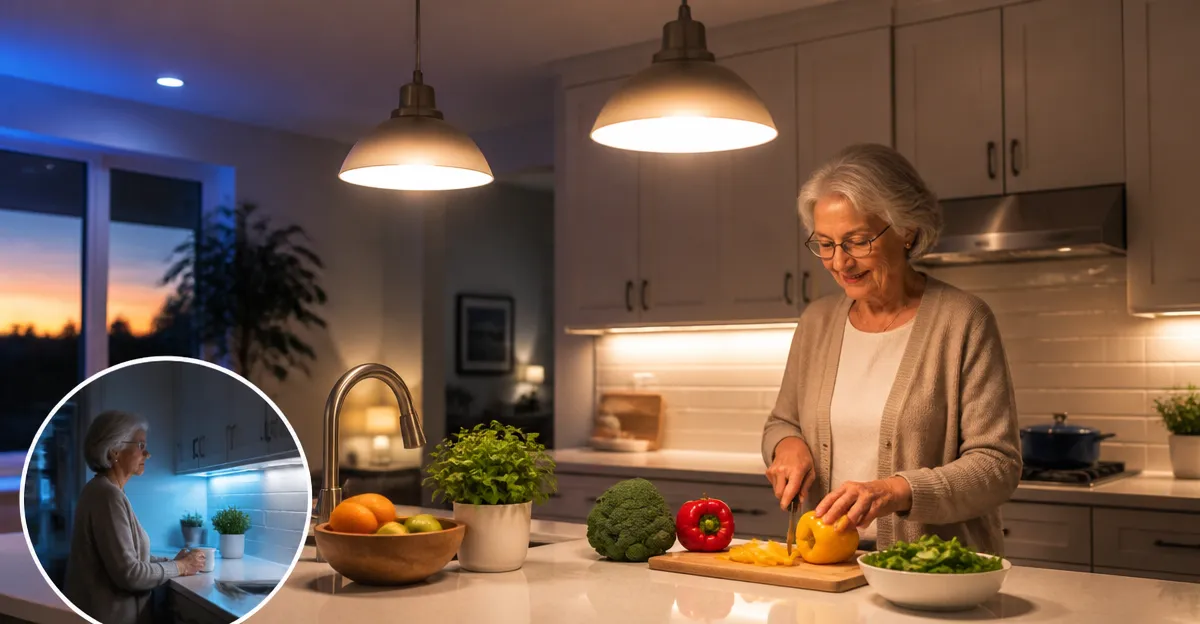
Circadian-Friendly Kitchen Lighting for Seniors: The Ultimate Guide to Better Sleep, Safety & Daily Wellbeing
Introduction
Lighting in the kitchen influences more than just visibility; it shapes the body's internal clock, especially for seniors whose circadian rhythms may be weakened. This guide explains how to select lighting that promotes healthy sleep patterns, enhances safety, and supports daily activities. Readers will learn the science of circadian lighting, practical design strategies, and product recommendations that align with senior needs. By the end, one will be equipped to transform a kitchen into a wellness‑focused environment.
Background and Context
The circadian system relies on light cues to regulate melatonin production, which dictates sleep‑wake cycles. Blue‑rich light in the morning stimulates alertness, while warmer, dimmer light in the evening encourages melatonin release. Seniors often experience reduced retinal sensitivity, making them more dependent on appropriate lighting cues. In addition, age‑related vision decline and mobility concerns increase the importance of glare‑free, well‑placed illumination for safety.
Key concepts include:
- Color temperature: Measured in kelvin (K); 2700‑3000K mimics evening light, while 5000‑6500K resembles daylight.
- Luminous flux: Measured in lumens (lm); higher lumens provide brighter illumination for tasks.
- Dimming and motion sensing: Allows automatic adjustment to activity levels, reducing the need for manual switches.
Understanding these fundamentals enables seniors or caregivers to make informed lighting choices that reinforce natural sleep rhythms while ensuring functional illumination for cooking, cleaning, and navigation.
Design Strategies for a Circadian‑Friendly Kitchen
Effective kitchen lighting integrates three layers: ambient, task, and accent. Ambient lighting establishes overall brightness, task lighting focuses on work surfaces, and accent lighting highlights safety‑critical zones such as stairways or cabinets.
1. Morning Brightness: Use higher‑temperature LEDs (5000K) near the kitchen entrance to signal wakefulness. 2. Evening Warmth: Switch to lower‑temperature bulbs (2700K) for countertops after dinner to cue relaxation. 3. Motion‑Activated Task Lights: Install sensors that illuminate only when movement is detected, preventing unnecessary exposure to bright light during night trips.
These strategies can be implemented with both built‑in fixtures and supplemental under‑cabinet lights. The following sections recommend specific products that fulfill each layer while meeting senior‑friendly criteria such as magnetic mounting, rechargeable batteries, and easy‑read controls.
Recommended Products and Their Roles
Under‑Cabinet Illumination
Under‑cabinet lighting provides focused task illumination without glare. The following products excel in brightness, dimming options, and motion sensing.
MCGOR Motion Sensor Cabinet Light offers a 10‑inch strip, rechargeable battery, and five dimming levels. Its magnetic mounting allows quick repositioning, and the motion sensor automatically turns the light on when a hand approaches the countertop. The product is rated highly for durability and ease of installation, making it suitable for seniors who prefer minimal wiring.
The 14.7" Rechargeable Motion Sensor Cabinet Light provides a longer illumination span, ideal for deeper cabinets. It includes magnetic dimmable LEDs and a wireless design, eliminating the need for hardwired power sources. Its larger size covers more surface area, reducing the number of fixtures required.
Gritin Rechargeable Cabinet Light distinguishes itself with three color temperature options and five brightness settings. The inclusion of four operating modes—steady, flashing, fading, and motion‑activated—offers flexibility for different times of day. Its magnetic attachment simplifies installation, and the rechargeable battery supports up to 12 hours of continuous use.
For a more extensive setup, the WOBANE Under Cabinet LED Light Kit supplies six 20‑inch strips, a 24W adapter, and an RF remote for precise dimming. The kit delivers 1500 lumens at a warm 2700K temperature, creating a cozy evening environment while still providing ample task lighting. Its remote control eliminates the need for seniors to reach for switches.
Ceiling and Ambient Lighting
Ambient lighting sets the overall mood of the kitchen. A semi‑flush mount fixture can distribute light evenly without protruding into headspace.
The Baocuz Semi Flush Ceiling Light features four adjustable, multi‑directional lamps housed in a metal cage. Its rotatable design enables fine‑tuning of light direction, allowing users to target specific zones such as dining areas or prep stations. The fixture supports both warm and cool bulbs, facilitating a transition from bright morning light to softer evening illumination.
Comparison and Selection Guide
| Feature | MCGOR 10" | 14.7" Motion Sensor | Gritin 10.2" | WOBANE Kit | Baocuz Ceiling |
|---|---|---|---|---|---|
| Length (inches) | 10 | 14.7 | 10.2 | 6 x 20 | 4 fixtures |
| Power Source | Rechargeable | Rechargeable | Rechargeable | AC Adapter | Hardwired |
| Motion Sensor | Yes | Yes | Optional (mode) | No (remote) | No |
| Dimming Levels | 5 | 5 | 5 + 3 temps | Remote dimming | Depends on bulb |
| Installation | Magnetic, no wiring | Magnetic, no wiring | Magnetic, no wiring | Adhesive strips + adapter | Mount to ceiling |
| Ideal Use | Shallow cabinets | Deep cabinets | Versatile, mood lighting | Full‑length under‑cabinet | General ambient |
When selecting a product, seniors should prioritize magnetic, wireless options to avoid the hazards of exposed wiring. Motion sensors reduce the need to locate switches in low‑light conditions, while dimmable units enable gradual transitions that support circadian rhythms.
Best Practices & Tips
- Start the day with bright, cool‑temperature light near the kitchen entrance to stimulate alertness.
- Use dimmable under‑cabinet lights set to warm 2700K after dinner to encourage melatonin production.
- Install motion sensors at a height of 5‑6 feet to capture hand movements without requiring seniors to bend.
- Choose magnetic fixtures that can be repositioned as furniture or cabinet layouts change.
- Combine ambient ceiling lighting with task lighting to reduce eye strain and improve overall visibility.
- Regularly clean lenses and sensor surfaces to maintain responsiveness.
- Consider a smart plug or voice‑controlled switch for additional hands‑free operation.
Frequently Asked Questions
- How does light temperature affect sleep for seniors? Cooler light (5000K‑6500K) suppresses melatonin, promoting wakefulness. Warmer light (2700K‑3000K) encourages melatonin release, aiding sleep.
- Are rechargeable cabinet lights safe to use near food preparation areas? Yes, rechargeable LED lights generate minimal heat and do not emit harmful UV radiation, making them safe for food‑prep zones.
- Can motion‑sensor lights be disabled at night? Most models, including the MCGOR and Gritin lights, allow manual override or timer settings to prevent unwanted activation during sleep hours.
- What is the recommended lumen level for countertop tasks? Approximately 300‑500 lumens per linear foot provides sufficient brightness for chopping, reading recipes, and cleaning.
- Do ceiling fixtures need a professional electrician? Semi‑flush mounts like the Baocuz light typically require basic wiring; however, seniors may prefer hiring a qualified electrician for safety.
- How often should the batteries in rechargeable lights be replaced? Rechargeable lithium‑ion batteries maintain performance for 300‑500 charge cycles, roughly two years of regular use.
- Is it necessary to use a separate remote for dimming? Remote control offers convenience, especially for seniors with limited dexterity, but many lights also support tap‑type dimming directly on the fixture.
Conclusion
Implementing circadian‑friendly lighting in the kitchen can significantly improve seniors' sleep quality, safety, and overall wellbeing. By understanding color temperature, lumens, and the benefits of motion‑activated, dimmable fixtures, one can create a harmonious environment that respects the body's natural rhythms. The recommended products—ranging from magnetic under‑cabinet strips to adjustable ceiling fixtures—provide practical solutions that are easy to install and operate. With thoughtful design and the right lighting tools, seniors can enjoy a kitchen that supports both functional tasks and restorative rest.
Products Featured in This Guide
MCGOR Motion Sensor Cabinet Light
Price: Not listed. Rating: Not listed.
Featured for its rechargeable battery, magnetic mounting, and five dimming levels that suit both bright task work and low‑light evening use.
Baocuz Semi Flush Ceiling Light
Price: Not listed. Rating: Not listed.
Featured for its adjustable multi‑directional lamps and metal cage design, providing versatile ambient lighting for any kitchen layout.
WOBANE Under Cabinet LED Light Kit
Price: Not listed. Rating: Not listed.
Featured for its six 20‑inch strips, RF remote, and 1500 lm output, delivering bright, warm illumination with precise control.
14.7" Rechargeable Motion Sensor Cabinet Light
Price: Not listed. Rating: Not listed.
Featured for its extended length and magnetic dimmable LEDs, ideal for deeper cabinets where broader coverage is required.
Gritin Rechargeable Cabinet Light
Price: Not listed. Rating: Not listed.
Featured for its three color temperatures, five brightness settings, and multiple operating modes, offering customizable lighting for any time of day.