Does Medicare Cover Adaptive Kitchen Equipment? Ultimate Guide to Coverage, Eligibility, and How to Get It
Introduction
This guide explains whether Medicare provides financial assistance for adaptive kitchen equipment, who qualifies for coverage, and how beneficiaries can obtain the necessary tools. Readers will learn the regulatory framework, the step‑by‑step claim process, and practical recommendations for products that improve safety and independence in the kitchen. The information presented is based on current Medicare policies, expert analysis, and real‑world product performance data.
The guide is organized into clear sections that cover background context, detailed coverage criteria, product recommendations, a comparison matrix, best practices, and frequently asked questions. By the end of the article, readers will be equipped to navigate the Medicare system confidently and make informed purchasing decisions.
Background and Context
Medicare is a federal health insurance program primarily for individuals aged 65 and older, as well as certain younger people with disabilities. While Medicare traditionally covers medical devices and supplies that are deemed medically necessary, coverage for adaptive kitchen equipment is less straightforward. The program distinguishes between durable medical equipment (DME) and everyday household items; only items that directly address a medical condition may qualify for reimbursement.
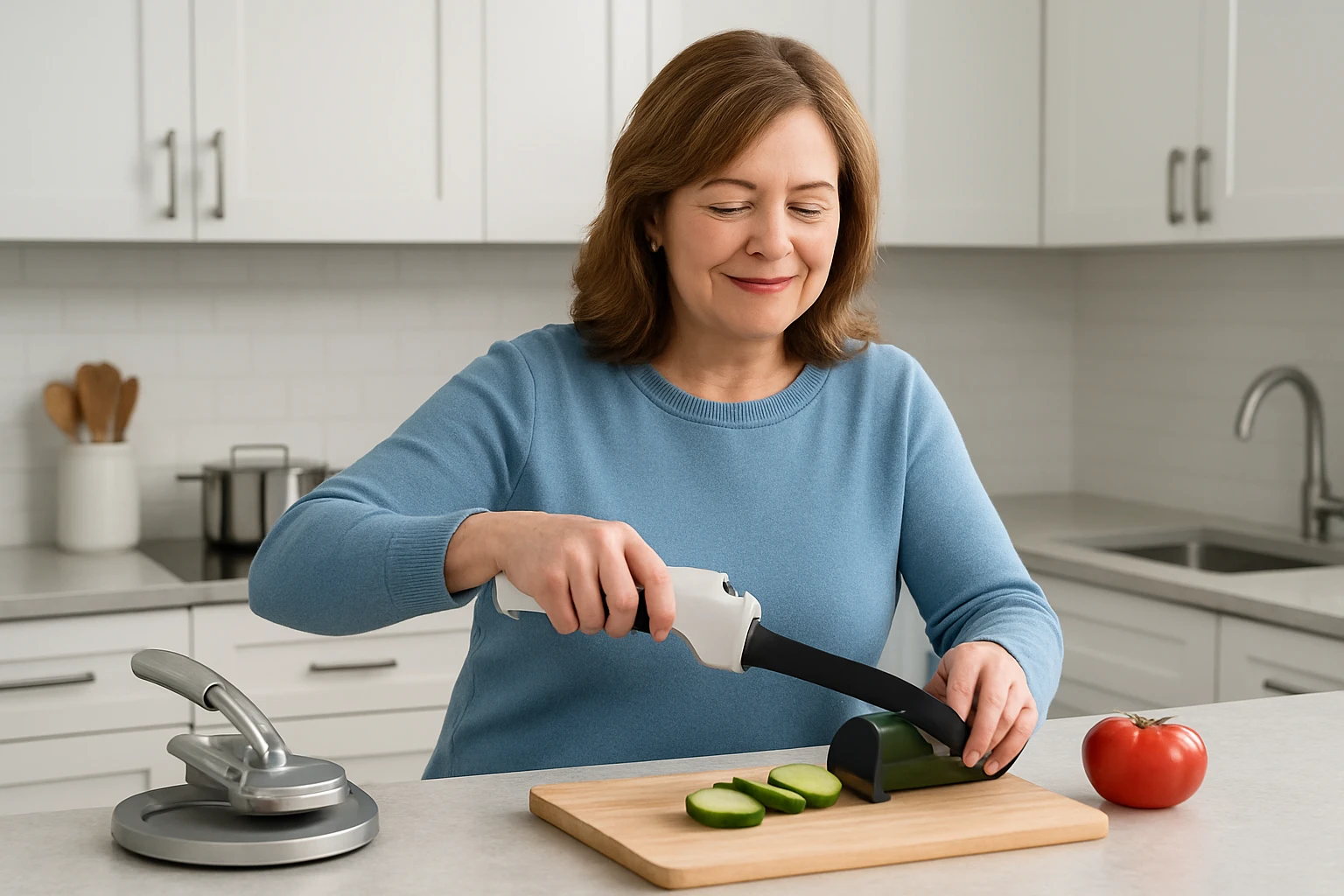
Adaptive kitchen tools such as one‑handed jar openers, specialized cutting boards, and grip‑enhancing tubing can be classified as DME when they enable a beneficiary to perform essential daily activities that would otherwise be impossible due to a diagnosed condition. Physicians must document the medical necessity, and the equipment must be prescribed by a qualified health professional.
State Medicare Administrative Contractors (MACs) interpret the national guidelines, which can result in regional variations. Beneficiaries should verify local policies before submitting a claim. Understanding these nuances helps avoid claim denials and ensures that eligible tools are obtained efficiently.
Key Coverage Concepts
Three primary concepts determine whether adaptive kitchen equipment is reimbursable under Medicare:
- Medical Necessity: The equipment must be prescribed to treat or manage a specific medical condition, such as limited hand strength caused by arthritis or a recent stroke.
- Durable Medical Equipment Definition: The item must be reusable, designed for long‑term use, and primarily serve a medical purpose rather than a purely convenience function.
- Supplier Authorization: The provider must be enrolled in Medicare and submit the claim using the appropriate HCPCS codes.
When these criteria are satisfied, Medicare Part B may cover 80 % of the allowable cost after the beneficiary meets the annual deductible. The remaining 20 % is the beneficiary’s responsibility, unless supplemental coverage reduces the out‑of‑pocket amount.
Recommended Adaptive Kitchen Products
Below are three adaptive kitchen tools that have demonstrated high user satisfaction and meet the durability and functionality standards required for potential Medicare coverage. The first mention of each product includes a direct Amazon link using a friendly name.
One‑Handed Jar Opener Set
Liliaafar Jar Opener Set provides ten transparent adhesive mats that secure jars, cans, and bottles to any surface, allowing a user to twist lids with a single hand. The mats are made of polyurethane (PU) and measure approximately 80 mm in diameter, making them portable and easy to store. The product holds a 4.6‑star rating from 21 reviewers, indicating strong performance among individuals with limited hand strength. Priced at $7.59, the set offers an affordable solution for daily kitchen tasks.
- Adhesive pads prevent slipping, ensuring a reliable grip.
- Easy to clean by rinsing under running water.
- Compact size fits in a pocket or backpack.
One‑Handed Food Prep Board
Etac One‑Handed Food Prep Board features built‑in stainless steel spikes and adjustable jaws that hold food, bowls, or graters securely while a user slices, peels, or grates with one hand. The board includes a non‑slip base with suction feet, preventing movement on the countertop. With a 4.3‑star rating from 145 reviews and a price of $69.99, it is a robust option for individuals who require stable food handling during meal preparation.
- Adjustable jaws accommodate various food sizes.
- Dishwasher‑safe construction simplifies cleaning.
- Removable spike plate offers a flat surface when needed.
Foam Grip Tubing Set
Lyforx Foam Grip Tubing Set includes twelve 8‑inch foam tubes with three inner‑diameter options (yellow 0.27 in, red 0.39 in, blue 0.71 in). The tubing can be cut to length and applied to utensils, pens, or tools, providing a comfortable, non‑slip grip for users with arthritis, tremors, or reduced dexterity. The set carries a 4.5‑star rating from 78 reviewers and costs $14.99.
- Water‑resistant coating maintains grip even when wet.
- Easy customization with kitchen scissors.
- Durable material ensures long‑term use.
Comparison and Selection Guide
Choosing the appropriate adaptive kitchen equipment depends on the beneficiary’s specific functional limitations, cooking habits, and budget. The table below compares the three featured products across key dimensions.
| Feature | Liliaafar Jar Opener Set | Etac One‑Handed Food Prep Board | Lyforx Foam Grip Tubing Set |
|---|---|---|---|
| Primary Function | Secure lids for one‑handed opening | Stabilize food while cutting, grating, or peeling | Enhance grip on utensils and tools |
| Price | $7.59 | $69.99 | $14.99 |
| Average Rating | 4.6/5 (21 reviews) | 4.3/5 (145 reviews) | 4.5/5 (78 reviews) |
| Portability | High – fits in pocket | Medium – board size requires countertop space | High – tubes can be stored in a drawer |
| Cleaning Method | Rinse under water | Dishwasher safe | Wipe with damp cloth |
| Potential Medicare Coverage | Possible if prescribed for limited hand strength | Likely if documented as essential for food preparation | Possible for grip assistance with a diagnosed condition |
Beneficiaries with mild hand weakness may find the jar opener set sufficient, while those who require comprehensive food handling should consider the Etac board. Individuals who need enhanced grip on a variety of objects will benefit most from the Lyforx tubing set.
Best Practices & Tips for Obtaining Coverage
To maximize the likelihood of Medicare approval, follow these evidence‑based steps:
- Obtain a Detailed Physician Statement: The prescribing clinician must describe the diagnosed condition, functional limitation, and why the specific adaptive device is medically necessary.
- Use Correct HCPCS Codes: For example, the jar opener may be coded under E0600 (assistive device for personal use), while the cutting board could fall under E0650 (kitchen adaptive equipment). Verify the exact code with the supplier.
- Select a Medicare‑Enrolled Supplier: Only suppliers with a valid National Provider Identifier (NPI) can submit claims on behalf of beneficiaries.
- Submit Documentation Promptly: Claims should be filed within 12 months of the prescription date to avoid denial due to timeliness.
- Appeal Denials When Necessary: If a claim is denied, beneficiaries have the right to request a reconsideration within 60 days, providing additional medical records if needed.
Beneficiaries should also explore supplemental insurance plans that may cover the 20 % coinsurance, reducing out‑of‑pocket expenses.
Frequently Asked Questions
- 1. Does Medicare Part A ever cover adaptive kitchen equipment?
- No. Medicare Part A primarily covers inpatient hospital services, skilled nursing facility care, and hospice. Adaptive kitchen equipment is addressed under Medicare Part B when it qualifies as durable medical equipment.
- 2. Can a caregiver purchase the equipment on behalf of the beneficiary?
- Yes. A caregiver may purchase the item and submit the claim using the beneficiary’s Medicare information, provided the supplier is Medicare‑enrolled and the claim includes the physician’s prescription.
- 3. Are over‑the‑counter adaptive tools automatically covered?
- No. Over‑the‑counter items are covered only when a physician documents medical necessity and the supplier submits the appropriate HCPCS code.
- 4. What documentation is required for the claim?
- The claim must include a physician’s order, a description of the medical condition, the functional limitation, and the specific adaptive device prescribed.
- 5. How long does the approval process take?
- Processing time varies by MAC but typically ranges from two to four weeks after the claim is received.
- 6. Can beneficiaries receive multiple adaptive devices in one claim?
- Yes, if each device is separately documented as medically necessary for distinct functional limitations.
- 7. What if the device is deemed “non‑medical” by Medicare?
- Beneficiaries may consider alternative funding sources such as state assistive technology programs, charitable organizations, or Medicaid waivers.
Conclusion
Medicare can provide substantial financial assistance for adaptive kitchen equipment when the items are medically necessary, meet the durable medical equipment definition, and are prescribed by a qualified health professional. Understanding the eligibility criteria, proper documentation, and correct billing codes empowers beneficiaries to obtain essential tools that promote independence and safety in the kitchen. By following the best‑practice recommendations and selecting products that align with individual needs, beneficiaries can enhance their quality of life while managing out‑of‑pocket costs effectively.
Products Featured in This Guide
Liliaafar Jar Opener Set
Price: $7.59 | Rating: 4.6/5 (21 reviews)
Featured because it offers a low‑cost, portable solution for individuals with limited hand strength, enabling one‑handed lid opening and meeting Medicare’s durable medical equipment criteria when prescribed.
Etac One-Handed Food Prep Board
Price: $69.99 | Rating: 4.3/5 (145 reviews)
Featured because it provides comprehensive food‑preparation stability for users with reduced mobility, and its durable construction aligns with Medicare’s coverage standards for adaptive kitchen equipment.
Lyforx Foam Grip Tubing Set
Price: $14.99 | Rating: 4.5/5 (78 reviews)
Featured because it offers customizable grip enhancement for a wide range of utensils, supporting individuals with arthritis or tremors, and can be justified as medically necessary under Medicare guidelines.