How to Create a Color‑Coded Cooking System for Dementia: Step‑by‑Step Guide for Safer, Easier Meal Prep
Introduction
Creating a kitchen environment that reduces confusion and promotes safety is essential when caring for a person with dementia. This guide explains how to develop a color‑coded cooking system that simplifies meal preparation, minimizes cross‑contamination, and supports independence. Readers will learn how to select appropriate tools, arrange them logically, and train caregivers to use the system consistently. By following the steps, one can transform a chaotic workspace into a structured, reassuring setting for both the caregiver and the individual with dementia.
What You’ll Need
- Amazon Basics 12-Piece Knife Set
- Fotouzy 7-Piece Cutting Board Mats
- Aichoof Color‑Coded Cutting Boards
- Astercook 12-Piece Knife Set
- Cooler Kitchen 6-Pack Cutting Mats
Step 1: Assess Kitchen Layout and Plan the Color‑Coding Scheme
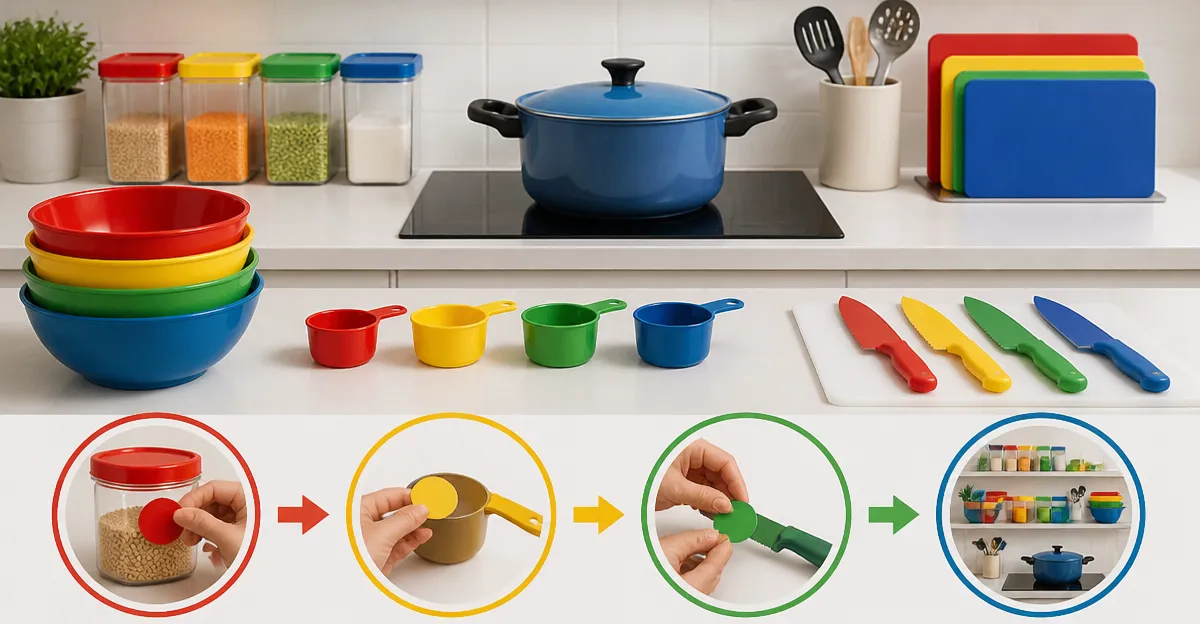
Begin by evaluating the existing kitchen layout. Measure countertop space, note the location of the sink, stove, and storage cabinets, and identify areas where clutter frequently accumulates. Create a simple diagram that marks zones for cutting, mixing, and plating. Choose a color palette that aligns with the user’s visual preferences; high‑contrast colors such as red, green, blue, and yellow are often easiest for individuals with cognitive decline to differentiate. Assign each color to a specific food group – for example, red for raw meat, green for vegetables, blue for fish, and yellow for cooked foods. This plan will serve as the foundation for the subsequent organization steps.
Step 2: Introduce Color‑Coded Knives
Knives are the most critical tools in a kitchen, and using a color‑coded set reduces the risk of selecting the wrong blade for a given task. The Amazon Basics 12-Piece Knife Set offers a practical solution. Each knife features an ergonomic handle and a non‑stick color coating that matches its designated food group. The set includes a paring knife, utility knife, Santoku knife, carving knife, chef’s knife, and bread knife, all accompanied by matching blade guards for safe storage. At a price of $19.96 and a rating of 4.7 stars from 26,381 reviews, the set provides excellent value for caregivers on a budget. The distinct colors enable quick identification, which is essential when memory recall is impaired.
For households that desire a more premium feel, the Astercook 12-Piece Knife Set presents an alternative. Its anti‑rust coating and vibrant color‑coded handles protect the blades while offering a professional appearance. Priced at $16.99 with a 4.7‑star rating from 1,685 reviews, it delivers comparable functionality at a slightly lower cost. Both sets include blade guards, which prevent accidental exposure when the knives are stored in drawers.
When selecting a knife set, consider the following criteria: blade material (stainless steel for durability), handle comfort (ergonomic design reduces fatigue), and the presence of a color‑coding system (prevents cross‑use). By standardizing the knives, one can train the person with dementia to reach for the correct tool without verbal prompts.
Step 3: Deploy Color‑Coded Cutting Boards and Mats
Cutting surfaces must also follow the color‑coding plan to avoid cross‑contamination. The Fotouzy 7-Piece Cutting Board Mats are flexible, dishwasher‑safe, and feature food icons that reinforce the color association. Each mat measures 12"×15" and includes a waffle‑grip back that prevents slipping on wet countertops. At $16.99 and a 4.6‑star rating from 7,228 reviews, the mats are affordable and durable. The set includes red for meat, green for vegetables, blue for fish, and yellow for fruit, directly matching the knife colors.
If a more rigid board is preferred, the Aichoof Color‑Coded Cutting Boards provide a thicker, sturdier option. The boards include a built‑in juice groove to catch liquids and silicone corners for a non‑slip grip. Priced at $34.99 with a 4.7‑star rating from 2,573 reviews, they are slightly more expensive but offer increased stability for heavy chopping tasks. The set also comes with a ventilated holder, which keeps the boards dry and organized when not in use.
For caregivers who need portable solutions, the Cooler Kitchen 6-Pack Cutting Mats are thin, flexible, and foldable. Their 1 mm thickness allows them to be rolled into a funnel for direct transfer of chopped ingredients into pots. At $9.99 and a 4.4‑star rating from 16,335 reviews, they represent the most economical option while still providing color‑coded safety.
When arranging the boards, place each mat or board in a dedicated drawer or on a labeled rack. Use the food icons as visual cues, and keep the corresponding knives nearby. This spatial consistency helps the individual with dementia develop a habit of selecting the correct combination without reliance on memory.
Step 4: Organize Storage and Labeling Systems
After acquiring the color‑coded tools, create a storage system that reinforces the visual cues. Install a magnetic strip or a utensil drawer organizer to hold the knives by their colored handles. Position the cutting boards in a lower cabinet with clear, color‑coded bins that match the mat colors. Label each bin with both the color and a simple word such as “Meat” or “Veggies.” Use large, sans‑serif fonts to enhance readability for individuals with visual impairments.
Consider adding a laminated quick‑reference guide near the stove. The guide should display each color, the associated food group, and the corresponding knife and board. This reference reduces the need for verbal instructions and empowers the caregiver to intervene only when necessary.
Regularly inspect the storage area for wear. Replace any knife that shows signs of dullness, as a dull blade requires more force and increases the risk of accidental cuts. Similarly, examine the cutting boards for cracks or warping, which can harbor bacteria.
Step 5: Train Caregivers and the Person with Dementia
Training is essential to ensure the system functions as intended. Conduct a brief demonstration that walks through each step of meal preparation, emphasizing the color cues. Allow the person with dementia to practice selecting the correct knife and board under supervision. Reinforce positive behavior with verbal praise and gentle correction when an error occurs.
Document the routine in a simple checklist that includes: (1) choose the appropriate board, (2) select the matching knife, (3) clean the board after use, and (4) store the knife in its guard. Place the checklist on the refrigerator door where it is easily visible.
When multiple caregivers are involved, ensure that each individual receives the same training and has access to the quick‑reference guide. Consistency across caregivers prevents confusion and maintains the integrity of the color‑coded system.
Step 6: Maintain and Review the System Regularly
Periodic review is necessary to adapt the system to changing needs. Schedule a monthly check‑in to assess whether the colors remain distinct for the individual, especially if vision changes occur. Replace any worn or discolored tools promptly to preserve the visual contrast.
In addition to visual maintenance, monitor hygiene. Run the cutting boards through the dishwasher after each use, and sanitize the knives according to manufacturer instructions. For the Amazon Basics 12-Piece Knife Set and Astercook 12-Piece Knife Set, both claim dishwasher safety, but hand‑washing the blades can extend their lifespan.
Finally, solicit feedback from the person with dementia and the primary caregiver. Adjust the color assignments if certain hues are confusing, and consider adding tactile markers (such as rubber grips) for additional reinforcement.
Tips & Pro Tips
- Use high‑contrast colors that are easily distinguishable for individuals with visual processing challenges.
- Keep the kitchen lighting bright and free of glare to enhance color perception.
- Rotate the cutting boards weekly to prevent uneven wear on a single surface.
- Pair the color‑coded system with a simple verbal cue, such as “Red for meat,” to reinforce learning.
- Store knives with blade guards engaged at all times to avoid accidental injuries.
Troubleshooting
| Problem | Possible Cause | Solution |
|---|---|---|
| Individual selects the wrong board | Colors appear similar under kitchen lighting | Introduce a supplemental label with a bold word or add a textured edge to each board. |
| Knives become dull quickly | Using the wrong knife for a task or excessive force | Re‑educate on proper knife selection and consider a sharpening stone for periodic maintenance. |
| Boards slip on the counter | Waffle‑grip backing worn | Replace the board or add a silicone mat underneath for extra traction. |
Conclusion
The color‑coded cooking system described herein offers a structured, visual approach to meal preparation for individuals living with dementia. By integrating color‑coded knives, cutting boards, and organized storage, one reduces the likelihood of cross‑contamination and accidental injury. Consistent training, regular maintenance, and periodic reviews ensure that the system remains effective as needs evolve. Caregivers are encouraged to adopt these practices to foster a safer, more independent kitchen environment.
Products Mentioned in This Guide
Frequently Asked Questions
Why is a color‑coded cooking system helpful for people with dementia?
It reduces visual confusion, signals the purpose of each tool, and promotes safer, more independent meal preparation.
How should I choose colors for knives, cutting boards, and utensils?
Assign distinct, high‑contrast colors to each food group (e.g., red for meat, green for vegetables) and keep the palette consistent throughout the kitchen.
What are the essential items needed to set up a color‑coded system?
A set of color‑coded knives, matching cutting board mats, labeled storage containers, and a simple visual guide for caregivers.
How can caregivers train someone with dementia to use the system?
Start with short, repeated demonstrations, use clear visual labels, and reinforce correct use with positive feedback.
Can the color‑coded system help prevent cross‑contamination?
Yes, by assigning separate colors to raw and ready‑to‑eat foods, it makes it easy to keep surfaces and tools distinct, reducing contamination risk.