How to Design a One-Handed Meal Prep Station Layout: Step‑by‑Step Guide to an Accessible, Efficient Kitchen
Introduction
One‑handed cooking can feel daunting when the kitchen is not arranged for ease of movement. This guide teaches readers how to design a meal‑prep station that minimizes strain, maximizes safety, and supports independence. By following the steps, one will learn to select the right tools, position work zones strategically, and create a workflow that reduces the need for two‑handed maneuvers. The result is a kitchen that empowers individuals with limited hand strength, arthritis, or temporary injuries to prepare meals confidently.
What You'll Need
- Adaptive jar opener and mixer – Cook-Helper One-Handed Jar Opener & Mixer
- Adaptive cutting board with built‑in peeler and grater – JFNoraiva Adaptive Cutting Board
- Clip‑on silicone strainer for hands‑free draining – Kitchen Gizmo Snap N' Strain Silicone Strainer
- Anti‑slip kitchen aid mats – JINUPHION One‑Handed Kitchen Aid Set
- Compact jar and bottle opener – Otstar Jar & Bottle Opener
- Basic kitchen utensils, containers, and a sturdy countertop.
Step 1: Assess Your Kitchen Space and Accessibility Needs
Begin by measuring the countertop length, depth, and the distance between the sink, stove, and refrigerator. Identify any obstacles such as low cabinets, protruding handles, or uneven flooring that could impede one‑handed movement. Record the height of the most frequently used work surface; an optimal height is between 34 and 36 inches for most adults, but a slight adjustment may be required for wheelchair users. This assessment creates a baseline that informs the placement of each adaptive tool.
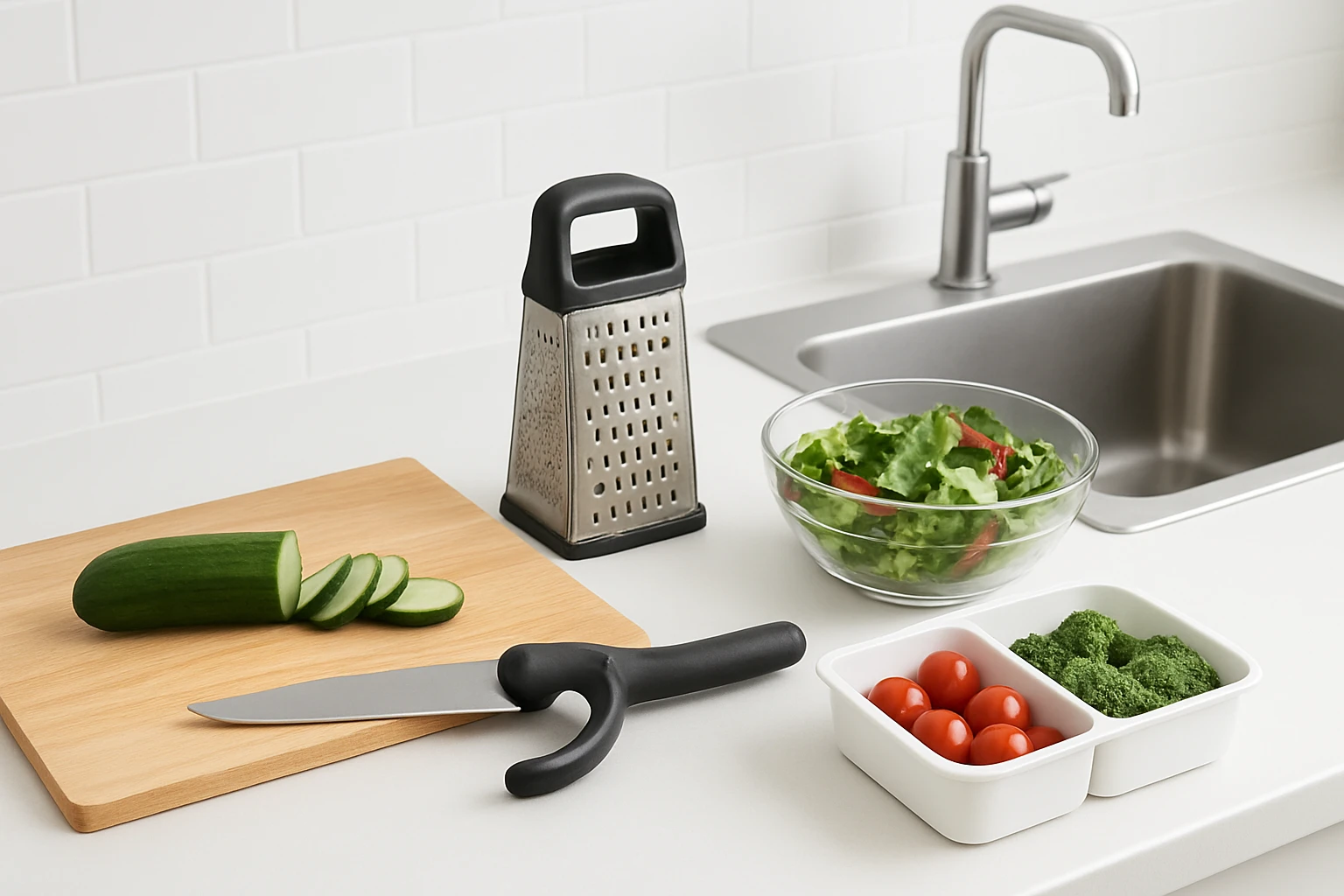
During the assessment, note the locations where jars, bottles, and heavy pots are typically opened. Positioning these zones near the sink reduces the need to carry wet items across the kitchen. Likewise, locate the cutting board close to the stove to allow a seamless transition from chopping to cooking. By mapping these zones, you can design a logical flow that eliminates back‑and‑forth motion.
Finally, consider lighting and visual accessibility. Bright, shadow‑free illumination on the work surface reduces eye strain and makes it easier to see small labels on jars. Adjustable under‑cabinet LED strips are inexpensive and can be installed without professional help.
Step 2: Create a Stable, Anti‑Slip Surface
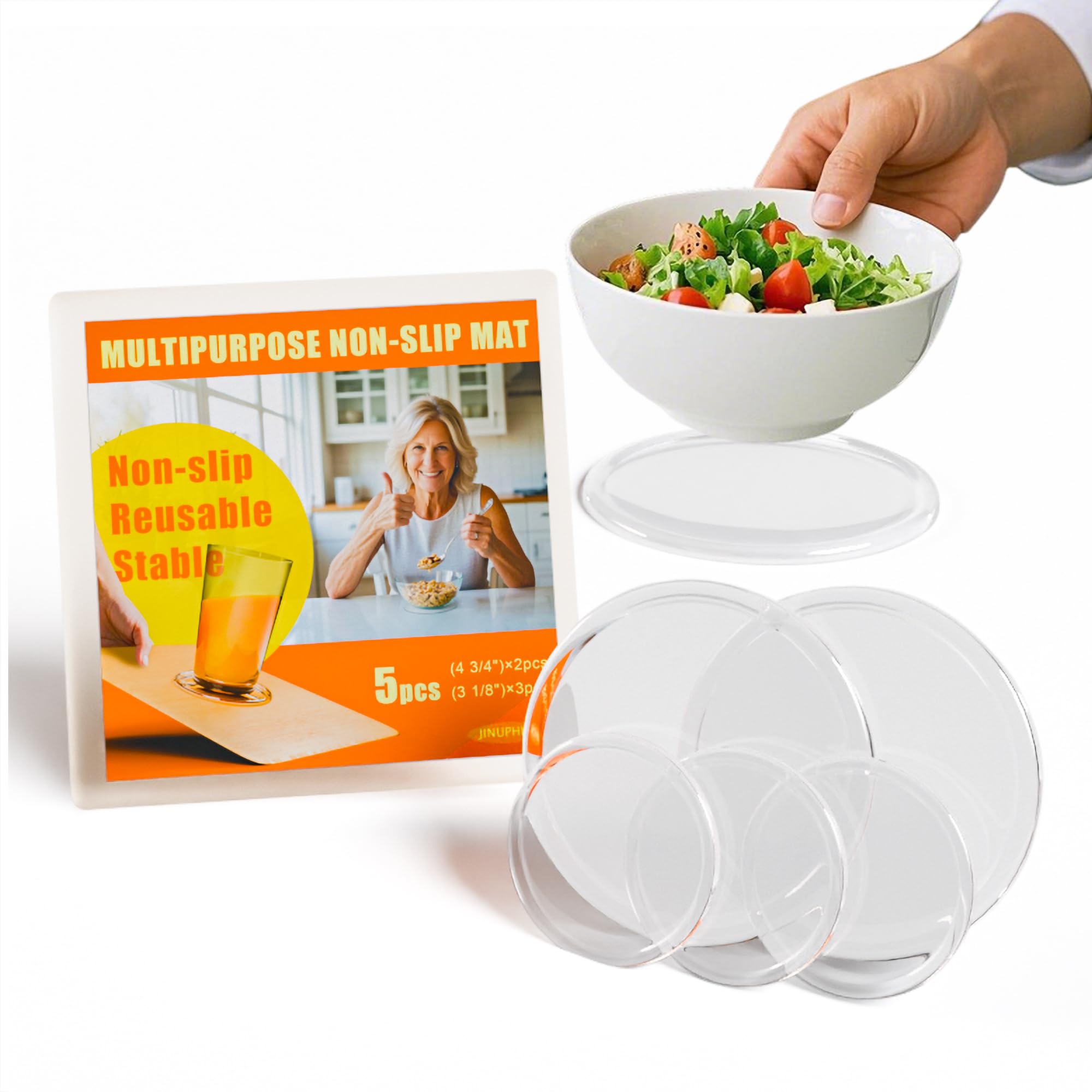
A stable surface prevents containers from sliding while you twist lids or slice vegetables. Place the JINUPHION One‑Handed Kitchen Aid Set under plates, bowls, and cutting boards to secure them to the countertop. Each mat features a transparent, high‑traction polymer that adheres without leaving residue, making it ideal for both ceramic and glass dinnerware.
The set includes five reusable mats, providing coverage for multiple workstations simultaneously. Because the mats are thin, they do not raise the height of the surface, preserving ergonomic alignment. The anti‑slip property also reduces the risk of accidental spills, a common concern for individuals with limited grip strength.
Alternative solutions such as permanent under‑cabinet suction cups exist, but they require installation and can be difficult to reposition. The JINUPHION mats are portable, allowing you to re‑configure the layout as needed. Their price of $10.99 and 4.5‑star rating (48 reviews) make them a cost‑effective safety upgrade.
Step 3: Organize a Dedicated Jar and Bottle Opening Zone
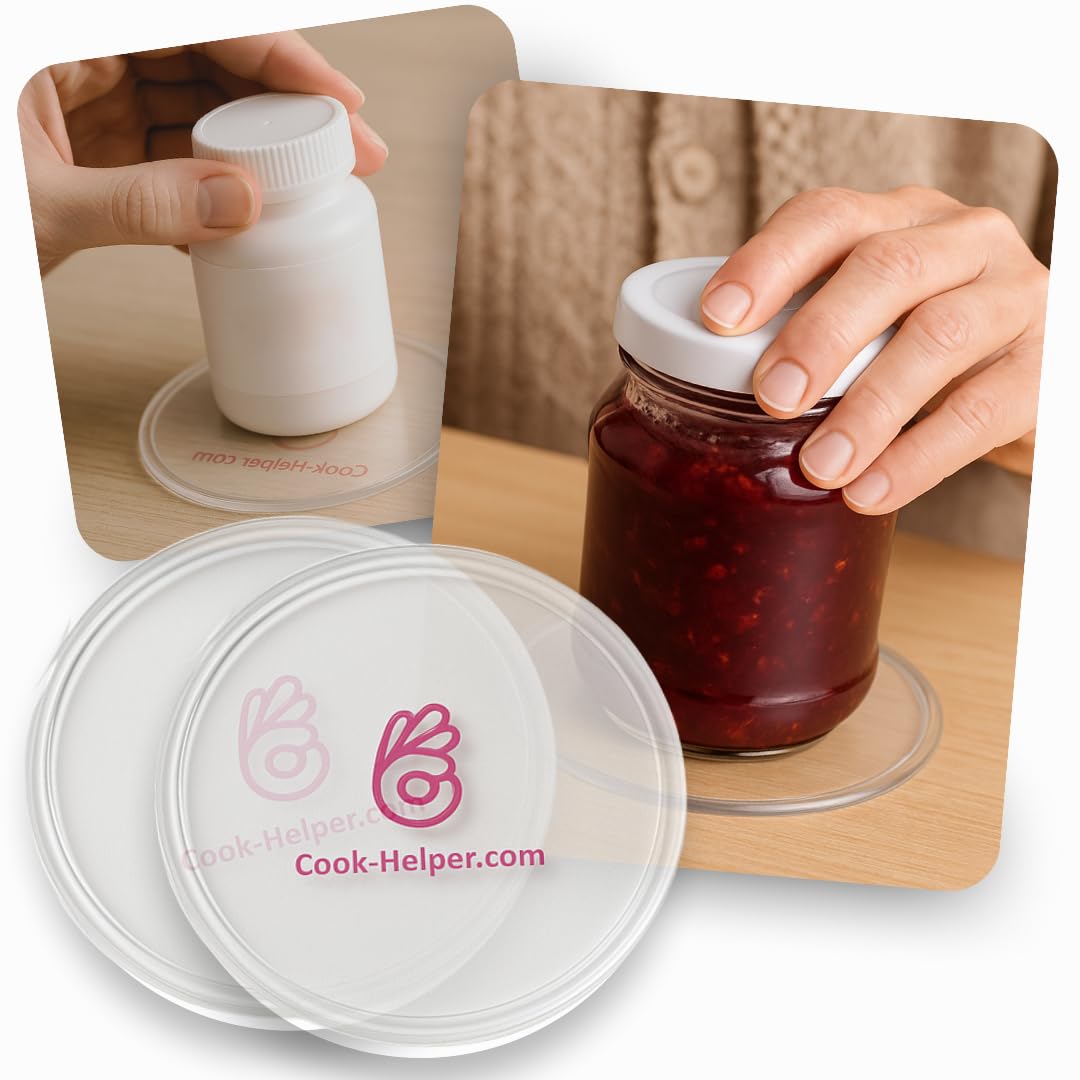
Open jars and bottles are among the most challenging tasks for one‑handed cooks. Allocate a corner of the countertop for this activity and keep the necessary tools within arm’s reach. The Cook-Helper One‑Handed Jar Opener & Mixer serves as a multifunctional base; its rubber pad holds containers securely while the built‑in mixer allows you to stir ingredients without a second hand.
This device costs $9.99, has a 4.4‑star rating from 239 reviews, and is praised for its ability to grip jars of various sizes. By placing the jar opener on the anti‑slip mat, you create a stable platform that prevents the container from rotating. The mixer attachment can be used to blend sauces directly in the bowl, eliminating the need for a separate hand‑held whisk.
For lids that are particularly stubborn, the Otstar Jar & Bottle Opener provides additional leverage. Its long handle and rubber lining create a firm grip, while the eight circular openings accommodate lids from 1 to 3 inches in diameter. Priced at $6.80 with a 4.3‑star rating (17,249 reviews), it is a budget‑friendly complement to the Cook‑Helper base.
By grouping these tools, you reduce the number of trips to the cabinet and keep the workflow smooth. The combination of a stable base and a lever‑assist opener addresses both stability and strength limitations.
Step 4: Set Up an Adaptive Cutting and Preparation Area
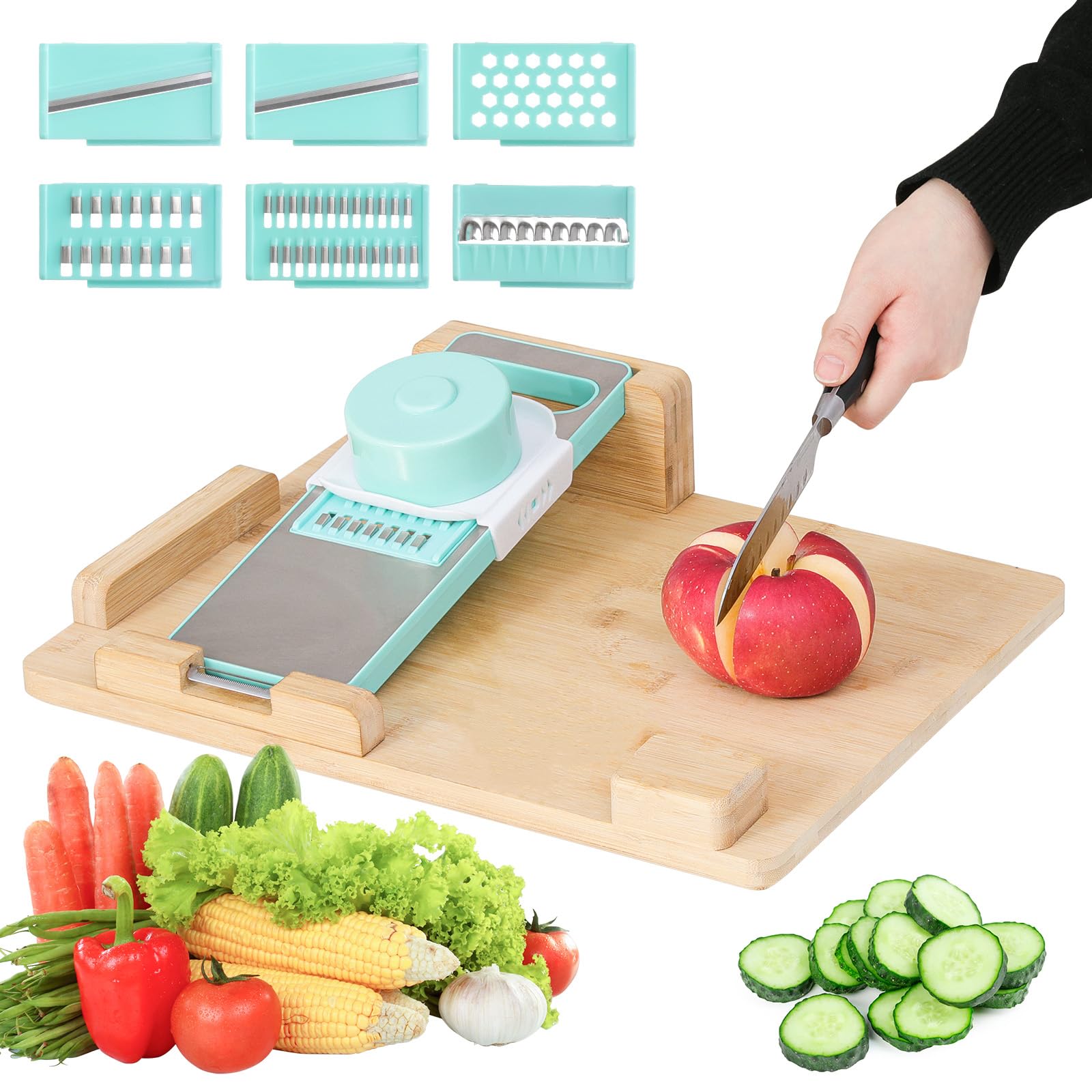
Chopping vegetables with one hand requires a board that can hold food securely. The JFNoraiva Adaptive Cutting Board incorporates spikes, a non‑slip bottom, and an integrated peeler and grater, allowing you to slice, peel, and grate without repositioning the board.
Constructed from 100% sustainable bamboo, the board is both eco‑friendly and gentle on knife edges. Its six interchangeable holders enable quick changes between diced, julienned, or grated textures. The built‑in hand guard protects the user’s fingers when using the grater, a feature highlighted in the product description.
At $42.98 and a 4.6‑star rating from 11 reviews, the board is an investment that pays off in safety and efficiency. Compared with a standard board, the adaptive features reduce the need for a second hand to steady the food, thereby decreasing the risk of cuts. Place the board on the JINUPHION mat to ensure it remains stationary during vigorous chopping.
After use, the bamboo surface can be maintained with a light coating of mineral oil, as recommended by the manufacturer. This simple upkeep prevents cracking and prolongs the board’s lifespan.
Step 5: Install a Hands‑Free Draining System
Draining pasta, vegetables, or rinsed fruits often requires holding a colander over a sink, which can be difficult with one hand. The Kitchen Gizmo Snap N' Strain Silicone Strainer clips directly onto the rim of pots and pans, freeing the hand for stirring or seasoning.
This silicone strainer tolerates temperatures up to 400°F (230°C), making it safe for hot boiling water. Its collapsible design folds flat for storage, a benefit for kitchens with limited cabinet space. The universal fit ensures compatibility with most cookware, eliminating the need for multiple strainers.
Priced at $16.99 with a 4.4‑star rating from over 41,000 reviews, the strainer is a proven kitchen staple. By attaching it to the pot, you can tilt the vessel to pour out liquid while the strainer holds solids in place. This reduces the reliance on a second hand and minimizes the chance of spills.
Combine the strainer with the anti‑slip mat for extra stability when the pot is moved from the stove to the sink. The mat prevents the pot’s base from sliding, especially when the silicone clip is engaged.
Step 6: Optimize Storage and Reachability
Store the adaptive tools within easy reach to maintain a fluid workflow. Use pull‑out drawers or low shelves that can be accessed without bending. Place the Cook‑Helper jar opener and Otstar opener on a dedicated shelf near the sink, while the cutting board and strainer reside on the adjacent countertop.
Label each storage spot with large, high‑contrast text or tactile symbols. This assists users with visual impairments and reduces the time spent searching for tools. Consider using clear containers for dry goods so that the contents are visible without opening the lid.
When possible, keep frequently used spices and utensils on a rotating carousel that can be turned with one hand. This eliminates the need to reach across the counter, a motion that can strain the shoulder.
Finally, maintain a clutter‑free environment. Excess items on the work surface can obstruct movement and increase the likelihood of accidents. Regularly assess the station and remove any unnecessary objects.
Step 7: Test the Workflow and Make Adjustments
After arranging the station, conduct a trial run by preparing a simple meal such as a stir‑fried vegetable medley. Observe each movement: opening a jar, chopping, cooking, and draining. Note any points where you must over‑reach or where a tool feels unstable.
If a step feels cumbersome, reposition the corresponding tool. For example, if the jar opener is too far from the sink, move it closer to reduce carrying distance. Adjust the height of the cutting board if your elbows are raised too high, which can cause shoulder fatigue.
Solicit feedback from the primary user or a caregiver. Their perspective can reveal hidden challenges, such as the need for a larger anti‑slip mat or a different grip size on the jar opener. Iterate until the workflow feels natural and requires minimal effort.
Document the final layout with a simple diagram or photo. This reference helps maintain consistency if the kitchen is rearranged in the future.
Tips & Pro Tips
- Use a lightweight, cordless electric mixer on the Cook‑Helper base for tasks that require prolonged stirring.
- Apply a thin layer of silicone spray to the JINUPHION mats periodically to preserve their adhesive quality.
- Store the Kitchen Gizmo strainer in a drawer with a silicone sleeve to protect its clips from deformation.
- When using the Otstar opener, position the handle toward the body to maximize leverage and reduce wrist strain.
- Consider a pull‑out trash bin positioned near the prep area to avoid trips to a distant waste container.
Troubleshooting
| Problem | Possible Cause | Solution |
|---|---|---|
| Jar lid will not turn | Insufficient grip on the rubber pad | Ensure the JINUPHION mat is clean; replace if the adhesive is worn. |
| Board slides during chopping | Non‑slip bottom compromised | Wipe the bottom with a dry cloth; apply a small amount of silicone spray. |
| Strainer clips detach | Clip not aligned with pot rim | Re‑position the clip so it snaps firmly; choose a pot with a thicker lip if needed. |
| Tools feel too far apart | Layout not optimized for workflow | Re‑measure distances and move the most used items within a 24‑inch radius of the sink. |
Conclusion
Designing a one‑handed meal‑prep station involves thoughtful layout, strategic placement of adaptive tools, and attention to stability. By following the seven steps, one can create a kitchen that supports independence, reduces strain, and enhances safety. The recommended products—Cook‑Helper Jar Opener, JFNoraiva Cutting Board, Kitchen Gizmo Strainer, JINUPHION Anti‑Slip Mats, and Otstar Opener—provide practical solutions that complement a well‑planned workflow. Even without purchasing every item, the principles outlined here empower users to adapt their existing equipment for greater accessibility.
Take the time to assess, arrange, and test your station, and you will discover a more enjoyable cooking experience that accommodates one‑handed operation without compromising efficiency.
Products Mentioned in This Guide
Frequently Asked Questions
What are the essential tools for a one‑handed meal prep station?
Key tools include a one‑handed jar opener/mixer, an adaptive cutting board with built‑in peeler and grater, and a clip‑on silicone strainer for hands‑free draining.
How should work zones be arranged to minimize strain?
Place frequently used items like knives, cutting boards, and appliances within easy reach of the dominant hand and keep the sink and stove in a logical flow to avoid back‑and‑forth movements.
Can a one‑handed kitchen layout improve safety?
Yes, by reducing the need for two‑handed maneuvers, using stable, non‑slip surfaces, and keeping clear pathways, the risk of spills and injuries is significantly lowered.
Is it necessary to remodel the entire kitchen for one‑handed cooking?
No, you can start with portable accessories and strategic placement of tools without major renovations, gradually adapting the space as needed.
How does a one‑handed station support people with arthritis or temporary injuries?
It provides ergonomic tools and a streamlined workflow that lessen grip force and repetitive motions, enabling independent meal preparation.