How to Document Adaptive Kitchen Purchases for Insurance Claims: Step‑by‑Step Guide to Maximize Approval and Reimbursement
Introduction
Insurance providers require clear, organized evidence when evaluating claims for adaptive kitchen modifications. This guide explains how to capture, organize, and submit documentation that demonstrates the necessity and value of each purchase. Readers will learn how to photograph items, retain receipts, and present supporting statements that increase the likelihood of full reimbursement. By following the procedures outlined below, one can avoid common delays and ensure that the claim process proceeds smoothly.
What You'll Need
- High‑resolution camera or smartphone
- Dedicated filing system (physical folder or digital cloud storage)
- Original purchase receipts and warranty cards
- Product specifications and safety certifications
- Medical or occupational therapist recommendation letters
- Recommended adaptive tools (see product recommendations)
Step 1: Verify Eligibility and Obtain Professional Recommendations
The first step is to confirm that the adaptive kitchen items qualify under the policy's medical equipment or home modification clause. One should request a written recommendation from a qualified professional, such as an occupational therapist, who can describe how each item mitigates a specific functional limitation. This documentation establishes medical necessity, which is a core requirement for claim approval.
When the therapist recommends an anti‑fatigue mat for prolonged standing, the StepRite Kitchen Mats provide the exact feature set described. The mats are 0.4‑inch thick, water‑resistant, and have a non‑slip bottom, reducing joint strain for individuals with arthritis. Price: $22.99; Rating: 4.4/5 from 9,349 reviews.
Similarly, a therapist may advise a cutting surface that prevents cross‑contamination. The Sumzzz Titanium Cutting Board offers a double‑sided, food‑grade surface that separates raw meat from vegetables, satisfying hygiene standards. Price: $29.55; Rating: 4.4/5 from 7,530 reviews.
Collect these letters and keep them with the product specifications for later attachment to the claim packet.
Step 2: Capture High‑Quality Visual Evidence
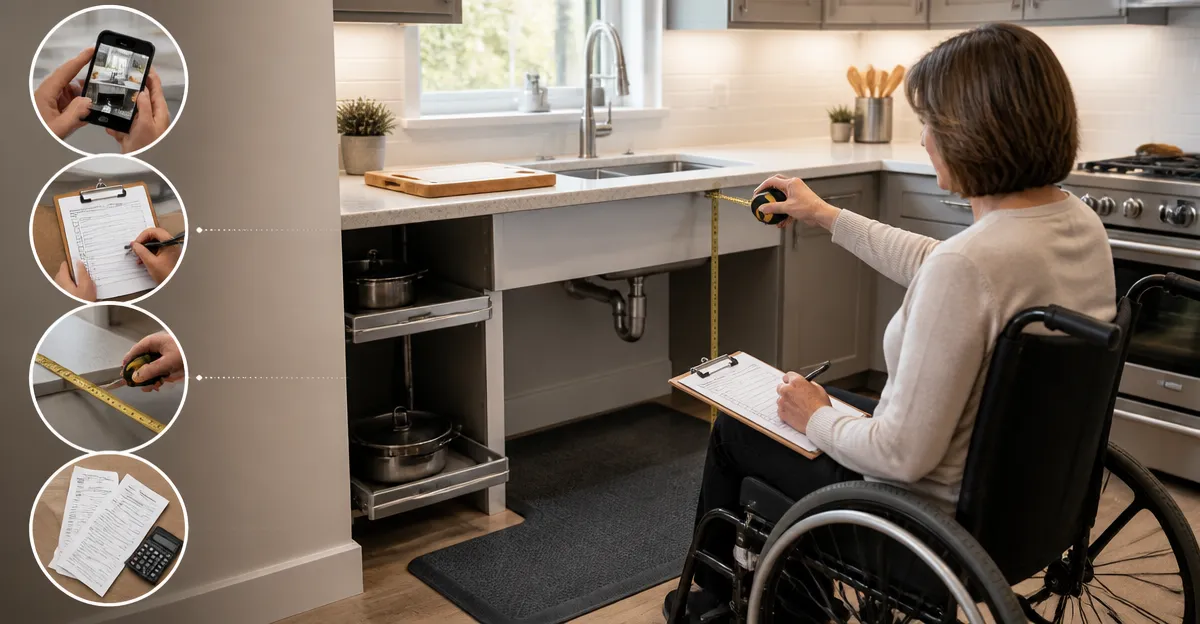
Insurance adjusters rely heavily on photographs to verify that the purchased items are installed and functional. Use a well‑lit environment, and take multiple angles: front, side, and a close‑up of any safety features. For each adaptive tool, include a photo of the product in use within the kitchen setting.
When photographing the StepRite Kitchen Mats, place them in front of a stovetop or prep area to illustrate the anti‑fatigue benefit. The non‑slip backing should be visible against the floor surface. For the Sumzzz Titanium Cutting Board, capture both sides—one with the titanium surface and the other with the polypropylene side—highlighting the built‑in juice groove.
Store the images in a dated folder named "Insurance_Claim_2026" and create a PDF index that links each photo to the corresponding receipt.
Remember to back up the files to a cloud service to prevent loss.
Step 3: Organize Receipts, Warranty Cards, and Product Documentation
Every purchase must be accompanied by an original receipt that shows the date, vendor, product name, and total cost. Scan each receipt at 300 dpi and save it as a PDF. If the retailer provides an electronic receipt, download the PDF directly.
For the Astercook Bamboo Cutting Boards, include the packaging insert that lists the deep‑carbonized bamboo construction, reversible design, and storage stand. This information demonstrates durability and space‑saving benefits, which are relevant to the claim evaluator.
Price: $24.99; Rating: 4.5/5 from 2,426 reviews. The set includes three sizes (15×10, 12×8, 9×6 inches) and a stand, making it a comprehensive solution for varied kitchen tasks.
Place each receipt and its corresponding product sheet together in a clear sleeve, then label the sleeve with the product name and purchase date.
Step 4: Document Installation and Use Cases
Adjusters often request proof that the adaptive item is installed correctly and used regularly. Write a brief log that records the date of installation, the location in the kitchen, and a description of how the item improves daily activities. For example, note that the Honmein Double‑Layer Sink Strainers were placed in the kitchen sink on 2026‑04‑12, preventing food debris from clogging the drain and reducing the need for plumber visits.
Price: $5.89; Rating: 4.8/5 from 13,870 reviews. Highlight the stainless‑steel construction and double‑layer safety design, which align with the claim’s safety improvement criteria.
Include a short video (30‑60 seconds) that shows the strainer being lifted out, emptied, and rinsed. This visual proof reinforces the claim that the product is functional and maintained.
Maintain the log in both a physical notebook and a digital spreadsheet for easy reference.
Step 5: Compile the Claim Packet
Most insurers require a single PDF or mailed packet that contains all supporting documents. The packet should be organized in the following order: (1) Cover letter summarizing the claim, (2) Professional recommendation letters, (3) Photographs with index, (4) Receipts and warranty cards, (5) Installation log, (6) Product specifications, and (7) Completed claim form.
When describing the Umite Chef Mixing Bowls, emphasize the airtight lids and non‑slip silicone bottoms, which prevent spills and provide a stable workspace for individuals with limited grip strength. Price: $35.98; Rating: 4.8/5 from 4,959 reviews.
The set includes six bowl sizes, grater attachments, and a brush, allowing the claimant to demonstrate a well‑equipped, safe cooking environment. Attach the product brochure that lists these features.
Before sending, run a final quality check to ensure all hyperlinks are functional, all PDFs are legible, and the total claim amount matches the sum of the receipts.
Step 6: Submit the Claim and Track Its Progress
Upload the compiled PDF through the insurer’s online portal or mail the physical packet to the address provided in the policy documents. Record the submission reference number and the date of submission in the claim log.
Follow up within ten business days by contacting the claims department. Request a written acknowledgment and ask for an estimated timeline for decision. If additional information is requested, provide it promptly to avoid denial.
Maintain copies of all correspondence, as they may be needed for future appeals.
By systematically presenting professional recommendations, visual proof, and organized receipts, one maximizes the probability of a full reimbursement.
Tips & Pro Tips
- Label each product with a unique identifier (e.g., "MAT‑01" for the anti‑fatigue mat) to simplify cross‑referencing between photos and receipts.
- Use a spreadsheet to calculate the total claim amount automatically; include columns for product name, price, tax, and shipping.
- When possible, choose products that come with detailed warranty cards, as these serve as additional proof of purchase and quality.
- Store all digital files in a folder with read‑only permissions to prevent accidental alteration.
- Consider obtaining a notarized statement from the therapist if the policy requires third‑party verification.
Troubleshooting
| Problem | Solution |
|---|---|
| Receipt missing or illegible | Contact the retailer for a duplicate receipt; many online sellers provide PDF copies in order history. |
| Photo quality rejected | Retake photos using natural daylight, ensure the product fills the frame, and avoid shadows on serial numbers. |
| Claim denied for “insufficient documentation” | Review the denial letter, add any missing items (e.g., therapist letter, installation log), and resubmit within the appeal window. |
Conclusion
Documenting adaptive kitchen purchases for insurance reimbursement requires meticulous organization, clear visual evidence, and professional justification. By following the six steps outlined—verification, photography, receipt management, usage documentation, packet compilation, and claim submission—one can present a compelling case that aligns with insurer expectations. The recommended tools, such as the StepRite Kitchen Mats and Umite Chef Mixing Bowls, not only improve daily living but also serve as tangible proof of adaptive modifications. Implement these practices, stay proactive in communication, and maximize the likelihood of full claim approval.
Products Mentioned in This Guide
Frequently Asked Questions
What documentation is required to prove an adaptive kitchen purchase is eligible for insurance reimbursement?
You need high‑resolution photos, original receipts, warranty cards, product specifications, safety certifications, and a medical or occupational therapist’s recommendation letter.
How should I organize my adaptive kitchen claim files for easy review by the insurer?
Create a dedicated folder—physical or cloud‑based—and label each item with its photo, receipt, spec sheet, and supporting recommendation in chronological order.
Do I need professional recommendations before buying adaptive kitchen equipment?
Yes, a signed recommendation from a medical professional or occupational therapist validates the necessity of the modifications and strengthens the claim.
What is the best way to photograph adaptive kitchen items for an insurance claim?
Use a high‑resolution camera, capture the item from multiple angles, include close‑ups of serial numbers or safety labels, and place the item in its intended kitchen location.
How can I avoid common delays when submitting an adaptive kitchen insurance claim?
Submit a complete, organized packet with all required documents, double‑check insurer guidelines, and follow up promptly if additional information is requested.