Introduction
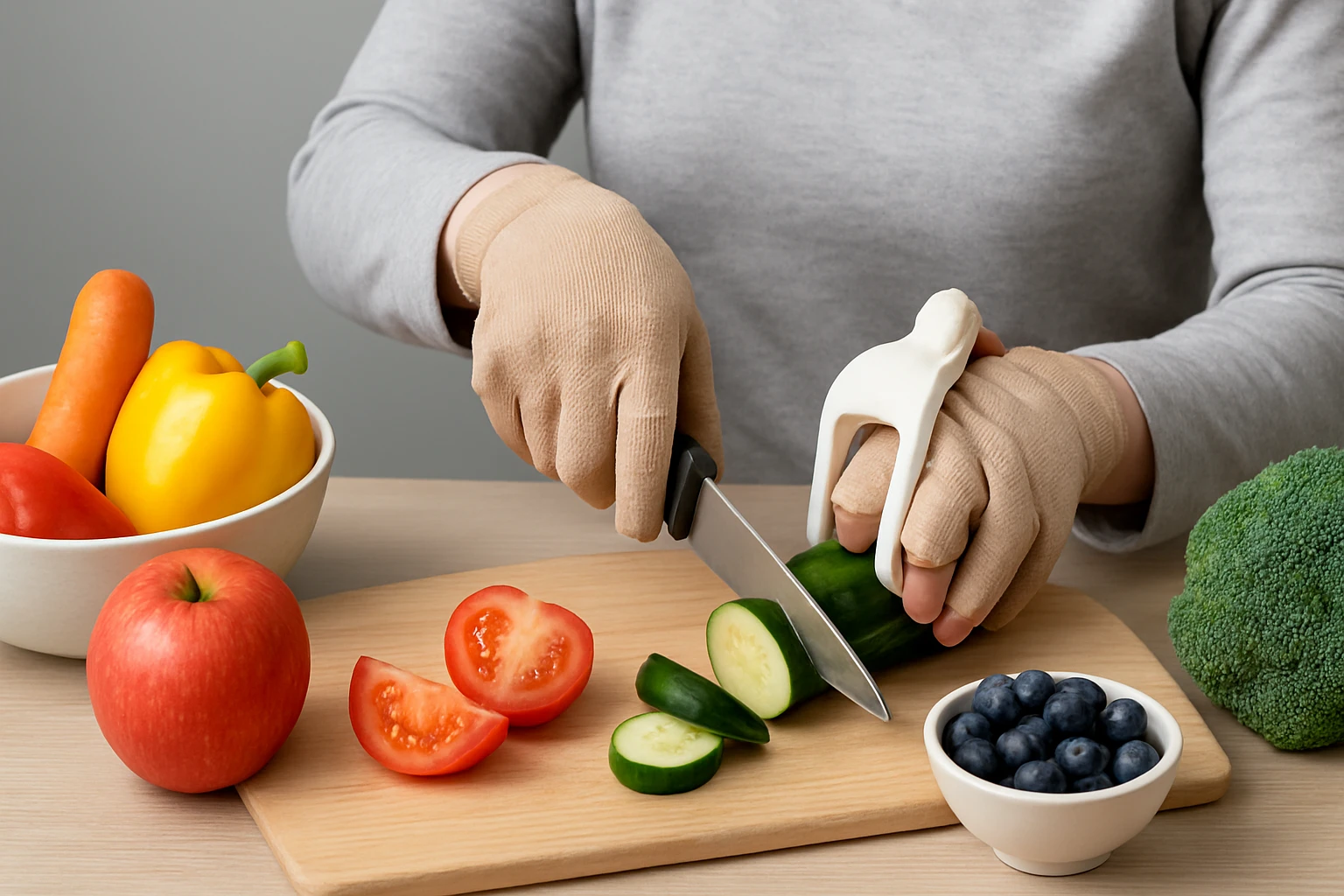
Preparing fresh, seasonal produce can be a rewarding activity that supports health and independence. Individuals with reduced hand strength, coordination challenges, or unilateral mobility often encounter obstacles that discourage regular cooking. This guide explains how to select appropriate tools, apply safe techniques, and adapt each stage of food preparation to accommodate limited dexterity. By following the steps, readers will gain confidence, reduce reliance on assistance, and enjoy the nutritional benefits of home‑cooked meals.
What You’ll Need
- PulPalet One‑Handed Cutting Board – $41.88, 4.1/5 rating (73 reviews)
- Coowolf Ulu Mezzaluna Knife – $21.99, 4.7/5 rating (619 reviews)
- Maxcheck Adaptive Dinnerware Set – $26.99, 4.2/5 rating (131 reviews)
- Crip Up the Kitchen – $24.49, 4.1/5 rating (24 reviews)
Step 1: Gather and Inspect Seasonal Produce
Begin by selecting fresh, in‑season fruits and vegetables that are firm and free of bruises. Wash each item under running water, using a soft brush for produce with skins such as carrots or potatoes. Inspect for any soft spots that could crumble during handling; remove these with a small paring knife or a clean fingertip. Organize the cleaned produce on a stable surface to minimize the need for repeated reaching.
Step 2: Secure the Workspace with a One‑Handed Cutting Board
Place the PulPalet One‑Handed Cutting Board on the countertop, ensuring the silicone feet are flush against the surface. The board’s four stainless‑steel spikes grip fruits, vegetables, and bread securely, allowing a single hand to guide the knife without the item sliding. The removable support fence can be attached when using the built‑in one‑handed vegetable peeler, providing additional stability for cylindrical produce such as cucumbers. Because the board is constructed from natural wood, it offers a sturdy yet gentle cutting surface that can be hung on a hook after use, preserving valuable counter space.
Step 3: Slice and Chop Using an Adaptive Ulu Knife
The Coowolf Ulu Mezzaluna Knife is designed for rocking motions that require minimal wrist extension, reducing strain on weak or arthritic hands. Position the knife’s curved stainless‑steel blade over the secured produce and apply gentle downward pressure while rocking the blade back and forth. This motion distributes cutting force across the blade length, allowing even thin slices of tomatoes, strawberries, or soft cheeses with one hand. The ergonomic enlarged walnut handle offers a comfortable grip, and the included wooden stand provides upright storage, keeping the blade out of the way when not in use. The knife is easy to clean by hand, ensuring hygienic preparation without the need for a dishwasher.
Step 4: Transfer and Serve with Adaptive Dinnerware
After cutting, move the produce to the Maxcheck Adaptive Dinnerware Set. The bowl and plate feature wide‑rim, contoured lips and a non‑slip rubber suction base that adheres to the table, preventing accidental spills when reaching with limited coordination. The included bendable cutlery can be adjusted to a comfortable angle, allowing the user to scoop or spear food without excessive wrist movement. The heavy‑handle design offers additional stability, especially for individuals with tremors. All components are microwave‑safe and dishwasher‑compatible (except the suction cups), simplifying cleanup after the meal.
Step 5: Expand Knowledge with Adaptive Cooking Resources
For deeper insight into cooking strategies tailored to various disabilities, consult Crip Up the Kitchen. This guide provides recipes, preparation techniques, and storage tips that consider physical, mental, and neurodivergent challenges. It also offers suggestions for customizing kitchen layouts, selecting assistive devices, and building confidence in independent cooking. Readers can apply the book’s principles to refine the steps described in this article, creating a personalized workflow that aligns with their unique abilities.
Tips & Pro Tips
- Arrange the cutting board near the edge of the counter to allow easy access for a single hand while keeping a clear path for the other arm.
- Use a bowl of cold water to firm up soft berries before slicing; this reduces crushing and improves slice uniformity.
- When rocking the Ulu knife, keep the blade in contact with the board at all times to maintain control and prevent accidental slips.
- Place a damp kitchen towel under the suction‑base dinnerware to increase adhesion on glossy surfaces.
- Periodically check the board’s spikes for wear; replace them if they become blunt to ensure continued food stability.
Troubleshooting
Problem: The cutting board spikes do not hold soft items such as ripe tomatoes.
Solution: Position a small piece of non‑slip silicone mat beneath the tomato before using the spikes, or use the board’s removable fence to create a shallow groove that cradles the fruit.
Problem: The Ulu knife feels too heavy for prolonged use.
Solution: Alternate between the Ulu and a standard chef’s knife, using the Ulu for tasks that benefit from a rocking motion and the lighter knife for delicate garnishes.
Conclusion
By integrating adaptive tools such as the PulPalet One‑Handed Cutting Board, Coowolf Ulu Mezzaluna Knife, Maxcheck Adaptive Dinnerware Set, and the instructional resource Crip Up the Kitchen, individuals with limited dexterity can safely and efficiently prepare seasonal produce. The outlined steps emphasize stability, ergonomic motion, and spill‑preventing servingware, all of which contribute to greater independence in the kitchen. Readers are encouraged to experiment with these techniques, adjust the workflow to personal comfort, and enjoy the satisfaction of creating fresh meals at home.
Products Mentioned in This Guide
Frequently Asked Questions
What adaptive tools help people with limited hand strength chop vegetables safely?
One‑handed cutting boards like the PulPalet and rocker‑style knives such as the Coowolf Ulu Mezzaluna provide stability and leverage, reducing the grip force needed.
How can I modify the slicing technique to avoid strain on my wrist?
Use a rocking motion with a mezzaluna or a rocking‑hand cutter, letting the tool’s weight do the work while keeping your wrist in a neutral position.
Are there kitchen accessories that make serving and eating easier for those with unilateral mobility?
Adaptive dinnerware sets with weighted, non‑slip bases, like the Maxcheck Adaptive Dinnerware, help keep plates steady and reduce the need for two‑handed handling.
What safety precautions should I follow when preparing produce with reduced coordination?
Secure the cutting surface with a non‑slip mat, keep knives sharp to require less force, and work on a stable surface to prevent accidental slips.
Can I still enjoy seasonal produce if I have limited dexterity, and how?
Yes—by selecting appropriate tools, using assisted chopping methods, and pre‑cutting or using pre‑washed produce, you can maintain a nutritious, home‑cooked diet with minimal assistance.