Introduction
Preparing holiday meals can be joyous, yet it may also present challenges for individuals with limited mobility. This guide explains how to create a festive menu while minimizing strain, using adaptive tools that enhance safety and efficiency. Readers will learn practical steps, recommended equipment, and expert tips to transform the kitchen into an accessible workspace. By following these instructions, one can enjoy cooking without sacrificing flavor or independence.
What You’ll Need
- Ukeetap Vegetable Chopper – $19.99, 4.4/5 rating
- Cook-Helper One‑Handed Jar Opener – $9.99, 4.4/5 rating
- WHEXE Adaptive Cutting Board – $41.99, 4.2/5 rating
- Sammons Preston Folding Pan Holder – $35.04, 3.8/5 rating
- UniGrip Adaptive Utensil Set – $9.99, 4.2/5 rating
1. Organize Your Kitchen Workspace
Begin by clearing countertops and arranging essential items within easy reach. Use a sturdy, non‑slip mat to prevent tools from sliding, and keep frequently used appliances on the same side of the sink. Position a 17‑liter container from the Ukeetap Vegetable Chopper nearby so that chopped vegetables fall directly into it, reducing the need to lift heavy bowls. The chopper’s eight stainless‑steel blades slice, dice, and julienne quickly, saving time and limiting repetitive motions that can aggravate joint pain.
Features such as BPA‑free ABS construction and a non‑slip rubber base ensure durability and stability during vigorous use. At a price of $19.99 and a rating of 4.4 stars from over 1,200 reviewers, the chopper offers reliable performance without excessive cost. By consolidating prep work into a single station, you create a safer environment for one‑handed or low‑strength cooking.
2. Safely Open Jars and Bottles
Many holiday recipes require sauces, pickles, or canned fruits, and opening these containers can be difficult for individuals with weak grip. The Cook-Helper One‑Handed Jar Opener provides a soft, sticky mat that adheres to the lid, allowing a single hand to twist or pull with minimal effort. Its portable design means it can be placed on any countertop, and the polyurethane material remains washable, preserving hygiene throughout the cooking session.
Each set includes three mats for placement in the kitchen, garage, or travel bag, ensuring that a grip‑enhancing surface is always available. Priced at $9.99 with a 4.4‑star rating from 224 users, this tool offers a cost‑effective solution that reduces wrist strain and the risk of dropped jars. Use the mat before reaching for a jar, press the lid onto the sticky surface, and turn confidently with one hand.
3. Use an Adaptive Cutting Board for One‑Handed Prep
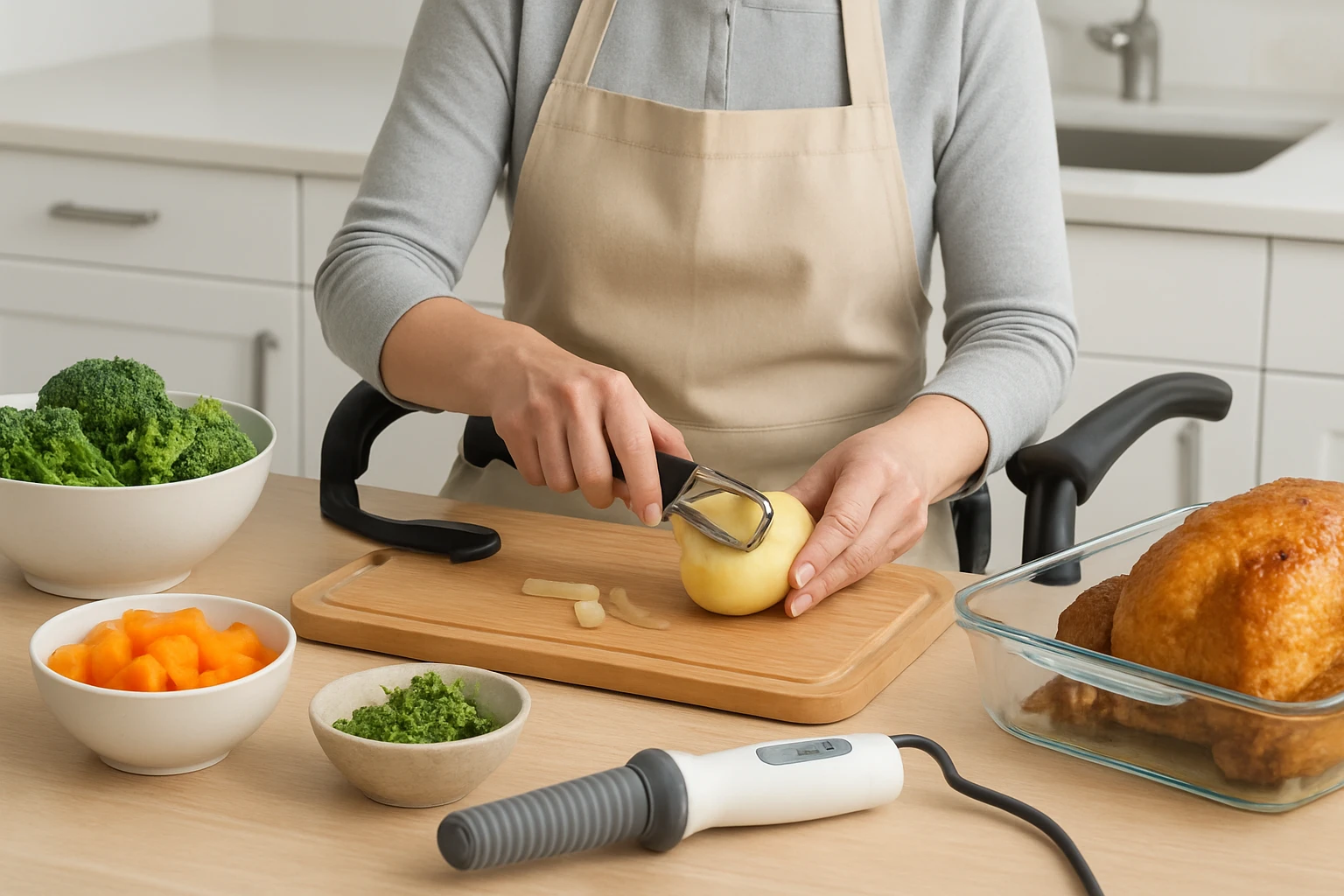
When chopping, slicing, or peeling, a stable surface is essential. The WHEXE Adaptive Cutting Board features built‑in spikes that hold food securely, allowing you to work with a single hand while the board remains anchored by non‑slip pads. Additional accessories such as a one‑hand peeler and grater expand its functionality, making it possible to prepare salads, roasted vegetables, and fruit garnishes without transferring items between surfaces.
Constructed from bamboo, the board offers a natural, antimicrobial surface that is easy to clean. At $41.99 and a rating of 4.2 stars from 52 reviewers, it balances affordability with specialized design. Place the board on a sturdy countertop, secure the food with the spikes, and perform cutting motions with confidence, knowing the board will not shift.
4. Stabilize Pots and Pans While Stirring
Stirring soups, sauces, or gravies often requires both hands—one to hold the spoon and another to steady the pot. The Sammons Preston Folding Pan Holder attaches to the stove top with suction cups, locking the handle of a pot or pan in place. Its adjustable steel leg folds for compact storage, and the non‑latex material prevents allergic reactions.
With a 7½‑inch diameter and capacity for handles up to two quarts, the holder accommodates most holiday cookware. Priced at $35.04 and receiving a 3.8‑star rating from 160 users, it provides a practical solution for one‑handed stirring, allowing you to focus on flavor development without fearing spills. Position the holder on the burner, engage the suction cups, and use a single hand to whisk or ladle safely.
5. Eat with Confidence Using Adaptive Utensils
After a successful cooking session, serving and eating the meal should be equally accessible. The UniGrip Adaptive Utensil Set includes a fork, knife, teaspoon, and tablespoon, each featuring wide silicone handles that prevent slipping for users with arthritis or tremors. The stainless‑steel heads are dishwasher‑safe, ensuring hygienic reuse throughout the holiday period.
At $9.99 and a 4.2‑star rating from 28 reviewers, the set offers an affordable upgrade to standard cutlery. The ergonomic design reduces the effort required to lift food to the mouth, promoting independence during family gatherings. Pair the utensils with the adaptive cutting board and pan holder for a fully accessible dining experience.
Tips & Pro Tips
- Arrange all adaptive tools within arm’s reach before beginning prep to avoid unnecessary movement.
- Use a kitchen timer to pace tasks, allowing rest periods for joints that may fatigue.
- When using the vegetable chopper, press the lid firmly to engage the safety guard and prevent accidental blade contact.
- Keep a small towel nearby to wipe any residue from the jar opener mat, maintaining its stickiness.
- Test the suction cups of the pan holder on a clean, dry surface; a light mist of water can improve grip on glass tops.
- Store the adaptive cutting board on a dry rack to prevent moisture from weakening the bamboo.
Troubleshooting
Problem: The vegetable chopper blades become dull after repeated use.
Solution: Wash the blades in warm, soapy water and dry thoroughly; replace the blade set if cutting performance declines.
Problem: The jar opener mat loses adhesion over time.
Solution: Rinse the mat with mild soap, allow it to air dry, and store it flat to preserve the sticky surface.
Problem: The pan holder suction cups fail to stick on a gas stove.
Solution: Place a silicone mat beneath the holder to create a smoother surface, or use the holder on a flat electric stove where suction is more reliable.
Conclusion
Cooking holiday meals with limited mobility is achievable through careful planning and the use of adaptive kitchen tools. By organizing the workspace, employing a vegetable chopper, jar opener, cutting board, pan holder, and ergonomic utensils, one can reduce strain and increase confidence. The strategies outlined in this guide empower individuals to participate fully in festive cooking, ensuring that the season remains joyful for all family members.
Products Mentioned in This Guide
Frequently Asked Questions
What adaptive kitchen tools are essential for holiday cooking with limited mobility?
Key tools include a vegetable chopper, one‑handed jar opener, adaptive cutting board, and a folding pan holder to reduce strain and improve safety.
How can I set up an accessible cooking workspace?
Arrange tools within arm’s reach, use a stable, height‑adjustable surface, and keep frequently used items on a rolling cart or nearby shelf.
Are there safety tips for handling hot pots and pans?
Use heat‑resistant gloves, a pan holder, and keep pot handles turned inward to prevent accidental spills.
Can I prep holiday dishes ahead of time to lessen effort on the day?
Yes, chop vegetables, measure spices, and pre‑assemble casseroles the night before, storing them in labeled containers for quick assembly.
How do I maintain independence while cooking for a large group?
Plan a simple menu, use multi‑tasking appliances, and delegate non‑physical tasks like setting the table to focus on cooking safely.