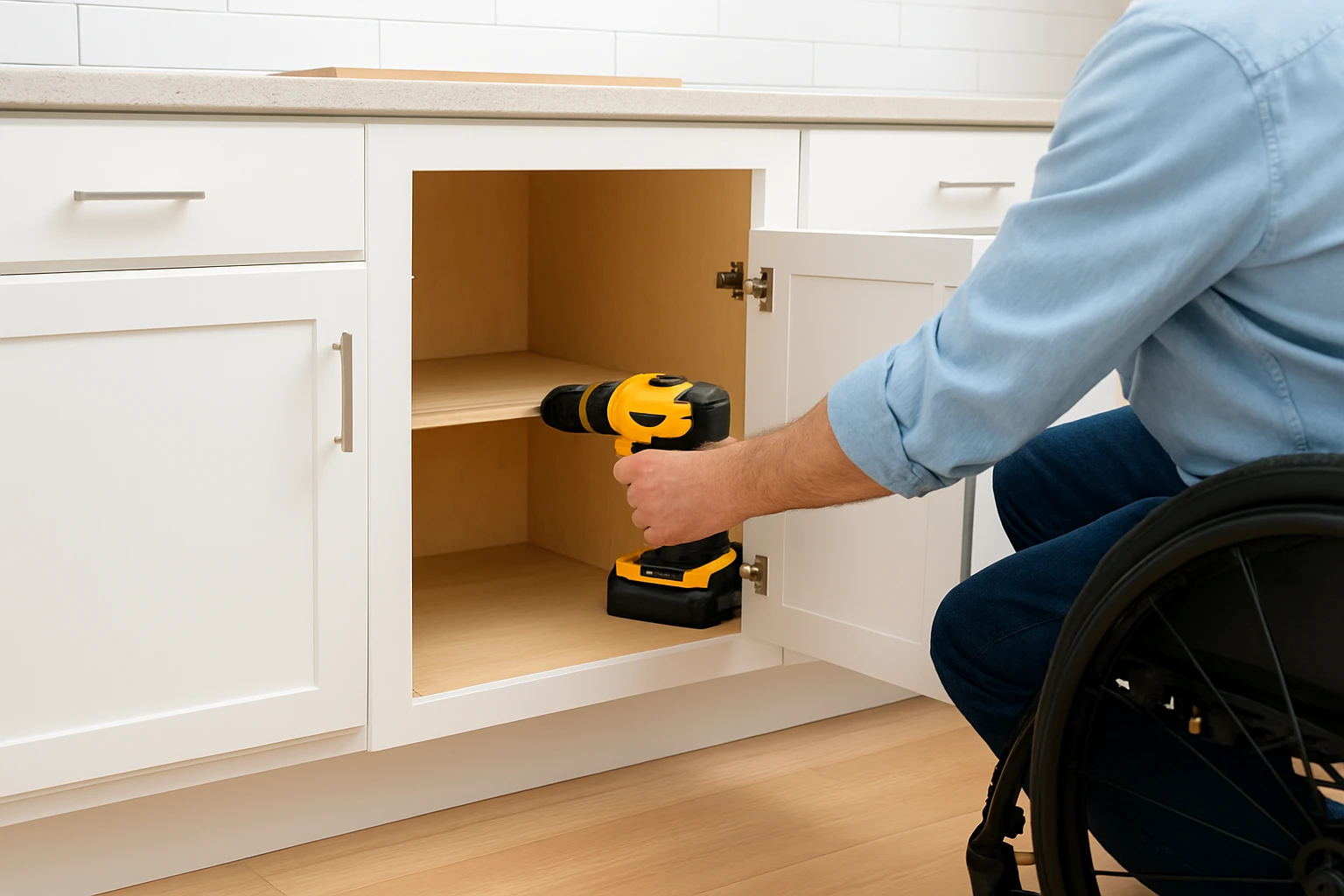
How to Retrofit Cabinets for Wheelchair Access: Step‑by‑Step DIY Guide to Create ADA‑Compliant, Accessible Kitchen Storage
The modern kitchen should serve every member of the household, regardless of mobility level. This guide explains how to transform existing cabinets into wheelchair‑friendly storage spaces while adhering to ADA standards. Readers will learn how to assess dimensions, select appropriate hardware, install pull‑out organizers, and finish the project with a professional appearance. By following the instructions, one can increase independence, reduce strain, and enhance safety without requiring a full remodel.
What You’ll Need
- Measuring tape, level, and pencil for layout planning.
- Power drill with appropriate bits for pre‑drilling screw holes.
- Screwdriver set – both Phillips and flat‑head.
- Heavy‑duty pull‑out cabinet organizers such as MODCART 2‑Tier Pull‑Out Cabinet Organizer, Kitstorack Expandable Pull‑Out Cabinet Organizer, or X‑cosrack Expandable Kitchen Storage Shelves.
- Mounting hardware supplied with the organizers (brackets, screws, riser pads).
- Optional: quality wood screws or machine screws for reinforced mounting.
- Safety glasses and dust mask.
Step‑by‑Step Instructions
Step 1: Assess Cabinet Dimensions and Accessibility Requirements
Begin by measuring the interior width, depth, and height of each base cabinet. Record the dimensions in a notebook to compare with product specifications. ADA guidelines recommend a minimum clear opening of 30 inches for wheelchair access; therefore, ensure that the modified cabinet does not obstruct the pathway. Verify that the cabinet depth does not exceed 24 inches, as deeper cabinets increase reach distance. Use a level to confirm that the cabinet faces are square, because uneven surfaces can affect the smooth operation of pull‑out drawers.
Step 2: Choose the Appropriate Pull‑Out Organizer
Based on the measurements, select a pull‑out system that fits the cabinet opening while providing sufficient load capacity. For cabinets with a 32‑inch opening and a depth of 21½ inches, the MODCART 2‑Tier Pull‑Out Cabinet Organizer is ideal. It features a full‑extension ball‑bearing system, supports up to 100 pounds per tier, and is constructed from durable chrome‑coated wire. Price: $139.99, Rating: 4.8/5 from 487 reviews. The organizer’s dimensions (31½" W × 21½" D × 15" H) match many standard base cabinets.
For cabinets that require width adjustability between 12 and 20 inches, the Kitstorack Expandable Pull‑Out Cabinet Organizer offers an extendable frame and a three‑rail full‑extension mechanism. It can handle heavy loads, endures over 40,000 glide cycles, and includes riser pads for framed cabinets. Price: $75.98, Rating: 4.4/5 from 1,824 reviews. This model is especially useful when cabinet widths vary across the kitchen.
If budget constraints are a primary concern, the X‑cosrack Expandable Kitchen Storage Shelves provide a stackable, adjustable solution at $29.99 with a 4.4/5 rating from 2,363 reviews. Each unit expands from 12.6" to 20.5" in length and allows height adjustment, making it suitable for shallow cabinets or open pantry shelves.
Step 3: Prepare the Cabinet Interior
Remove any existing shelves, dividers, or debris from the cabinet. Clean the interior with a mild cleanser and allow it to dry completely. Apply a non‑slip shelf liner if desired; this step protects the cabinet surface and provides a stable base for the organizer. For wheelchair users, a smooth surface reduces the risk of items shifting during movement.
Using the template supplied with the MODCART organizer (or a homemade template for other products), mark the mounting locations on the cabinet floor. The template ensures that brackets are positioned accurately, preventing misalignment that could cause binding during extension.
Step 4: Install Mounting Brackets
Pre‑drill pilot holes at the marked locations using a drill bit slightly smaller than the supplied screws. If the cabinet material is particle board, consider using higher‑quality wood screws rather than the inexpensive Phillips screws included in the package; this prevents stripping and improves long‑term stability. Insert the brackets, ensuring they sit flush with the cabinet floor.
For the Kitstorack system, attach the riser pads first if the cabinet has a frame edge exceeding 0.8 inches. The pads raise the organizer slightly, allowing the sliding rails to operate without interference from the cabinet side panels.
Step 5: Attach the Pull‑Out Organizer
Slide the organizer onto the mounted brackets. For the MODCART unit, engage the ball‑bearing sliders by aligning the wire basket with the brackets and pressing down until a firm click is felt. Verify that the drawer extends fully without wobble. For the Kitstorack model, ensure the three‑rail system is engaged and that the drawer glides silently throughout its travel.
If using the X‑cosrack shelves, fasten the four provided screws through the pre‑drilled holes on the shelf frame. Adjust the height of each shelf using the built‑in slots, then tighten the screws to lock the position. The powder‑coated metal board resists rust and provides a sleek appearance.
Step 6: Test Functionality and Make Adjustments
Open and close each pull‑out several times to confirm smooth operation. Load each tier with typical kitchen items (e.g., pots, pans, spices) to simulate real‑world use. If any binding occurs, loosen the screws slightly and realign the brackets. For wheelchair users, ensure that the drawer can be accessed from a seated position without excessive reaching.
Check that the cabinet doors close fully with the organizer installed. If the doors interfere with the drawer, adjust the mounting depth or trim the door edge minimally. The MODCART organizer includes a template for door clearance, which simplifies this adjustment.
Step 7: Finish and Secure the Installation
Once functionality is verified, tighten all mounting screws to the manufacturer’s recommended torque. Apply a small bead of silicone sealant at the bracket‑to‑cabinet interface if the cabinet is exposed to moisture, such as in a kitchen near the sink. This prevents water ingress that could degrade the hardware over time.
Finally, organize kitchen items on the new pull‑out shelves. Place frequently used items on the front tier for easy reach, and store heavier, less‑used items on the rear tier. This arrangement minimizes the need for excessive reaching and promotes a safer cooking environment.
Tips & Pro Tips
- Measure twice, cut once: Accurate measurements prevent the need for re‑drilling or returning hardware.
- Use a laser level to ensure brackets are perfectly horizontal; uneven brackets cause binding.
- Replace the supplied screws with stainless‑steel or zinc‑coated screws when installing into particle board for greater durability.
- Apply a thin strip of lip‑gloss or a marker on the template to highlight pre‑drilled holes; this visual cue speeds up screw placement.
- Consider adding soft‑close dampers to the pull‑out drawer if noise reduction is desired; these are aftermarket accessories compatible with most ball‑bearing systems.
Troubleshooting
Drawer does not fully extend: Verify that the rail system is not obstructed by cabinet side panels. Adjust the riser pads or reposition the brackets to provide adequate clearance.
Excessive wobble during use: Tighten all mounting screws and ensure the brackets are securely anchored to the cabinet floor. Replace any stripped screws with new, higher‑grade fasteners.
Cabinet door contacts the drawer: Trim the door edge by no more than 1/8 inch or relocate the bracket slightly forward to create additional clearance.
Conclusion
Retrofitting kitchen cabinets for wheelchair access is a practical project that dramatically improves independence and safety. By assessing dimensions, selecting the appropriate pull‑out organizer, and following the detailed installation steps, one can achieve ADA‑compliant storage without extensive construction. The recommended products—MODCART 2‑Tier Pull‑Out Cabinet Organizer, Kitstorack Expandable Pull‑Out Cabinet Organizer, and X‑cosrack Expandable Kitchen Storage Shelves—offer reliable performance, load capacity, and ease of installation. With careful planning and the pro tips provided, the kitchen will become a more inclusive space for all users.
Products Mentioned in This Guide
Frequently Asked Questions
What measurements should I take before retrofitting cabinets for wheelchair access?
Measure the countertop height, cabinet depth, and clearance space to ensure the pull‑out organizer fits within the ADA‑recommended 34‑48 inches reach range.
Which hardware is recommended for ADA‑compliant pull‑out cabinet organizers?
Heavy‑duty two‑tier pull‑out organizers like the MODCART or Kitstorack models are ideal because they provide smooth glide and sufficient load capacity.
At what height should cabinet handles be installed for wheelchair users?
Place handles between 34 and 38 inches from the floor to meet ADA reach guidelines and ensure easy operation.
Can I install pull‑out organizers without removing the existing cabinet doors?
Yes, most pull‑out kits mount inside the cabinet frame, allowing installation while keeping the doors intact.
What safety benefits does retrofitting cabinets provide for wheelchair users?
Retrofit cabinets reduce bending and over‑reaching, decreasing strain and the risk of falls while promoting independent kitchen use.