How to Set Up a One‑Handed Sous Vide Station: A Step‑by‑Step Guide
Introduction
In this guide one will learn how to assemble a sous vide workstation that can be operated with a single hand. The approach emphasizes safety, efficiency, and precision so that busy individuals can prepare restaurant‑quality meals without juggling multiple tools. By the end of the article one will understand how to choose the right immersion circulator, container, and accessories, and how to arrange them for seamless one‑handed operation. The information is valuable for home cooks, meal‑prep enthusiasts, and anyone who wishes to simplify the cooking process.
What You’ll Need
The essential items for a one‑handed station include an immersion circulator, a suitable water container, a sealing method for bags, and basic kitchen tools that can be handled with one hand. Optional accessories such as a silicone rack, a magnetic timer, and a cleaning brush can improve convenience but are not mandatory. The following products have been selected because they combine reliability, compact size, and ease of use.
- Anova Sous Vide Nano 2.0
- Inkbird WiFi Sous Vide Cooker
- Wancle 1100W Sous Vide Cooker
- Greater Goods Sous Vide Cooker
- Everie 12 Qt Sous Vide Container
Step 1: Choose the Right Immersion Circulator
The first decision concerns the immersion circulator, which is the heart of any sous vide system. For a one‑handed workflow a compact unit with an intuitive interface is preferable because it can be mounted and adjusted without removing the other hand from the work surface. The Anova Sous Vide Nano 2.0 offers a small footprint, a detachable clamp, and a temperature range of 0 °C to 92 °C with ±0.1 °C accuracy. It costs $63.12 and holds a 4.6‑star rating from more than fifteen thousand reviews, indicating strong consumer confidence. The built‑in Bluetooth connection allows remote monitoring via a smartphone, but the device can also be operated directly from its touch panel, which is essential when one hand is occupied.
If wireless control is a priority, the Inkbird WiFi Sous Vide Cooker provides Wi‑Fi connectivity, a large LCD touchscreen, and a self‑calibration function that guarantees long‑term accuracy. Priced at $76.78 with a 4.5‑star rating, it delivers precise temperature control from 25 °C to 99 °C. The ability to adjust settings from a phone while the circulator remains clipped to the pot frees the user’s hand for other tasks.
For a budget‑friendly option that does not require an app, the Wancle 1100W Sous Vide Cooker supplies 1100 W of power, IPX7 waterproof protection, and ±0.1 °C accuracy. At $41.99 and a 4.5‑star rating, it delivers solid performance without the distraction of wireless features, which can be advantageous for a truly one‑handed setup.
Finally, the Greater Goods Sous Vide Cooker combines a quiet brushless motor, a large bright display, and manual dial controls that can be turned with a single finger. It is priced at $89.99 and carries a 4.6‑star rating. The lack of Wi‑Fi or Bluetooth eliminates potential connectivity issues, allowing the user to focus on the cooking process.
Step 2: Select a Container That Supports One‑Handed Access
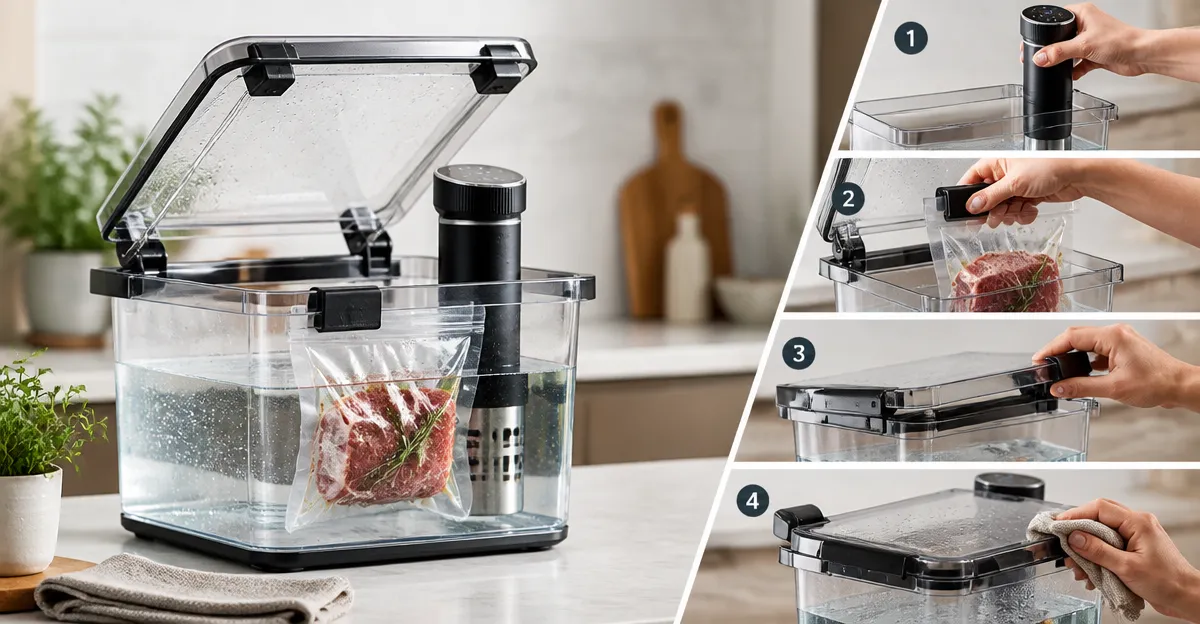
After the circulator is chosen, the next step is to select a water bath container that can be opened and closed with one hand. The Everie 12 Qt Sous Vide Container features a hinged lid with a split‑hinge design that can be lifted without removing the entire top. This design enables quick water checks or bag adjustments while the other hand remains on the circulator or a cutting board. The container holds twelve quarts, which is sufficient for family‑size meals, and is NSF‑approved for food safety. It is priced at $34.99 and enjoys a 4.6‑star rating.
If space is limited, the Anova Nano can be paired with any standard pot, but a dedicated container reduces the need to juggle heavy cookware. The Everie container also includes a built‑in lip that minimizes evaporation, a common issue during long cooks. The lid’s smooth operation prevents the user from having to balance the container while reaching for the clamp.
Step 3: Prepare the Sealing System
Vacuum‑sealed bags are the most reliable method for sous vide cooking, yet a one‑handed user may prefer zip‑lock bags with the water‑displacement technique. The technique involves submerging the bag in water to force air out, then sealing the bag with one hand while the other hand steadies the bag. For those who desire a true vacuum, a handheld pump that attaches to a valve can be operated with a thumb press, leaving the other hand free to handle the bag.
Regardless of the method, it is important to label each bag with the intended temperature and time. This practice prevents the need to consult a phone or notebook mid‑cook, which would interrupt a one‑handed workflow.
Step 4: Position the Immersion Circulator for Easy Access
Mount the circulator on the side of the container where the user’s dominant hand can reach the control panel without crossing the body. The clamp on the Anova Nano and the clip on the Greater Goods model both slide into place with a single motion. Ensure the unit is securely attached at a depth of at least five inches, as recommended by the manufacturers, to achieve optimal water circulation.
When using the Inkbird model, connect the device to the home Wi‑Fi network before the first use, then place it on the rim of the container. The touchscreen can be adjusted with a thumb while the other hand holds the bag or a kitchen utensil. The Wancle unit also features a compact clamp that can be tightened with one hand.
Step 5: Set Temperature and Timer
Power on the circulator and set the desired temperature using the device’s interface. For models with a touchscreen, such as the Inkbird, a single tap selects the temperature, and a second tap adjusts the time. For dial‑controlled units like the Greater Goods cooker, rotate the dial to the required temperature and press the start button. The Anova Nano allows temperature entry via the app or the device’s touch screen; the app can be pre‑programmed so that a single tap initiates the cook.
Confirm the water temperature with an external probe after the circulator indicates that the target has been reached. This verification step adds a layer of safety, especially when the device will be left unattended for extended periods.
Step 6: Manage the Cooking Process with One Hand
Once the water bath is ready, place the sealed bag into the container, ensuring it is fully submerged. The hinged lid of the Everie container can be lifted with a fingertip, allowing the bag to slide in without removing the entire lid. After the bag is positioned, close the lid and let the circulator maintain the temperature.
If a recipe requires a quick sear after the sous vide phase, pre‑heat a skillet before the water bath reaches the target temperature. This preparation enables the user to transfer the cooked protein directly from the bag to the pan with a single hand, using tongs that have a built‑in lock for safety.
Tips & Pro Tips
- Label each bag with a waterproof marker to avoid searching for recipe details mid‑cook.
- Use a silicone rack inside the container to keep bags upright and prevent them from drifting into the circulator’s intake.
- For long cooks, add a small amount of oil to the water surface to reduce evaporation.
- Periodically check the water level, especially when the lid is opened, and top up with hot water to maintain temperature stability.
- When using the Inkbird Wi‑Fi model, enable push notifications so the phone alerts the user when the cook is complete, eliminating the need to monitor the display.
Troubleshooting
Problem: The circulator displays the correct temperature but the water feels cooler.
Solution: Verify that the unit is fully submerged and that the water level is above the minimum line. If the problem persists, run a self‑calibration (available on the Inkbird and Greater Goods models) to adjust the internal sensor.
Problem: Air bubbles remain trapped in the bag, causing uneven cooking.
Solution: Use the water‑displacement method or a handheld vacuum pump. Ensure the bag is sealed tightly before submerging.
Problem: The lid of the Everie container sticks after repeated use.
Solution: Clean the hinge with a mild detergent and dry it thoroughly. The split‑hinge design is built for 100,000 cycles, but regular maintenance extends its lifespan.
Conclusion
This guide has outlined how to create a sous vide station that can be operated with a single hand, from selecting an appropriate immersion circulator to arranging the container and managing the cooking process. By following the step‑by‑step instructions one can achieve precise, hands‑free cooking while maintaining safety and efficiency. The recommended products provide reliable performance and ergonomic features that simplify one‑handed operation, yet the principles described can be applied with alternative tools as well. One is encouraged to experiment with different recipes and enjoy the convenience of restaurant‑quality meals prepared with minimal effort.
Products Mentioned in This Guide
Frequently Asked Questions
What immersion circulator works best for one‑handed operation?
Choose a compact, clip‑on circulator with a single‑button interface, like the Anova Nano, which can be attached and adjusted with one hand.
How should I select a water container for a one‑handed sous vide station?
Use a lightweight, tall container with a wide mouth and a stable base so you can lift, fill, and position it using one hand.
What sealing method is easiest for one‑handed bag sealing?
A zip‑lock bag with a built-in slider or a reusable silicone seal works best, allowing you to close the bag with a single grip.
Can I add accessories without compromising one‑handed use?
Yes—silicone racks, magnetic timers, and a small cleaning brush can be placed nearby and operated with a thumb or fingertip while the other hand remains free.
How do I ensure safety while operating the sous vide with one hand?
Secure the circulator’s clamp, keep cords out of the way, and use heat‑resistant gloves to prevent burns during placement and removal.