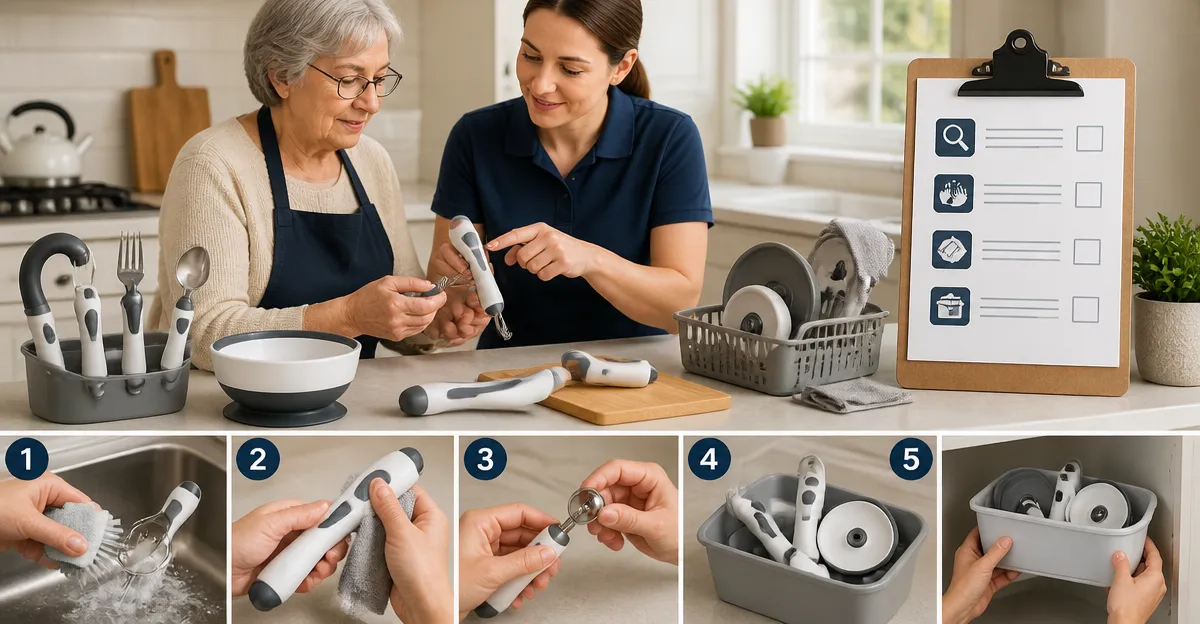
How to Train Caregivers on Maintaining Adaptive Kitchen Devices: Step‑by‑Step Guide & Maintenance Checklist
Introduction
Caregivers who support individuals with limited hand mobility must ensure that adaptive kitchen devices remain safe, functional, and hygienic. This guide explains how to train caregivers to clean, inspect, and store these tools correctly. By following the procedures, caregivers reduce the risk of injury, extend the lifespan of equipment, and promote independence for the people they assist.
The reader will learn a systematic maintenance workflow, a printable checklist, and product recommendations that simplify each step. The information is applicable to a wide range of adaptive utensils, from one‑handed knives to spike‑filled cutting boards.
What You Will Need
- Soft microfiber cloths
- Mild dish soap
- Food‑safe silicone lubricant (optional for moving parts)
- Dry storage container or drawer liner
- Printed maintenance checklist (provided at the end of this guide)
- Adaptive devices such as Fstcrt Rocker Knife, SENDAR Adaptive Cutting Board, Dext Ring Pull Can Opener, Bloss Jar Opener, and Cook‑Helper Sticky Mat Set.
Step 1: Assess Device Inventory
The first training module should teach caregivers to create a complete inventory of all adaptive kitchen tools in the household. Write down the device name, location, and date of last service. This inventory becomes the reference point for scheduling routine checks.
During the assessment, caregivers can verify that each item matches the specifications provided by the manufacturer. For example, the Fstcrt Rocker Knife measures 6.3 × 2.2 × 0.56 inches, weighs approximately 100 grams, and includes a leather sheath for safe transport. Its stainless‑steel blade and wooden handle require regular cleaning but no sharpening under normal use.
Documenting the inventory also helps identify missing accessories such as the leather case for the rocker knife or the silicone feet on the SENDAR Adaptive Cutting Board. Missing components should be replaced before the next cooking session.
Why this matters: A well‑maintained inventory reduces the likelihood of using damaged equipment, which can cause accidental cuts or food contamination.
Step 2: Establish a Daily Cleaning Routine
Cleanliness is essential for preventing bacterial growth on surfaces that come into contact with food. Caregivers should clean each device after every use, unless the manufacturer specifies dishwasher safety.
The Fstcrt Rocker Knife is dishwasher safe, but hand washing with warm, soapy water preserves the wooden handle’s finish. Rinse thoroughly and dry with a microfiber cloth to avoid rust.
The SENDAR Adaptive Cutting Board is constructed from solid acacia hardwood with non‑slip silicone feet. Wipe the board with a damp cloth, then dry the spikes to prevent rust. The stainless‑steel spikes can be scrubbed gently with a soft brush if residue accumulates.
For the Dext Ring Pull Can Opener, the ergonomic handle should be washed with mild soap, while the ring‑pull mechanism can be rinsed under running water. The design minimizes stress on the tab, but food particles can lodge in the hinge if not cleaned.
Cleaning the Bloss Jar Opener and Cook‑Helper Sticky Mats follows the same principle: wash with warm, soapy water, rinse, and allow to air dry. The rubber grip on the jar opener retains moisture; drying prevents mold growth.
Step 3: Perform Functional Checks
After cleaning, caregivers must verify that each device operates as intended. Functional checks should be performed weekly for high‑use items and monthly for occasional tools.
To test the Fstcrt Rocker Knife, place a piece of bread on a stable surface and perform a rocking motion. The blade should glide smoothly without wobble. If the blade feels dull, the user can sharpen it with a fine ceramic stone; however, most users find the factory edge sufficient for everyday meals.
For the SENDAR Adaptive Cutting Board, press a vegetable against the stainless‑steel spikes. The food should remain firmly in place without slipping. Inspect the silicone feet for wear; replace the board if the feet become hard or detached.
The Dext Ring Pull Can Opener should open a standard pull‑tab can in one smooth motion. If the ring pull does not release, examine the lever for debris and clean the pivot point.
The Bloss Jar Opener’s rubber strips must grip tightly. Test by attempting to open a jar of pickles; the lever should turn the lid without excessive force. The Cook‑Helper Sticky Mats should adhere firmly to the countertop; if the adhesive loses tack, rinse and allow to dry completely before reuse.
Why functional checks are critical: Detecting wear early prevents sudden failure during meal preparation, which could lead to injury or loss of independence.
Step 4: Lubricate Moving Parts (If Applicable)
Some adaptive devices contain moving components that benefit from occasional lubrication. The Dext Ring Pull Can Opener’s hinge and the SENDAR Cutting Board’s spike base may develop friction over time.
Apply a food‑safe silicone lubricant to the hinge of the Dext opener, using a dropper to avoid excess. Wipe away any surplus with a clean cloth. For the cutting board, a light coating of silicone spray on the spike shafts prevents rust while maintaining grip.
Do not use petroleum‑based lubricants, as they can contaminate food. Always verify that the lubricant is labeled as food‑grade.
Lubrication should be performed no more than once every three months, or when the caregiver notices resistance during operation.
Step 5: Store Devices Properly
Proper storage protects adaptive tools from damage and keeps them readily accessible. Each device has specific storage recommendations.
The Fstcrt Rocker Knife comes with a leather sheath; caregivers should place the knife in the sheath and store it in a drawer lined with a soft cloth to prevent the blade from contacting other utensils.
The SENDAR Adaptive Cutting Board should be placed on a flat countertop when in use, and stored upright against a wall when not needed. The non‑slip silicone feet keep the board stable; ensure the board is completely dry before storage to avoid mildew.
The Dext Ring Pull Can Opener can be hung on a kitchen hook using its built‑in loop, keeping the handle away from heat sources. The Bloss Jar Opener’s anti‑slip rubber strip allows it to be mounted on a magnetic strip or stored in a drawer with a silicone mat.
The Cook‑Helper Sticky Mats are reusable; after cleaning, roll them up and keep them in the original packaging to preserve the adhesive surface. Store a spare mat in a pantry for quick access.
Consistent storage habits reduce the risk of accidental cuts, preserve device integrity, and make the tools easy to locate during meal preparation.
Step 6: Document Maintenance Activities
Caregivers should record each cleaning, inspection, and repair activity in a maintenance log. The log can be a paper notebook or a digital spreadsheet, with columns for date, device, task performed, observations, and next scheduled check.
Sample entry: "2026‑08‑01 – Fstcrt Rocker Knife – Hand‑washed, blade inspected, no dullness observed – Next inspection 2026‑08‑08." This level of documentation creates accountability and provides a clear history for healthcare professionals.
When a device requires replacement of a component, note the part number and date of purchase. This information simplifies warranty claims and ensures that caregivers replace parts with manufacturer‑approved equivalents.
Regular documentation also supports training new caregivers, as they can review the log to understand the household’s maintenance cadence.
Tips & Pro Tips
- Schedule maintenance tasks at the same time each day to develop a routine; for example, clean all devices immediately after dinner.
- Use color‑coded microfiber cloths for different devices to avoid cross‑contamination.
- When cleaning stainless‑steel spikes, a mixture of equal parts water and white vinegar removes mineral buildup without harming the metal.
- Store the leather sheath of the Fstcrt Rocker Knife in a cool, dry place to prevent leather cracking.
- Test the adhesive of the Cook‑Helper Sticky Mats on a small, inconspicuous area of the countertop before full application to ensure compatibility.
- Never submerge electronic adaptive devices (if any) in water; wipe them with a damp cloth instead.
Troubleshooting
| Problem | Possible Cause | Solution |
|---|---|---|
| Blade of Rocker Knife feels dull | Extended use without sharpening | Use a fine ceramic sharpening stone; maintain a 15‑degree angle. |
| Spikes on Cutting Board lose grip | Corrosion or food residue | Soak spikes in warm, soapy water, scrub gently, dry thoroughly, and apply food‑grade silicone spray. |
| Can Opener ring pull does not release | Debris in hinge | Disassemble if possible, clean hinge with a toothbrush, lubricate with food‑safe silicone. |
| Jar Opener rubber strips slip | Residue or wear | Wash rubber strips with mild soap, dry, and replace if cracks appear. |
| Sticky Mats lose adhesion | Oil or moisture on surface | Clean countertop with isopropyl alcohol, allow to dry, then reapply mat. |
Conclusion
By following the six steps outlined in this guide, caregivers can maintain adaptive kitchen devices safely and efficiently. Regular cleaning, functional checks, proper storage, and thorough documentation create a reliable environment that supports independence for individuals with limited hand mobility. The accompanying checklist reinforces consistency, while the product recommendations provide tools that simplify each maintenance task.
Caregivers are encouraged to integrate this workflow into daily routines, adapt the checklist to specific household needs, and share the protocol with new staff members. Consistent maintenance not only extends the lifespan of adaptive equipment but also enhances the quality of life for those who rely on these essential kitchen aids.
Products Mentioned in This Guide
Frequently Asked Questions
What are the essential steps for caregivers to clean adaptive kitchen devices?
First, rinse off food debris, then wash with mild dish soap and a soft microfiber cloth, rinse thoroughly, and dry completely before storage.
How often should caregivers inspect adaptive utensils for wear or damage?
Perform a visual and functional inspection before each use and a deeper check weekly to catch loose parts, cracks, or worn grips.
When is it appropriate to use food‑safe silicone lubricant on adaptive tools?
Apply silicone lubricant sparingly to moving parts (e.g., swivel handles) after cleaning, only if the device’s manufacturer recommends it.
What storage methods keep adaptive kitchen devices hygienic and ready to use?
Store cleaned, dry devices in a dry container or drawer liner, separating them to avoid contact with moisture or other utensils.
How can caregivers use the printable maintenance checklist effectively?
Print the checklist, place it near the kitchen workspace, and tick off each task after cleaning, inspecting, lubricating, and storing the devices.