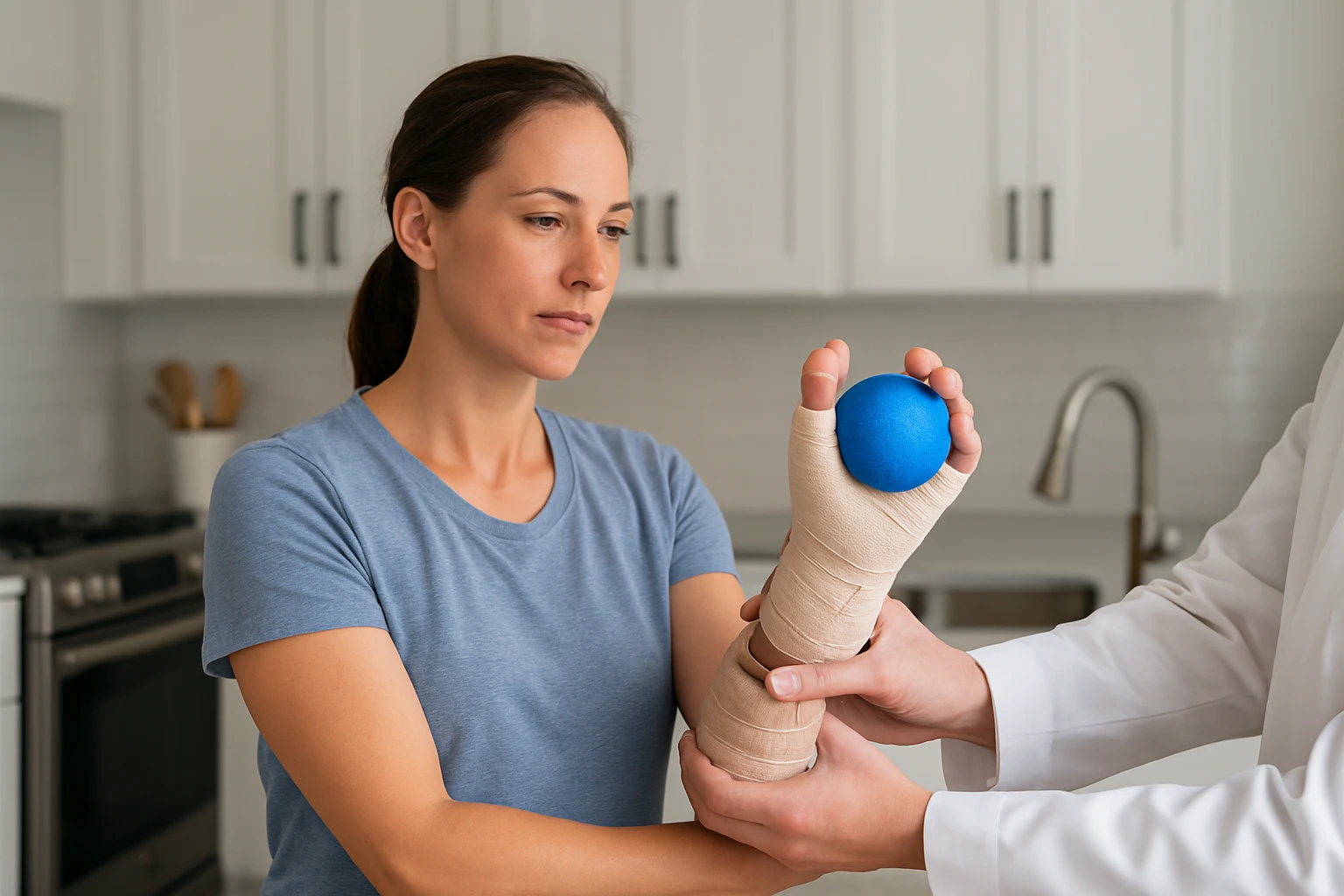
Kitchen Occupational Therapy Exercises After Hand Surgery: A Therapist‑Approved At‑Home Guide to Faster Hand Recovery
Introduction
Recovering from hand surgery can feel overwhelming, especially when daily tasks such as cooking become challenging. This guide explains how the kitchen environment can serve as a therapeutic space, offering practical exercises that integrate functional movements with everyday activities. Readers will learn the underlying principles of occupational therapy, step‑by‑step exercise routines, and how to select supportive tools such as A AZURELIFE Long Resistance Bands and FlintRehab Therapy Putty. By the end of the article, one will possess a structured plan to accelerate hand strength, dexterity, and confidence in the kitchen.
Background/Context
Hand surgery often involves incisions, tendon repairs, or joint replacements that temporarily limit range of motion and grip strength. Occupational therapists focus on restoring functional use by combining passive stretching, active resistance, and task‑specific practice. The kitchen provides a natural setting for task‑specific training because it requires gripping utensils, manipulating containers, and applying controlled force. Research shows that repetitive, low‑impact functional activities promote neuroplasticity and reduce scar tissue formation, leading to faster recovery when performed within safe limits.
Key concepts include progressive resistance, where the load increases gradually, and bilateral training, which engages the unaffected hand to assist the recovering hand. Understanding the stages of healing—acute, sub‑acute, and remodeling—helps therapists prescribe appropriate intensity. During the acute phase, gentle range‑of‑motion movements are essential; the sub‑acute phase introduces light resistance; and the remodeling phase focuses on strength and endurance.
Core Kitchen Exercises
Each exercise below aligns with a specific stage of healing and can be performed with common kitchen items or the featured products. Perform each movement slowly, breathing evenly, and stop if pain exceeds a mild discomfort level.
1. Warm‑Up: Wrist Flexion and Extension with a Spoon
- Hold a wooden spoon by the handle with the palm facing up.
- Gently bend the wrist upward (extension) and then downward (flexion) for 10 repetitions.
- Maintain a pain‑free range; this prepares tendons for resistance work.
2. Grip Strength with A AZURELIFE Long Resistance Bands
- Wrap the band around the palm and fingers, creating a loop for a secure grip.
- Perform “squeeze‑hold” actions by pulling the band apart for 5 seconds, then release slowly.
- Complete 3 sets of 12 repetitions, progressing from the light to the X‑Heavy band as strength improves.
These bands are 5 ft long and 6 inches wide, providing a stable surface for hand‑level resistance while remaining portable for kitchen use. The color‑coded resistance levels (light, medium, X‑heavy) allow clear progression, and the non‑latex material protects users with latex allergies.
3. Fine Motor Control: Rolling Dough
- Place a small ball of dough on a floured surface.
- Use the affected hand to roll the dough into a thin sheet, alternating with the healthy hand for assistance.
- Repeat for 5 minutes, focusing on smooth, coordinated movements.
This activity challenges pinch strength, finger extension, and proprioception, all vital for safe cooking.
4. Finger Extension with FlintRehab Therapy Putty
- Choose the appropriate firmness level (Yellow for early stage, Blue for later stage).
- Pinch, stretch, and roll the putty between thumb and fingers for 30 seconds per hand.
- Perform 3 rounds, increasing resistance as pain permits.
The putty’s non‑toxic silicone composition ensures it does not irritate sensitive skin, and its four resistance levels support gradual progression. It also serves as a portable stress‑relief tool during longer cooking sessions.
5. Simulated Cutting with a Butter Knife
- Place a soft vegetable (e.g., a cucumber slice) on a cutting board.
- Using a butter knife, practice a controlled slicing motion, emphasizing wrist stability.
- Complete 10 cuts per hand, alternating sides to promote bilateral coordination.
This functional task mimics real‑world kitchen demands while reinforcing grip endurance.
Comparison/Selection Guide
Choosing the right therapeutic tool depends on the stage of recovery, personal preferences, and specific functional goals. The table below summarizes the key attributes of the two featured products.
| Feature | A AZURELIFE Long Resistance Bands | FlintRehab Therapy Putty |
|---|---|---|
| Primary Use | Progressive resistance for grip, wrist, and forearm | Finger and hand strengthening, stress relief |
| Resistance Levels | Three color‑coded bands (Light, Medium, X‑Heavy) | Four color‑coded firmness levels (Yellow, Red, Green, Blue) |
| Material | Non‑latex elastomer, odor‑free | Premium silicone, gluten‑free, non‑latex |
| Portability | Lightweight, folds for travel | Compact containers, no residue |
| Price | $9.99 | $16.95 |
| Rating | 4.5/5 (15,273 reviews) | 4.7/5 (11,239 reviews) |
| Best For | Early to intermediate strength building | Fine motor control and stress management |
For patients in the sub‑acute phase seeking moderate resistance, the bands offer a scalable solution. For those requiring precise finger articulation or a calming sensory input, the putty provides targeted benefits.
Best Practices & Tips
- Warm up for at least five minutes before each session using gentle wrist circles and finger stretches.
- Maintain a consistent schedule—ideally three sessions per day, each lasting 10‑15 minutes—to reinforce neural pathways.
- Document progress in a simple log, noting resistance level, repetitions, and any discomfort.
- Incorporate functional kitchen tasks (e.g., stirring a pot, opening jars) as part of the routine to promote task specificity.
- Ensure proper ergonomics: keep the countertop at waist height, use non‑slipping mats, and avoid excessive force that could jeopardize healing.
- Consult with a licensed occupational therapist before advancing to higher resistance levels or more demanding tasks.
Frequently Asked Questions
- 1. How soon after hand surgery can I start kitchen exercises?
- Typically, gentle range‑of‑motion activities can begin within the first week, but resistance work with bands or putty should wait until the surgeon confirms tissue healing, usually around the third week.
- 2. Are the resistance bands safe for scar tissue?
- Yes, the non‑latex elastomer is designed to be gentle on skin and scar tissue. Begin with the light band and avoid excessive stretch that could irritate the incision.
- 3. Can I use the therapy putty while cooking?
- Absolutely. The silicone putty does not leave residue, making it ideal for brief hand‑rest periods during meal preparation.
- 4. How do I know which resistance level to choose?
- Start with the lowest level that provides a noticeable challenge without pain. Progress to the next level once you can complete three sets of twelve repetitions comfortably.
- 5. What if I experience swelling during exercises?
- Pause the activity, elevate the hand, and apply a cold compress for 15 minutes. Resume only after swelling subsides and pain remains mild.
- 6. Is it necessary to purchase both products?
- While each product offers unique benefits, many users find that combining bands for gross strength and putty for fine motor control yields the most comprehensive recovery.
- 7. How long will it take to regain full kitchen function?
- Recovery timelines vary, but most patients achieve functional independence within 8‑12 weeks when adhering to a structured therapy plan.
Conclusion
Integrating occupational therapy exercises into everyday kitchen activities provides a realistic and motivating pathway to hand recovery. By understanding the stages of healing, selecting appropriate tools such as A AZURELIFE Long Resistance Bands and FlintRehab Therapy Putty, and following best‑practice guidelines, one can accelerate strength, dexterity, and confidence in the kitchen. Consistency, gradual progression, and professional oversight remain the cornerstones of successful rehabilitation.
Products Featured in This Guide
A AZURELIFE Long Resistance Bands
Price: $9.99 | Rating: 4.5/5 (15,273 reviews)
Featured because it provides scalable, non‑latex resistance ideal for rebuilding grip strength and wrist stability during kitchen tasks.
FlintRehab Therapy Putty
Price: $16.95 | Rating: 4.7/5 (11,239 reviews)
Featured because its silicone composition and four firmness levels support fine motor rehabilitation and stress reduction during prolonged cooking sessions.