Introduction
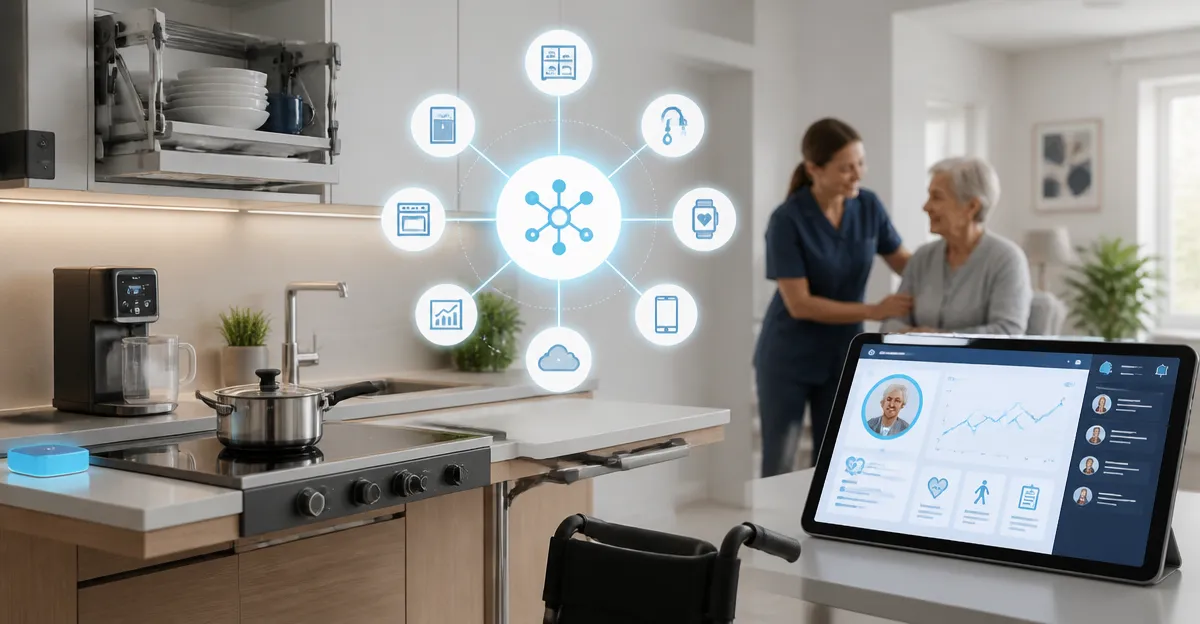
This guide explores the emerging field of interoperability between adaptive kitchen devices and home health platforms. Readers will understand the technical standards that enable seamless data exchange, the role of application programming interfaces (APIs), and practical strategies for deploying a connected environment. The article also recommends specific Amazon products that enhance both culinary convenience and health monitoring, illustrating how hardware and software can work together to improve daily living.
By the end of this guide, the reader will be able to evaluate device capabilities, select appropriate solutions, and implement best practices that safeguard privacy while maximizing functionality.
Background and Context
Adaptive kitchen technology includes smart ovens, temperature‑controlled thermometers, voice‑activated displays and connected lighting. Home health platforms aggregate data from wearables, medical‑grade sensors and health‑focused applications to provide insights into nutrition, activity and chronic condition management. Interoperability bridges these two domains, allowing a smart oven to report cooking temperature to a health dashboard, or a voice assistant to remind a user to take medication before a meal.
Key standards such as Matter, Zigbee, Bluetooth Low Energy (BLE) and Wi‑Fi 6 provide the physical and network layers for device communication. On the software side, RESTful APIs, GraphQL and Webhooks enable real‑time data flow. Security frameworks like OAuth 2.0 and Transport Layer Security (TLS) protect personal health information (PHI) during transmission.
Understanding these layers is essential for architects who wish to design resilient, future‑proof solutions. The following sections break down each component and illustrate practical integration points.
Core Concepts and Strategies
Interoperability can be categorized into three primary strategies: data aggregation, command orchestration, and contextual automation.
- Data aggregation collects sensor readings from kitchen devices and forwards them to health platforms for analysis. For example, a smart meat thermometer can send real‑time temperature data to a nutrition app that calculates caloric intake.
- Command orchestration enables health platforms to trigger actions in the kitchen. A blood‑glucose monitor may signal a smart coffee maker to prepare a low‑caffeine brew.
- Contextual automation combines environmental cues with health data to create personalized routines. When a user’s activity tracker detects low activity, the kitchen display can suggest a quick, protein‑rich recipe.
Implementing these strategies requires reliable standards and well‑documented APIs. Matter, endorsed by major manufacturers, offers a unified discovery and communication protocol that simplifies cross‑vendor integration. BLE is ideal for low‑power devices such as temperature probes, while Wi‑Fi provides high‑bandwidth channels for video‑enabled displays.
Below are product recommendations that embody these standards and can serve as building blocks for an interoperable ecosystem.
Recommended Products and Their Role
The first product, Echo Show 15, functions as a central hub in the kitchen. Its 15.6" Full‑HD display runs built‑in Fire TV, providing a visual interface for health dashboards, recipe videos and video calls. Key specifications include a 1080p screen, integrated camera with auto‑framing, and a privacy shutter. With a rating of 4.4 out of 5 stars from over 6,000 reviews, it demonstrates strong user satisfaction. The device supports Matter and Wi‑Fi, enabling direct communication with smart appliances and health sensors.
For compact spaces, the Echo Show 5 offers a 5.5" screen, enhanced bass and a built‑in camera. It is ideal for countertop placement where quick glanceable information such as blood‑pressure trends or medication reminders is needed. The product is rated 4.2 stars from more than 70,000 reviewers, indicating broad acceptance. Its support for Alexa Skills allows developers to create custom health‑focused voice commands.
The Echo Dot provides voice‑only interaction and can act as a speaker for auditory health alerts. It includes eero mesh Wi‑Fi integration, extending network coverage to ensure reliable connectivity for kitchen sensors. With a 4.7‑star rating from nearly 200,000 reviews, the Dot is praised for its sound quality and ease of setup.
When a bedside or office clock is required, the Echo Spot delivers a compact smart alarm with vibrant sound and eero‑based Wi‑Fi extension. Its customizable clock face can display health metrics such as heart‑rate averages, while voice commands can start a cooking timer on the kitchen hub. The Spot holds a 4.6‑star rating from over 44,000 reviewers.
Finally, the GoveeLife Smart Meat Thermometer provides precise temperature monitoring for cooking. The device features a magnetic base, dual‑band Wi‑Fi and Bluetooth connectivity, and a 10‑function LCD that updates every two seconds with 1.8°F precision. With a 4.4‑star rating from 726 reviews, it is a reliable component for feeding nutritional data into health platforms.
Comparison and Selection Guide
| Feature | Echo Show 15 | Echo Show 5 | Echo Dot | Echo Spot | GoveeLife Thermometer |
|---|---|---|---|---|---|
| Display Size | 15.6" Full‑HD | 5.5" | None (voice only) | 2.5" (clock) | 10‑function LCD (probe) |
| Built‑in Camera | Yes (auto‑framing) | Yes (2 MP) | No | No | No |
| Matter Support | Yes | Yes | Yes | Yes | No (Wi‑Fi/BLE) |
| Audio Quality | Vibrant sound with stereo | 2 × bass, clearer vocals | Vibrant sounding speaker | Big vibrant sound | N/A |
| Price (USD) | 299.99 | 89.99 | 49.99 | 79.99 | 39.99 |
| Rating | 4.4/5 | 4.2/5 | 4.7/5 | 4.6/5 | 4.4/5 |
| Primary Use Case | Kitchen hub & family dashboard | Compact countertop display | Voice alerts & multi‑room audio | Smart alarm & bedside info | Precision cooking & temperature alerts |
When selecting devices, consider the size of the kitchen area, the desired level of visual feedback, and the existing network topology. For large open‑plan kitchens, the Echo Show 15 provides ample screen real estate and integrated Fire TV for entertainment. In smaller apartments, the Echo Show 5 delivers essential visual cues without overwhelming the space. The Echo Dot and Echo Spot excel at delivering auditory reminders and extending Wi‑Fi coverage, which is critical for reliable sensor communication.
The GoveeLife Smart Meat Thermometer is indispensable for users who require precise cooking data to feed into nutrition tracking applications. Its dual‑band connectivity ensures that temperature readings remain accurate up to 500 feet away, allowing the cook to monitor progress from a living room sofa.
Best Practices and Implementation Tips
- Standardize on Matter where possible. Matter simplifies device discovery and reduces the need for proprietary bridges. Verify that each kitchen device advertises Matter support during the onboarding process.
- Secure API access with OAuth 2.0. When integrating health platforms, use token‑based authentication to protect PHI. Rotate credentials regularly and enforce least‑privilege scopes.
- Utilize Webhooks for real‑time alerts. Configure the GoveeLife Thermometer to send a webhook when the target temperature is reached. The webhook can trigger a routine on the Echo Show 15 to display a congratulatory message and log the event in the health app.
- Leverage Alexa Skills for custom health commands. Develop a skill that queries a user's daily nutrient goals and suggests recipes displayed on the Echo Show 5. The skill can also read out medication reminders via the Echo Dot.
- Implement network segmentation. Place IoT devices on a dedicated VLAN to isolate them from personal computers. This practice limits exposure in case of a compromised device.
- Maintain privacy controls. All featured devices include microphone and camera mute buttons. Encourage users to enable these features when the devices are not actively used for health monitoring.
- Test latency and reliability. Conduct periodic latency measurements between the kitchen hub and the health platform to ensure data arrives within acceptable windows for real‑time decision making.
By following these guidelines, architects can create a resilient, secure, and user‑friendly environment that seamlessly blends culinary convenience with health awareness.
Frequently Asked Questions
- 1. How does Matter improve interoperability between kitchen devices and health platforms?
- Matter provides a common language for device discovery, authentication and communication, allowing products from different manufacturers to work together without custom bridges. This reduces integration complexity and improves reliability.
- 2. Can I use the Echo Show 15 without an Amazon Prime subscription?
- Yes, the core functionalities such as voice control, smart home dashboard and health data display operate without a Prime subscription. However, streaming services like Prime Video require a subscription.
- 3. What security measures protect health data transmitted from a smart thermometer?
- The thermometer uses TLS encryption for Wi‑Fi communication and BLE pairing with authenticated keys. When paired with a health platform, OAuth 2.0 tokens ensure that only authorized applications can access the data.
- 4. Is it possible to control multiple Echo devices with a single health‑driven routine?
- Yes, Alexa routines can target groups of devices. For example, a “Post‑Meal Check‑In” routine can announce a summary of nutrient intake on the Echo Show 15, play soothing music on the Echo Dot, and dim lights via the Echo Spot.
- 5. How do I extend Wi‑Fi coverage to ensure reliable sensor connectivity?
- Both the Echo Dot and Echo Spot include eero mesh technology. Placing one of these devices near a Wi‑Fi dead zone will automatically extend the network, providing a stable link for temperature probes and other BLE sensors.
- 6. Can the GoveeLife Thermometer integrate with third‑party health apps?
- Yes, the thermometer offers RESTful APIs and webhook support. Developers can forward temperature events to platforms such as Apple HealthKit, Google Fit or custom nutrition trackers.
Conclusion
Integrating adaptive kitchen devices with home health platforms creates a holistic ecosystem that supports nutrition, safety and overall well‑being. By adhering to open standards such as Matter, securing API interactions, and selecting devices that complement each other, users can achieve a seamless experience that scales with future innovations. The products highlighted in this guide illustrate how hardware and software can cooperate to deliver real‑time insights, personalized routines and reliable connectivity.
Implementing the recommended best practices will ensure that the system remains secure, resilient and user‑centric. As the market evolves, continuous evaluation of standards and device capabilities will keep the integration aligned with emerging health guidelines and technological advancements.
Products Featured in This Guide
Echo Show 15
Price: $299.99 | Rating: 4.4/5 (6,014 reviews)
Featured because it serves as a central visual hub, supports Matter, and includes built‑in Fire TV for health dashboard display.
Echo Show 5
Price: $89.99 | Rating: 4.2/5 (70,264 reviews)
Featured for its compact display, enhanced audio and ability to run custom Alexa health skills on a countertop.
Echo Dot
Price: $49.99 | Rating: 4.7/5 (197,209 reviews)
Featured for its voice‑only interaction, eero mesh Wi‑Fi integration and high rating for reliability.
Echo Spot
Price: $79.99 | Rating: 4.6/5 (44,469 reviews)
Featured as a compact smart alarm clock that can display health metrics and extend Wi‑Fi coverage.
GoveeLife Smart Meat Thermometer
Price: $39.99 | Rating: 4.4/5 (726 reviews)
Featured for its precise temperature monitoring, dual‑band connectivity and ability to feed cooking data into health applications.