
The Ultimate Guide to Private Insurance Coverage for Adaptive Kitchen Equipment
Introduction
This guide explains how private insurance policies can support the purchase of adaptive kitchen equipment for individuals with limited hand strength. Readers will learn the essential concepts of coverage, eligibility criteria, documentation requirements, and the reimbursement process. The article also highlights practical product recommendations that align with insurance guidelines. By the end of the guide, one will be equipped to navigate insurance claims confidently and select equipment that enhances daily living.
Background and Context
Adaptive kitchen equipment refers to tools designed to reduce the physical effort required for routine cooking tasks. Such devices are especially valuable for seniors, arthritis sufferers, and anyone experiencing reduced grip strength. Private health insurance plans often include provisions for durable medical equipment (DME) when a physician certifies medical necessity. Understanding the intersection of medical necessity, coding, and policy language is critical for successful claims.
Historically, insurance coverage for kitchen aids was limited, but modern policies recognize the role of functional independence in overall health outcomes. Studies indicate that maintaining the ability to prepare meals independently reduces hospital readmissions and improves nutritional status. Consequently, insurers have expanded coverage categories to include certain adaptive devices under DME or orthotic and prosthetic benefits.
Key Concepts in Private Insurance Coverage
Private insurers classify adaptive kitchen tools under several headings, including Durable Medical Equipment, Orthotics, and Home Health Supplies. The classification determines the applicable reimbursement rate, deductible, and co‑pay structure. For a claim to be approved, the equipment must satisfy three core criteria: medical necessity, physician documentation, and compliance with the insurer’s approved product list.
Medical necessity is established through a physician’s statement that the device will mitigate a documented functional limitation. Documentation typically includes a diagnosis code (e.g., ICD‑10 M19.90 for osteoarthritis of the hand) and a corresponding HCPCS code for the device. Insurers may also request functional assessments from occupational therapists to substantiate the claim.
Another important concept is the “reasonable and customary” standard. Insurers compare the requested product price to market averages and may only reimburse up to a predetermined amount. Therefore, selecting cost‑effective yet high‑quality tools can improve the likelihood of full reimbursement.
Eligibility and Documentation Requirements
Eligibility for coverage begins with a thorough medical evaluation. The physician must document the specific limitation, such as difficulty opening jars due to reduced grip strength. The recommendation should reference a specific adaptive device and explain how it addresses the limitation.
After the physician’s prescription, a detailed claim form must be completed. The form should include the product’s HCPCS code, unit price, and quantity. Supporting documents may consist of the product’s specification sheet, a copy of the user manual, and any relevant clinical studies demonstrating efficacy.
Some insurers require a prior authorization before the device is shipped. The prior‑authorization request must contain the same documentation and a justification that the device is not a standard kitchen utensil but a medically necessary aid. Prompt submission and clear communication with the insurer’s case manager can reduce processing time.
Adaptive Kitchen Equipment: Categories and Examples
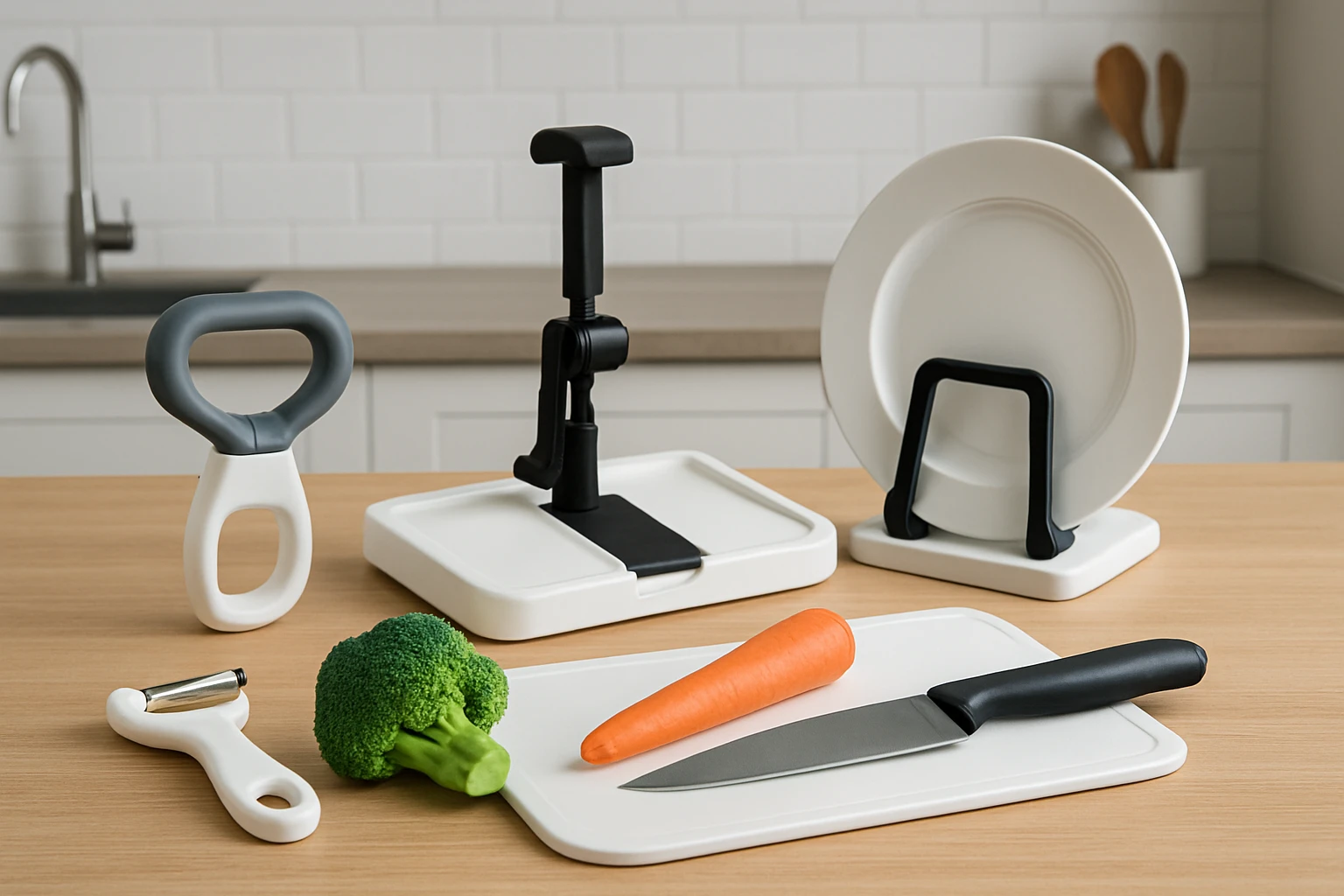
Adaptive kitchen equipment can be grouped into three primary categories: grip‑assistance tools, ergonomic utensils, and specialized appliances. Grip‑assistance tools include jar openers, bottle openers, and can openers that provide leverage or non‑slip surfaces. Ergonomic utensils feature enlarged handles and weighted designs to reduce strain. Specialized appliances, such as one‑handed mixers, incorporate motorized assistance for tasks that normally require two hands.
When selecting equipment for insurance coverage, it is advisable to prioritize items that have been clinically validated and possess a high user rating. Devices that combine multiple functions, such as a 6‑in‑1 jar and bottle opener, often meet the “multiple‑use” criterion that insurers favor.
Below is a recommended product that exemplifies the criteria described above.
Otstar Jar & Bottle Opener offers a versatile solution for individuals with weak hands. The device features eight circular openings ranging from 1 to 3 inches, a lever‑style handle for increased leverage, and a rubber‑lined grip that prevents slippage. It is constructed from food‑grade polypropylene and rubber, ensuring durability and ease of cleaning. With a price of $5.94 and a rating of 4.3 out of 5 stars based on 17,779 reviews, the opener provides both affordability and proven user satisfaction.
Comparison and Selection Guide
Choosing the right adaptive kitchen tool involves evaluating several factors: functional fit, cost, durability, and insurer acceptance. The table below compares common features of popular jar openers.
| Feature | Otstar Jar & Bottle Opener | Competing Brand A | Competing Brand B |
|---|---|---|---|
| Number of Opening Sizes | Eight (1‑3 in) | Five (1‑2.5 in) | Six (1‑3 in) |
| Leverage Handle Length | Long (provides extra torque) | Medium | Short |
| Material | Food‑grade PP & rubber | Plastic | Metal & silicone |
| Price | $5.94 | $12.99 | $9.49 |
| Average Rating | 4.3/5 (17,779 reviews) | 4.0/5 (2,134 reviews) | 4.1/5 (3,210 reviews) |
From the comparison, the Otstar opener stands out for its extensive size range, low price, and high user approval. Insurers often reference the unit price when applying the reasonable‑and‑customary standard; therefore, the lower cost improves reimbursement odds.
When evaluating a product, one should also verify that the manufacturer provides a HCPCS code or that the device can be classified under an existing code for “assistive devices, hand.” If a code is unavailable, the claim may require a “miscellaneous” designation, which can delay approval.
Best Practices and Tips for Successful Claims
- Obtain a detailed physician’s prescription that cites the specific functional limitation and names the recommended device.
- Include the product’s full specifications, such as dimensions, materials, and user instructions, in the claim packet.
- Submit a prior‑authorization request before purchasing, unless the insurer permits post‑purchase reimbursement.
- Retain all receipts, shipping documents, and correspondence with the insurer for audit purposes.
- Consider bundling multiple adaptive tools in a single claim if they serve a common medical purpose, as this can satisfy the “multiple‑use” requirement.
- Follow up regularly with the insurer’s case manager to address any information gaps promptly.
Adhering to these practices reduces claim rejections and accelerates the reimbursement timeline. Additionally, maintaining a clear record of functional improvements, such as the ability to open jars independently, can support future claim extensions or upgrades.
Frequently Asked Questions
- Does private insurance always cover adaptive kitchen tools? Coverage varies by policy; most plans require a physician’s prescription and proof of medical necessity.
- What HCPCS code should be used for a jar opener? There is no universal code; many insurers accept “L3020 – Miscellaneous Durable Medical Equipment” with a supporting letter.
- Can I be reimbursed for a device purchased online? Yes, provided the device meets the insurer’s criteria and the purchase is documented with a receipt.
- How long does the reimbursement process take? Typical processing time ranges from two to six weeks after submission of a complete claim.
- Will the insurer cover multiple devices for the same condition? Insurers may allow multiple devices if each addresses a distinct functional limitation, but they often require justification for each.
- What if my claim is denied? Review the denial reason, gather additional documentation, and submit an appeal within the insurer’s specified timeframe.
- Are there alternatives to insurance coverage? Some states offer Medicaid waivers for adaptive equipment, and certain nonprofit organizations provide grants for seniors.
Conclusion
Private insurance can serve as a valuable resource for acquiring adaptive kitchen equipment that restores independence for individuals with limited hand strength. By understanding eligibility criteria, preparing thorough documentation, and selecting cost‑effective, high‑quality products, claimants can maximize their chances of approval. The Otstar Jar & Bottle Opener exemplifies a device that meets clinical needs, offers excellent value, and aligns with insurer expectations. Implementing the best‑practice tips outlined in this guide will streamline the reimbursement journey and empower users to maintain a nutritious, self‑sufficient lifestyle.
Products Featured in This Guide
Otstar Jar & Bottle Opener
Price: $5.94
Rating: 4.3 out of 5 stars (17,779 reviews)
Why featured: Provides eight opening sizes, lever‑style handle for increased torque, food‑grade materials, and an affordable price point that aligns with insurers’ reasonable‑and‑customary standards.