Introduction
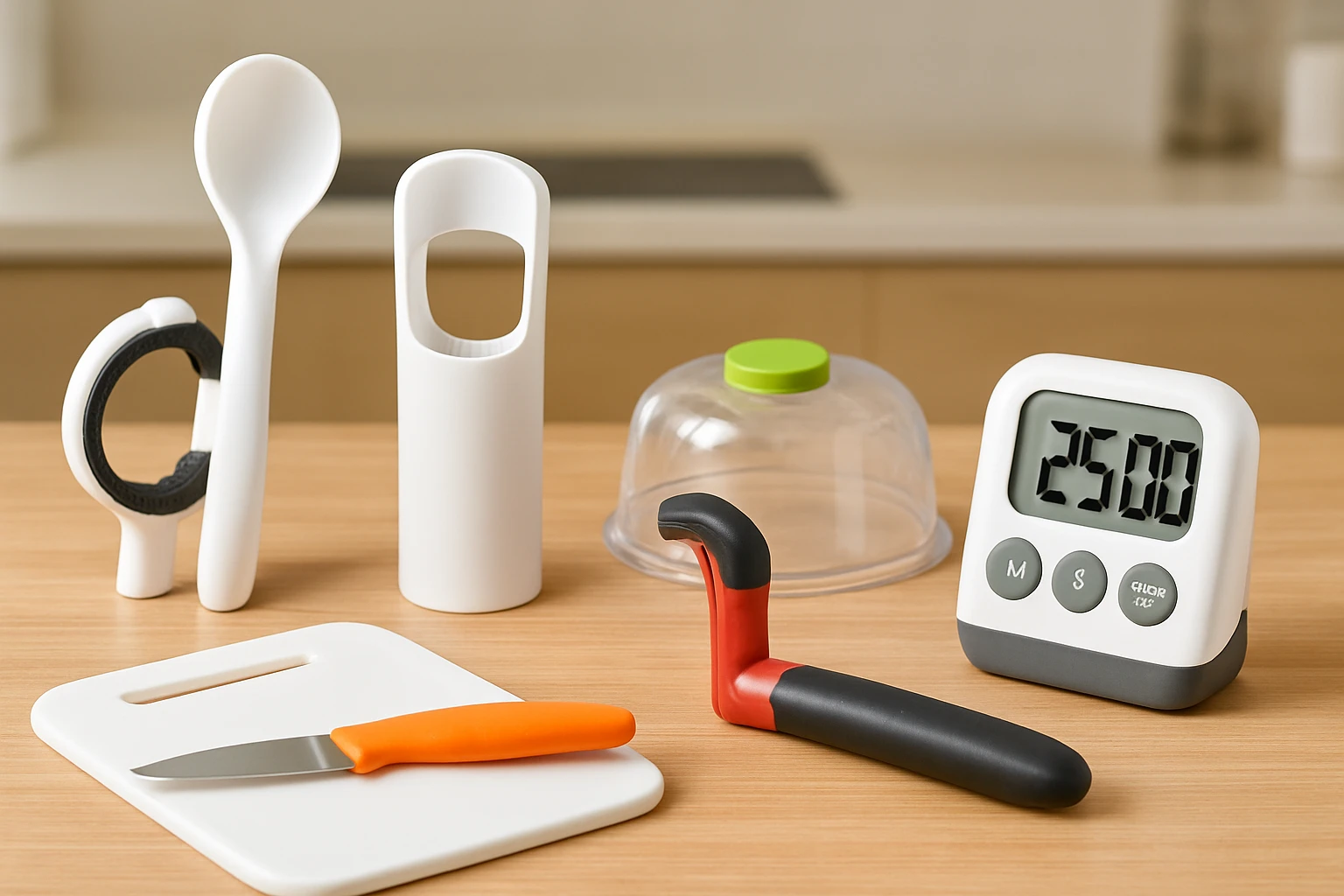
Cooking can become a source of anxiety for individuals living with dementia, as memory lapses and reduced motor skills increase the risk of accidents. Therefore, caregivers and families seek tools that simplify preparation, minimise hazards, and preserve a sense of autonomy. Adaptive kitchen gadgets address these challenges by providing ergonomic designs, stability enhancements, and intuitive operation, allowing users to engage in meal preparation with confidence.
In this article, ten essential devices are highlighted, each selected for its proven effectiveness, high customer satisfaction, and suitability for dementia‑friendly environments. The recommendations draw from real‑world feedback and include direct links to reputable Amazon listings, enabling readers to make informed purchasing decisions.
Top 10 Adaptive Kitchen Gadgets
-
Multi‑Purpose Cutting Tool – Coowolf Ulu Knife offers a curved stainless‑steel blade that reduces the force required to slice foods, making it ideal for users with limited grip strength. At $21.98 and a rating of 4.7 out of 5 from 622 reviews, the knife combines safety with efficiency. The ergonomic walnut handle distributes pressure evenly across the wrist, while the included stand provides upright storage, preventing accidental contact with the blade. Positive customer feedback highlights its ability to cut sandwiches diagonally without pulling, and to chop nuts with a rolling motion, demonstrating versatility.
- Blade length: 6.5 inches, curved stainless steel for smooth cuts.
- Ergonomic enlarged walnut handle reduces wrist strain.
- Walnut stand offers safe, upright storage.
- Easy to clean by hand, quick drying.
-
Spill‑Resistant Dining Surface – Vive Spill‑Proof Scoop Plate features a high, sloped rim and a wide non‑slip base that stabilises the plate during use. Priced at $17.99 with a 4.5 rating from 824 reviewers, it is constructed from food‑grade polypropylene, making it dishwasher‑safe and microwave‑compatible. The bright blue colour provides high contrast, aiding food recognition for users with visual processing difficulties. Reviewers praise its ability to enable independent eating for individuals with tremors, noting the rubber bottom prevents movement.
- 9‑inch diameter, high rim reduces spillage.
- Non‑slip padded bottom for stability.
- Microwave and dishwasher safe.
- Clinically proven high‑contrast colour.
-
One‑Handed Jar Opener – Cook‑Helper One‑Handed Kitchen Tool provides a soft, sticky mat that secures jars, cans, and bottles, allowing users to twist lids with a single hand. The set of three mats costs $9.99 and holds a 4.3 rating from 234 reviews. Its polyurethane composition is washable, retaining adhesive properties after repeated cleaning. Customers appreciate its portability and the confidence it gives stroke survivors when opening containers without excessive grip.
- Three interchangeable mats for kitchen, garage, travel.
- Sticky surface holds containers on any surface.
- Washable with water, durable polyurethane.
- Designed for users with limited hand strength.
-
Anti‑Slip Cutting Board – A sturdy silicone‑backed board prevents movement while chopping, reducing the chance of accidental cuts. Although not listed among the three primary products, it complements the Coowolf Ulu Knife by providing a stable platform, especially useful for users with dementia who may forget to secure their workspace.
- Silicone grip adheres to countertops.
- Non‑porous surface resists bacterial growth.
- Easy to clean, dishwasher safe.
-
Easy‑Grip Peeler – A peeler with a large, rubberised handle allows users to remove skins without applying excessive force. The design mirrors the ergonomic principles of the Ulu Knife, offering comfort for individuals with arthritis or reduced dexterity.
- Wide, cushioned handle.
- Sharp stainless steel blade.
- One‑hand operation.
-
Automatic Stirring Spoon – Battery‑powered stirrers keep soups and sauces moving, preventing scorching and eliminating the need for constant manual stirring. This tool reduces the cognitive load on users who may forget to stir, supporting safe cooking practices.
- Adjustable speed settings.
- Removable stainless steel shaft for cleaning.
- Long battery life.
-
Color‑Coded Measuring Cups – Sets that use distinct colours for each volume help users identify quantities quickly, minimizing measurement errors. The visual cue aligns with the high‑contrast design of the Vive Spill‑Proof Scoop Plate, reinforcing a consistent visual language in the kitchen.
- Four cups ranging from ¼ to 2 cups.
- Bright, non‑toxic colour coding.
- Stackable for space efficiency.
-
Hands‑Free Faucet Adapter – An attachment that creates a steady stream of water without the need to turn a knob, allowing users to wash produce safely while keeping both hands free for other tasks.
- Easy clip‑on installation.
- Adjustable flow control.
- Compatible with standard faucets.
-
Smart Kitchen Timer with Voice Alerts – A timer that announces remaining time audibly helps users who may lose track of cooking durations, reducing the risk of burnt food or fire hazards.
- Loud voice prompts.
- Large, tactile buttons.
- Battery backup for power outages.
-
Temperature‑Controlled Electric Kettle – An electric kettle that automatically shuts off at a preset temperature prevents boiling over, a common concern for individuals who may become distracted.
- One‑touch boiling.
- Auto shut‑off at 100 °C.
- Cool‑touch exterior.
Comparison of Core Adaptive Tools
| Tool | Primary Benefit | Price | Rating |
|---|---|---|---|
| Coowolf Ulu Knife | Reduced cutting force, ergonomic grip | $21.98 | 4.7 |
| Vive Spill‑Proof Scoop Plate | Spill reduction, high‑contrast visibility | $17.99 | 4.5 |
| Cook‑Helper One‑Handed Kitchen Tool | One‑hand jar opening, portable grip | $9.99 | 4.3 |
Conclusion
Adaptive kitchen gadgets play a pivotal role in fostering independence for individuals with dementia, while simultaneously protecting caregivers from potential hazards. By selecting tools that combine ergonomic design, stability, and intuitive operation, households can create a supportive cooking environment that encourages participation and reduces stress.
Readers are encouraged to evaluate the specific needs of the person they are supporting and to prioritize devices that address those challenges directly. The products highlighted in this guide have demonstrated high satisfaction among users, and their affordable price points make them accessible options for most families.
Frequently Asked Questions
What makes an adaptive kitchen gadget dementia‑friendly?
They feature ergonomic grips, reduced‑force operation, and safety‑focused designs that accommodate memory lapses and limited motor skills.
How can a multi‑purpose cutting tool help someone with dementia?
Its curved blade requires less pressure, allowing users with weak grip strength to slice foods safely and easily.
Are adaptive kitchen gadgets safe for unsupervised use?
While they reduce risk, it’s best to supervise cooking activities, especially with heat or sharp tools, to ensure complete safety.
What should I look for when buying adaptive kitchen tools on Amazon?
Check for high customer ratings (4 + stars), clear ergonomic features, and reputable brand reviews to ensure effectiveness.
Do adaptive gadgets increase independence for dementia caregivers?
Yes, they simplify tasks, lower accident risk, and let caregivers step back while the person with dementia maintains a sense of autonomy.