Introduction
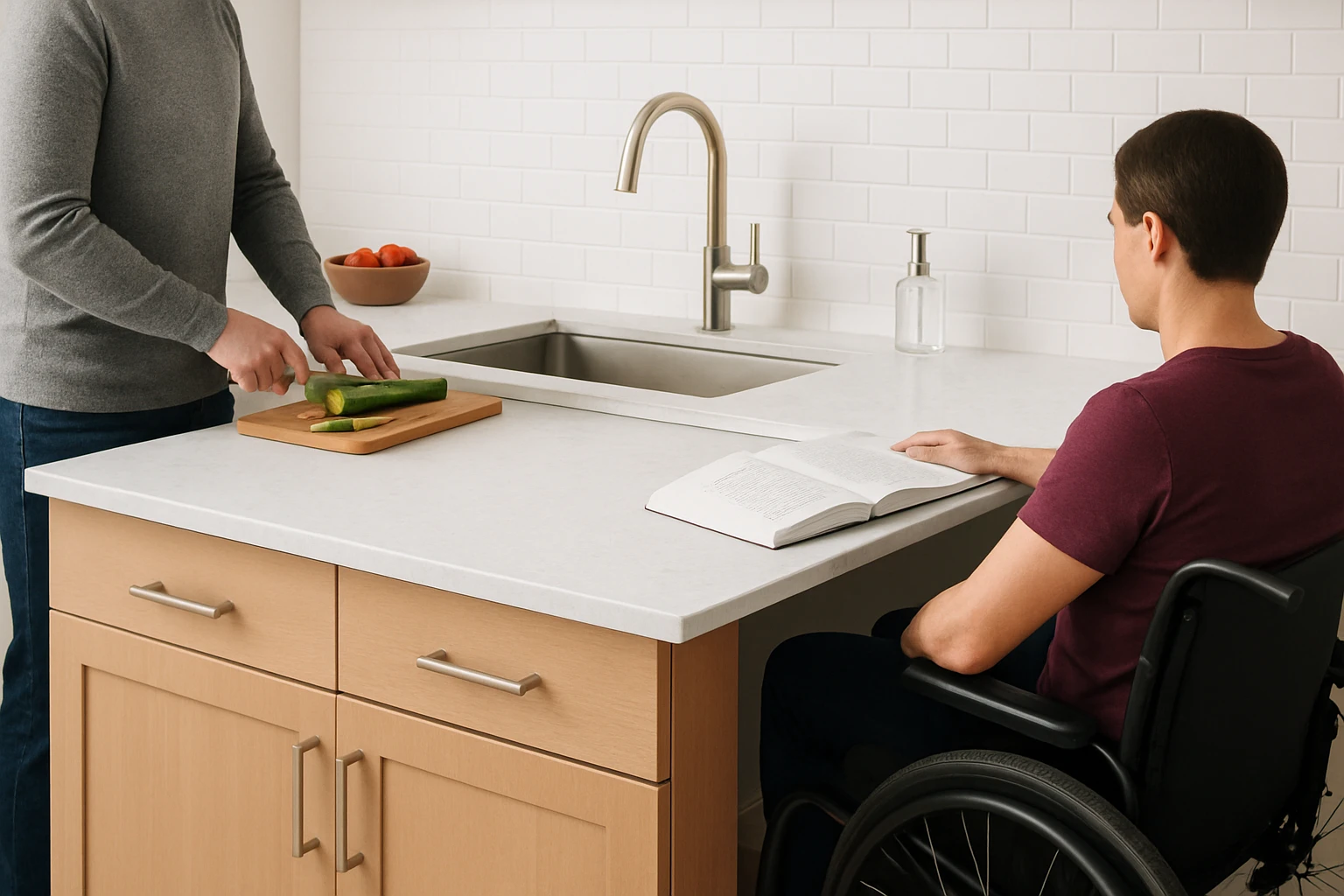
The modern kitchen must serve a diverse range of users, from individuals who stand while cooking to those who operate from a wheelchair. This guide explains how to determine optimal countertop heights, integrate adaptable accessories, and choose products that enhance safety and independence. Readers will learn foundational ergonomics, practical design strategies, and a clear comparison of four highly rated Amazon items that support mixed‑mobility households.
Background and Context
Ergonomic research indicates that a countertop height that is too low forces a seated user to reach forward, increasing the risk of shoulder strain, while a height that is too high creates an uncomfortable bending posture for standing users. The American Disabilities Act recommends a minimum clear knee space of 27 inches and a maximum countertop height of 34 inches for wheelchair accessibility. In addition, adjustable and modular furniture can bridge the gap between these standards, allowing a single kitchen to accommodate multiple users without extensive remodeling.
Designing Countertop Heights for Wheelchair Users
When planning a wheelchair‑friendly kitchen, the primary goal is to provide a clear knee clearance of at least 27 inches and a work surface that aligns with the user’s elbow height, typically between 28 and 34 inches. Adjustable shelving and over‑microwave racks can raise appliances without raising the entire countertop, preserving the required clearance.
A practical solution is the DOLALIKE Expandable Microwave Rack. This carbon‑steel rack expands from 16.17 to 24.67 inches, allowing users to position a microwave at a comfortable height while maintaining a stable base. Each tier supports up to 55 lb, for a total capacity of 110 lb, making it suitable for microwaves, small appliances, and storage containers. The product holds a rating of 4.7 out of 5 stars from 1,823 reviews and is priced at $27.99, offering high value for households seeking flexible vertical space.
Installation requires no drilling; non‑slip suction feet keep the rack steady on the countertop. Users should avoid extending the rack beyond 24.67 inches to preserve stability, as noted in the manufacturer’s guidelines. By placing the microwave on this rack, the countertop height remains unchanged, yet the user enjoys a reduced reaching distance and a clearer knee area.
Flexible Multi‑Purpose Surfaces for Standing and Seated Users
Beyond appliance positioning, a versatile tabletop can serve as a dining surface, craft area, or temporary work desk. The Best Choice Folding Dining Table offers a collapsible design that adapts to limited floor space while providing a sturdy work surface up to 100 lb.
Key features include three storage shelves—two fixed and one adjustable—allowing users to keep utensils, plates, or craft supplies within easy reach. Built‑in wheels enable smooth relocation, and a locking mechanism secures the table when extended. The tabletop measures 52 inches long, 31.5 inches wide, and can be adjusted to a height that suits both seated and standing individuals. At $119.99 and a rating of 4.2 out of 5 stars from 483 reviews, this table balances durability with affordability.
When folded, the table occupies a compact footprint, freeing floor space for wheelchair maneuverability. When opened, the extended leaves provide ample surface area for meals or projects, reducing the need for separate tables and simplifying the kitchen layout.
Portable Over‑Bed and Over‑Chair Tables
In mixed‑mobility homes, users often require a surface that can travel between the kitchen, bedroom, and living area. The Drive Medical Overbed Table delivers a height‑adjustable, roll‑away platform that supports up to 40 lb. Its laminated top resists sliding, and the H‑style base with 2‑inch swivel casters offers stability during movement. Height adjustment ranges from 28 to 45 inches, accommodating users who sit in bed, on a recliner, or at a wheelchair.
With a price of $54.99 and a rating of 4.4 out of 5 stars from 21,822 reviews, this table provides reliable performance at a modest cost. The limited‑lifetime warranty underscores the brand’s confidence in durability. Users can position the table beside a kitchen island for meal preparation or pull it into a bedroom for comfortable dining.
For wheelchair users who need a dedicated lap surface, the Wheelchair Removable Lap Tray attaches securely to armrests spaced 16‑20 inches apart. Constructed from durable ABS plastic and steel, the tray includes two cup indents and a pencil well to prevent spills. At $43.99 and a rating of 4.1 out of 5 stars from 117 reviews, it offers a portable solution for eating, reading, or using a laptop while seated.
Installation involves four mounting holes and a rotating bracket, allowing the tray to be positioned for optimal ergonomics. The design supports independence by keeping essential items within arm’s reach, reducing the need for caregivers to assist with meals.
Comparison and Selection Guide
| Product | Primary Use | Adjustability | Weight Capacity | Price | Rating |
|---|---|---|---|---|---|
| DOLALIKE Expandable Microwave Rack | Elevate microwave and create under‑shelf storage | Length 16.17–24.67 in (fixed height) | 110 lb total | $27.99 | 4.7/5 (1,823 reviews) |
| Best Choice Folding Dining Table | Multipurpose dining/working surface | Foldable leaves, wheels for mobility | 100 lb | $119.99 | 4.2/5 (483 reviews) |
| Drive Medical Overbed Table | Adjustable height bedside or wheelchair table | 28–45 in continuous adjustment | 40 lb | $54.99 | 4.4/5 (21,822 reviews) |
| Wheelchair Removable Lap Tray | Portable lap surface for wheelchair | Fixed size, adjustable mounting angle | Not specified (robust ABS construction) | $43.99 | 4.1/5 (117 reviews) |
When selecting a product, consider the primary activity (cooking, dining, bedside work), the required height adjustment, and the weight of items to be supported. For users who primarily need a higher microwave position, the DOLALIKE rack offers the most cost‑effective solution. For flexible surface area, the Best Choice table excels. For bedside or mobile work, the Drive Medical table provides smooth height adjustment, while the Wheelchair Lap Tray is ideal for direct arm‑rest attachment.
Best Practices & Tips
- Measure the knee clearance under all countertops; maintain at least 27 inches of vertical space for wheelchair users.
- Position frequently used appliances at elbow height for seated users; use adjustable racks or pull‑out shelves to achieve this.
- Incorporate rounded countertop edges to reduce injury risk when arms or legs contact the surface.
- Use non‑slip mats or suction feet on movable accessories to prevent accidental movement during use.
- Plan clear pathways of at least 36 inches width around appliances to allow smooth wheelchair navigation.
- When installing over‑microwave racks, verify that the maximum extension does not exceed manufacturer‑specified limits to preserve stability.
- Regularly inspect wheels and casters on mobile tables for wear; replace as needed to maintain safe maneuverability.
Frequently Asked Questions
- What is the ideal countertop height for a wheelchair user? The recommended height ranges from 28 to 34 inches, depending on the user’s elbow height while seated. Maintaining a minimum knee clearance of 27 inches is essential.
- Can I use a standard kitchen island with a wheelchair? Yes, if the island includes a clear under‑clearance of at least 27 inches and a rounded edge. Adding a removable over‑microwave rack can raise appliances without altering the island height.
- Do I need a professional to install the DOLALIKE rack? No. The rack includes suction feet and requires only basic alignment; users can install it without drilling.
- How much weight can the Drive Medical Overbed Table support? The table is rated for a maximum load of 40 lb, suitable for laptops, meals, and small medical devices.
- Is the Wheelchair Removable Lap Tray compatible with all wheelchairs? It fits most models with arm‑rest spacing between 16 and 20 inches and tube diameters of 0.85–0.9 inches.
- What maintenance is required for these products? Clean metal surfaces with a damp cloth, avoid abrasive cleaners on ABS plastic, and periodically check fasteners for tightness.
- Can I combine multiple accessories in a single kitchen? Absolutely. Using a combination of an expandable rack, a folding table, and a portable over‑bed table creates a layered approach that serves both seated and standing users.
Conclusion
Designing a kitchen that accommodates both wheelchair and standing users requires thoughtful measurement, adaptable furniture, and attention to safety. By applying ergonomic standards, selecting adjustable accessories such as the DOLALIKE Expandable Microwave Rack, Best Choice Folding Dining Table, Drive Medical Overbed Table, and Wheelchair Removable Lap Tray, and following best‑practice guidelines, households can create inclusive environments that promote independence and comfort. The strategies outlined in this guide empower readers to make informed decisions, whether they choose to invest in new products or simply reconfigure existing spaces.
Products Featured in This Guide
DOLALIKE Expandable Microwave Rack
Price: $27.99 | Rating: 4.7/5 (1,823 reviews)
Featured because it provides a stable, height‑adjustable platform that preserves wheelchair knee clearance while freeing countertop space.
Best Choice Folding Dining Table
Price: $119.99 | Rating: 4.2/5 (483 reviews)
Featured because its collapsible design and built‑in storage create a versatile surface that adapts to both seated and standing activities.
Drive Medical Overbed Table
Price: $54.99 | Rating: 4.4/5 (21,822 reviews)
Featured because its height‑adjustable, roll‑away design supports bedside meals and work tasks for both wheelchair and bed‑bound users.
Wheelchair Removable Lap Tray
Price: $43.99 | Rating: 4.1/5 (117 reviews)
Featured because it attaches directly to wheelchair armrests, providing a portable, spill‑resistant surface for meals and reading.