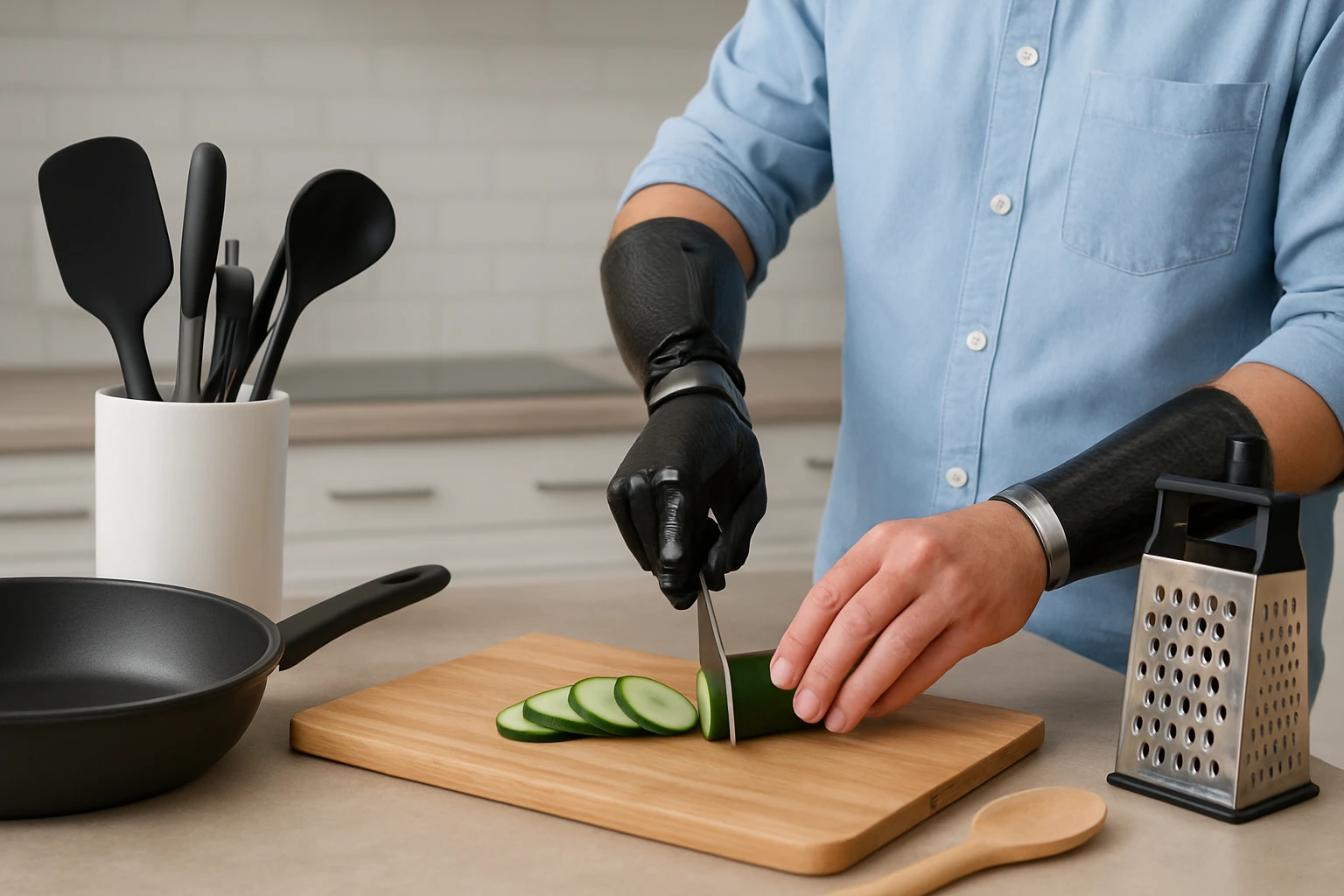
Ultimate Guide to Prosthetic-Compatible Kitchen Tools for Amputees: Best Adaptive Utensils, Gadgets & Safety Tips
Introduction
Living independently after an amputation often requires thoughtful modifications to everyday tasks, especially food preparation and eating. This guide explains how prosthetic‑compatible kitchen tools can restore confidence, reduce fatigue, and promote safety for amputees. Readers will learn essential background information, explore adaptive utensil categories, and receive detailed product recommendations. By the end of the article, one will be equipped to select tools that match personal ability, prosthetic design, and culinary preferences.
Background and Context
Prosthetic limbs differ widely in weight, range of motion, and attachment method, which directly influences how users manipulate objects. Most commercial utensils are designed for a full‑hand grip, creating challenges for individuals with limited grasp strength or altered hand geometry. Adaptive kitchen tools address these challenges by providing wider handles, weighted shafts, or magnetic attachments that align with prosthetic sockets. Understanding the interaction between prosthetic mechanics and utensil ergonomics is the foundation for safe, efficient cooking.
Key concepts include grip span, torque resistance, and tactile feedback. Grip span refers to the distance between the prosthetic fingers or hooks; tools with a larger diameter reduce the need for precise finger placement. Torque resistance describes how much force is required to rotate a utensil; weighted designs increase stability for users with tremor or reduced wrist control. Tactile feedback is enhanced by textured, non‑slip surfaces that allow users to sense the utensil’s position without visual confirmation. When these principles are applied, the kitchen becomes a more accessible environment.
Adaptive Utensil Categories
Adaptive utensils can be grouped into three primary categories: weighted utensils, swivel‑handle utensils, and modular utensil systems. Weighted utensils, such as the Special Supplies Black Weighted Utensils Set, add mass to the shaft, reducing unwanted movement caused by tremor or limited prosthetic control. Swivel‑handle designs incorporate a rotating joint that aligns the handle with the prosthetic grip, minimizing strain on the socket. Modular systems allow users to interchange heads (fork, spoon, knife) on a single handle, reducing clutter and simplifying storage.
Each category offers distinct advantages. Weighted utensils improve stability for users with Parkinson’s disease or severe hand tremor, while swivel handles benefit those with limited wrist extension. Modular systems are ideal for small kitchens or travel, as they reduce the number of individual pieces that must be cleaned. Selecting the appropriate category depends on the user’s specific prosthetic capabilities, daily routines, and personal preferences.
Recommended Adaptive Utensils
Two highly rated products from Special Supplies Store exemplify the weighted‑utensil approach. The Special Supplies Black Weighted Utensils Set includes a fork, knife, dinner spoon, and soup spoon, each featuring a silicone‑coated, non‑slip grip and a stainless‑steel shaft. Priced at $27.99, the set holds a 4.4‑star rating based on 1,847 reviews, indicating broad consumer satisfaction. Its key features are:
- Weighted, wide‑diameter handles that counteract tremor and improve control.
- Ribbed, textured silicone grips for enhanced tactile feedback.
- Dishwasher‑safe stainless‑steel construction for durability.
- Available in black or gray silicone handles to match kitchen décor.
The grey counterpart, Special Supplies Grey Weighted Utensils Set, offers identical specifications with a neutral colour option. It shares the same price point, rating, and feature set, making it a suitable alternative for users who prefer a lighter visual aesthetic. Both sets are designed to be bendable, allowing users to adjust the utensil angle for optimal prosthetic alignment, a feature praised in multiple customer reviews.
Comparison and Selection Guide
When choosing adaptive utensils, consider the following criteria:
- Weight Preference: Heavier utensils provide stability but may be difficult for users with limited strength. The Special Supplies sets weigh approximately 6 oz each; users seeking lighter options should test a single piece before purchasing the full set.
- Handle Diameter: A wider handle reduces the precision required for a secure grip. Both featured sets have a diameter of roughly 1.5 inches, suitable for most prosthetic sockets.
- Material Compatibility: Stainless‑steel shafts are dishwasher safe and resist corrosion, while silicone grips are hypoallergenic and easy to clean.
- Colour and Aesthetics: Matching utensil colour to kitchen décor can improve user satisfaction. Black and grey options are available.
- Modularity: If space is limited, consider a modular system that allows interchangeable heads.
By scoring each criterion on a scale of 1‑5, users can create a simple decision matrix to identify the best fit. For example, a user with moderate hand strength but significant tremor may prioritize weight and grip, scoring the Special Supplies weighted sets highly in those categories.
Best Practices & Tips
Beyond selecting the right tools, amputees can adopt several practices to maximise safety and efficiency in the kitchen.
- Organise Workspaces: Keep frequently used utensils within arm’s reach to minimise unnecessary movement.
- Use Adaptive Cutting Boards: Boards with suction cups or non‑slip bases prevent shifting while cutting.
- Employ Stabilising Racks: Fork and spoon racks keep weighted utensils upright, reducing the effort required to retrieve them.
- Practice Proper Grip Techniques: Align the prosthetic socket so that the palm side contacts the utensil’s widest portion; this distributes force evenly.
- Maintain Cleanliness: Dishwasher‑safe utensils like the Special Supplies sets reduce manual cleaning time, lowering the risk of burns or cuts.
Regularly inspect silicone grips for wear, as a compromised surface can reduce friction and increase the chance of accidental drops. If a grip shows signs of cracking, replace the utensil promptly to preserve safety.
Frequently Asked Questions
- 1. Are weighted utensils safe for individuals with very weak prosthetic grip?
- Weighted utensils add mass, which can be beneficial for tremor but may be challenging for users with extremely limited strength. It is advisable to test a single utensil before buying a full set.
- 2. Can the silicone handles be replaced if they break?
- Special Supplies currently offers the full set only; however, the manufacturer can be contacted for spare grips. Users have reported successful replacement by purchasing a new set.
- 3. Do these utensils work with my myoelectric hand?
- Yes. The wide, non‑slip grip accommodates a range of prosthetic socket designs, including myoelectric and body‑powered devices.
- 4. How do I clean the weighted utensils without damaging the silicone?
- Place the utensils on the top rack of a dishwasher; the silicone is heat‑resistant up to 180 °F. Hand washing with mild soap is also safe.
- 5. Are there any tax‑exempt options for medical devices?
- In many jurisdictions, adaptive utensils are considered medical aids and may be eligible for tax‑exempt purchase. Consult local regulations or a tax professional.
Conclusion
Prosthetic‑compatible kitchen tools empower amputees to maintain independence, dignity, and enjoyment while preparing meals. By understanding ergonomic principles, evaluating weighted versus swivel or modular designs, and applying the selection criteria outlined above, users can make informed decisions. The Special Supplies Black and Grey Weighted Utensils Sets exemplify high‑quality, affordable options that meet the needs of many amputees, yet the guide also provides a framework for assessing alternative products. Implementing the best‑practice tips further enhances safety and reduces fatigue, ensuring that cooking remains a rewarding activity.
Products Featured in This Guide
Special Supplies Black Weighted Utensils Set
Price: $27.99 | Rating: 4.4/5 (1,847 reviews)
Featured because it provides weighted, non‑slip handles that improve control for users with tremor or limited prosthetic grip, and it includes a full 4‑piece set.
Special Supplies Grey Weighted Utensils Set
Price: $27.99 | Rating: 4.4/5 (1,847 reviews)
Featured as the colour‑matched counterpart to the black set, offering identical ergonomic benefits while allowing users to select a neutral grey aesthetic.