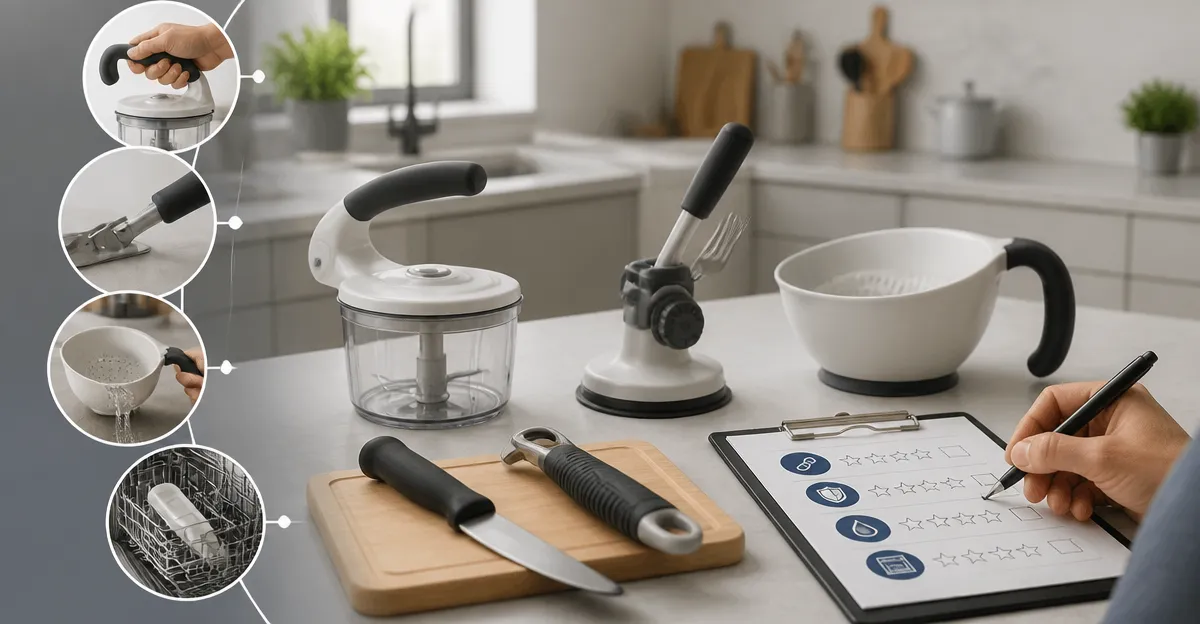
Introduction
The modern kitchen often incorporates adaptive products that promise flexibility, space efficiency, and ergonomic benefits. One must determine whether these promises translate into long‑term durability before committing financial resources. This guide explains how to conduct practical durability tests, identify critical design features, and apply buying strategies that reduce risk. Readers will emerge with a systematic approach that can be applied to any adaptive kitchen solution.
What You’ll Need
- Measuring tape or ruler (minimum 150 cm)
- Digital scale capable of measuring up to 10 kg
- Heavy‑duty adhesive tape for stress‑testing joints
- Notebook or digital device for recording observations
- Reference material such as All New Kitchen Ideas that Work for industry benchmarks
Step 1: Assess Material Quality
The first indicator of durability is the intrinsic quality of the materials used in the product. Examine visible surfaces for grain consistency, weld seams, and finish uniformity; high‑grade stainless steel, solid hardwood, and reinforced polymers typically outperform lower‑cost alternatives. Use the measuring tape to verify that thickness specifications match manufacturer claims, as thin components are prone to warping under load. Record any discrepancies, because they often correlate with premature failure.
For adaptive storage units, the reference book All New Kitchen Ideas that Work provides a concise checklist of material standards for cabinets, pull‑out drawers, and modular islands. The book is priced at $15.26, holds a rating of 4.4 out of 5 from 349 reviewers, and offers practical illustrations that simplify the assessment process.
Step 2: Conduct Load‑Bearing Tests
Adaptive products frequently claim to support heavy cookware, appliances, or pantry items. To validate these claims, place a known weight on the surface and observe deformation over a five‑minute interval. Use the digital scale to ensure the applied load matches or exceeds the manufacturer’s advertised capacity. If the product flexes, creaks, or the joints separate, it fails the durability benchmark.
When testing pull‑out shelves, attach heavy‑duty adhesive tape across the sliding mechanism and pull firmly to simulate repeated use. Observe whether the tape releases smoothly or tears the surface, indicating potential wear points. Consistent performance under these conditions suggests robust engineering.
Step 3: Evaluate Joint and Connection Strength
Adaptive designs rely on hinges, brackets, and magnetic catches to enable flexibility. Inspect each connection for secure fastening, smooth motion, and absence of wobble. Apply lateral pressure with your hand while the product is in its extended position; any looseness may lead to failure during everyday operation.
The handbook The Kitchen Paraphernalia Handbook lists common substitution strategies for hardware, allowing the evaluator to compare original components with higher‑grade alternatives. Priced at $3.99 and rated 4.5 out of 5 from 17 reviews, this Kindle edition offers concise tables that streamline the comparison process.
Step 4: Test Resistance to Moisture and Temperature
Kitchens expose products to steam, splashes, and occasional heat spikes. Conduct a moisture resistance test by wiping a damp cloth over the surface and noting any water absorption, staining, or swelling after ten minutes. For temperature resilience, place a hot pot (approximately 80 °C) on the product for two minutes and inspect for discoloration or warping.
The guide The Efficient Kitchen includes a chapter on climate‑proof materials, making it a valuable reference for this step. It is available for $2.99, carries a 4.8 rating from 49 reviewers, and emphasizes practical testing protocols.
Step 5: Perform Long‑Term Simulated Use
True durability emerges after repeated cycles of use. Simulate at least 50 opening and closing cycles on adjustable drawers, sliding racks, or fold‑down tables. Record any increase in friction, audible squeaks, or loss of alignment. This accelerated test approximates several months of everyday activity.
Document each observation in the notebook, noting the date, temperature, and any visual changes. Consistent smooth operation across the simulated cycles indicates that the product’s engineering can withstand real‑world demands.
Tips & Pro Tips
- Prefer products with stainless‑steel reinforcement in high‑stress zones; this alloy resists corrosion and maintains structural integrity.
- Check warranty terms; a minimum two‑year warranty often reflects manufacturer confidence in durability.
- When possible, purchase from retailers that offer a return window of at least 30 days, allowing extended testing at home.
- Cross‑reference product specifications with the guidelines in All New Kitchen Ideas that Work to ensure compliance with industry standards.
Troubleshooting
Problem: Joint loosening after a few weeks of use.
Solution: Tighten screws using a torque‑controlled screwdriver; replace any stripped hardware with stainless‑steel alternatives listed in The Kitchen Paraphernalia Handbook.
Problem: Surface warping near the heat source.
Solution: Verify that the product’s material rating includes heat‑resistant properties; if not, relocate the item or add a heat‑deflecting mat.
Conclusion
Evaluating the durability of adaptive kitchen products requires a methodical approach that blends visual inspection, load testing, joint analysis, moisture resistance, and simulated long‑term use. By following the steps outlined above, one can make evidence‑based purchasing decisions that minimise future disappointment. The referenced guides—All New Kitchen Ideas that Work, The Kitchen Paraphernalia Handbook, and The Efficient Kitchen—provide additional depth and reference tables for continued learning. One should feel confident that the chosen adaptive solutions will endure the rigors of daily culinary activity.
Products Mentioned in This Guide
Frequently Asked Questions
What basic tools are needed to test the durability of adaptive kitchen products?
A measuring tape or ruler, a digital scale (up to 10 kg), heavy‑duty adhesive tape, and a notebook or device for notes are essential.
How can I assess material quality during a durability evaluation?
Inspect surfaces for consistent grain, solid weld seams, and uniform finishes, as these indicate higher intrinsic strength.
What simple stress test can reveal joint weakness in kitchen adapters?
Apply heavy‑duty adhesive tape across joints and pull gently; any separation or creaking signals potential failure points.
Why is recording measurements important when testing adaptive kitchen items?
Documenting dimensions, weight capacity, and observations creates a benchmark for comparison and helps verify manufacturer claims.
How do industry benchmarks, like those in ‘All New Kitchen Ideas that Work’, aid my durability assessment?
They provide reference standards for material grades and load limits, allowing you to gauge whether a product meets or exceeds typical durability expectations.