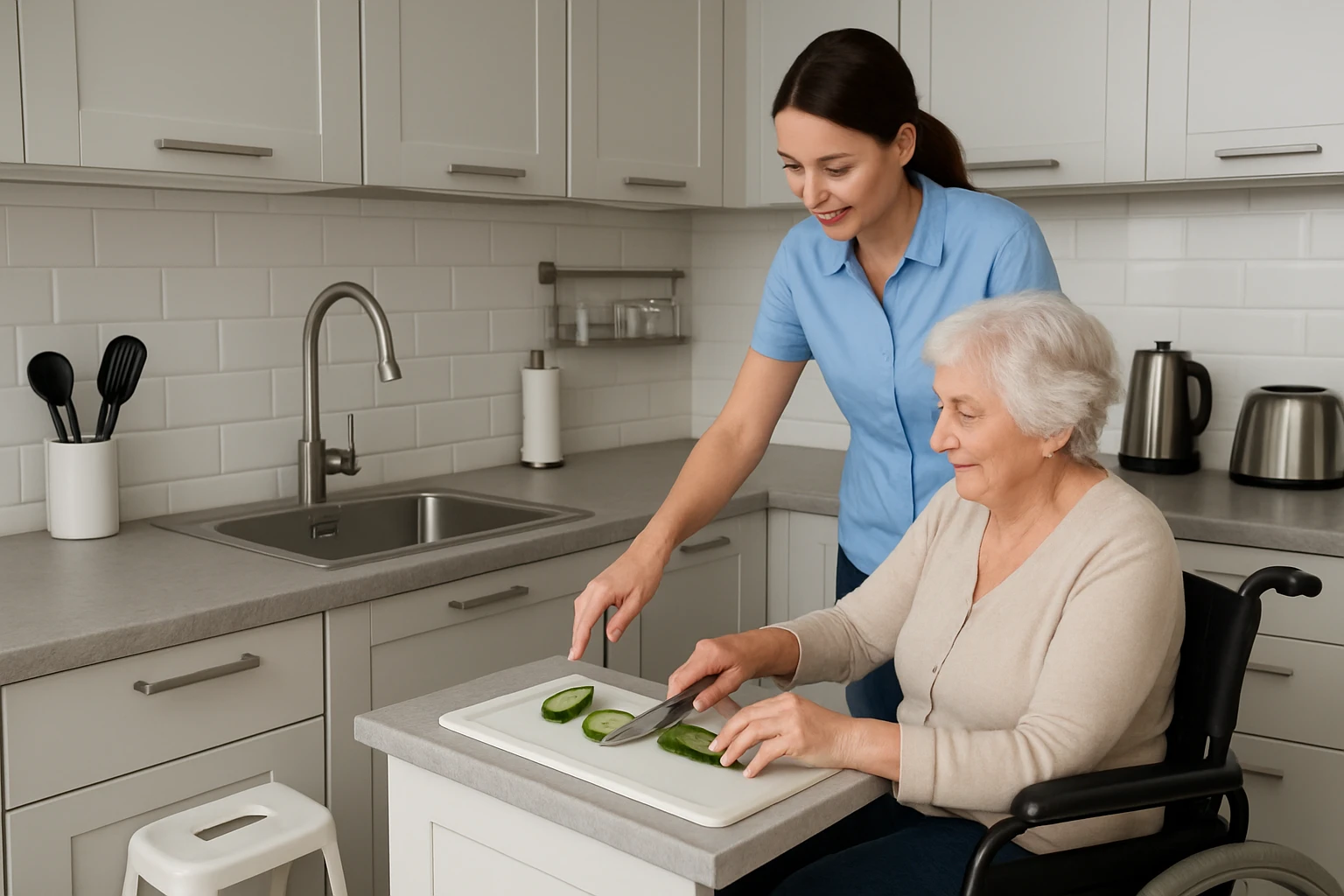
Kitchen Accessibility Checklist for Caregivers: A Step-by-Step Guide to Safer, Independent Cooking
Introduction
Caregivers often face the challenge of creating a kitchen environment that supports independence for individuals with limited hand strength, tremors, or arthritis. This guide outlines a systematic checklist that enables one to evaluate safety, accessibility, and usability of kitchen tools and spaces. Readers will learn foundational concepts, practical adaptations, and product recommendations that align with evidence‑based best practices. By following the steps, caregivers can reduce the risk of spills, cuts, and frustration while encouraging confidence during meal preparation.
The checklist is organized into logical sections that address layout, equipment, adaptive utensils, and ongoing maintenance. Each section includes actionable items that can be implemented without extensive renovation. The guide also provides a comparison of popular adaptive utensil sets so that caregivers can select the most appropriate option for the specific needs of the person they support.
Background and Context
Limited dexterity often results from conditions such as Parkinson’s disease, arthritis, stroke, or age‑related muscle loss. These conditions affect grip strength, coordination, and the ability to apply fine motor control. Research indicates that adaptive kitchen tools can improve self‑efficacy and nutritional intake for individuals with these challenges. Key concepts include ergonomic handle design, weighted versus lightweight utensils, non‑slip bases, and adjustable angles that accommodate tremor amplitude.
One must also consider the safety hierarchy: eliminate hazards, substitute safer tools, engineer controls, and provide training. In the kitchen, this hierarchy translates to removing clutter, using stable dishware, selecting utensils with built‑in stability, and teaching safe handling techniques. Understanding these principles prepares caregivers to make informed decisions that balance independence with risk mitigation.
Assessing Kitchen Layout
The first step in the checklist is to evaluate the physical layout of the cooking area. One should ensure that countertops are at a comfortable height, typically between 34 and 36 inches for most adults. Clear pathways of at least 36 inches allow wheelchair access and reduce the likelihood of accidental collisions.
Storage solutions such as pull‑out shelves, lazy‑susans, and low‑height cabinets enable easy retrieval of cookware without excessive reaching. Lighting should be bright and evenly distributed; task lighting over stovetops and cutting boards reduces visual strain. Finally, non‑slip mats placed in front of sinks and stovetops provide a stable footing surface for individuals who may experience balance issues.
Adaptive Dinnerware Solutions
Adaptive dinnerware combines stable bases with ergonomic designs to prevent spills and enhance control. The Maxcheck Adaptive Utensils Set Blue includes a suction‑base bowl and plate together with a set of bendable cutlery. The bowl measures approximately 5.8 inches in diameter and holds 14 oz, while the plate measures 9.2 inches and holds 17 oz. The suction cups secure the items to the tabletop, preventing movement during use. The cutlery features a large, heavy handle that offers stability, and three pieces can be bent to suit personal angles.
This set is constructed from plastic and stainless steel, making it microwave, refrigerator, and dishwasher safe, except for the suction cups. The product holds a rating of 4.3 out of 5 stars based on 122 reviews, indicating reliable performance for users with Parkinson’s or hand tremors. The price of $26.99 positions it as a mid‑range option that delivers both functional and ergonomic benefits.
When selecting dinnerware, caregivers should verify that the suction base is compatible with the surface material and that the weight of the bowl does not exceed the user’s lifting capacity. The high‑to‑low design of the Maxcheck set helps hold food in place, reducing the need for excessive hand movement.
Adaptive Cutlery Options
Cutlery that offers enlarged grips and weighted handles can significantly improve self‑feeding for individuals with weak grip strength. The Nourislif Adaptive Cutlery Set provides four pieces—spoon, teaspoon, fork, and knife—each with a contoured, built‑up handle. The utensils are made of rust‑proof stainless steel and are dishwasher safe.
Key features include an enlarged easy‑grip handle that enhances stability, a premium stainless‑steel construction that ensures durability, and a one‑year guarantee that adds confidence to the purchase. The set is priced at $9.99 and carries a rating of 4.6 out of 5 stars from 1,263 reviews, reflecting high customer satisfaction. Its lightweight design makes it suitable for users who prefer less weight while still requiring a secure grip.
For caregivers who need a color‑coordinated option, the Maxcheck Adaptive Utensils Set Red offers the same functional features as the blue version, with the added benefit that the red color does not stain from tomato‑based foods. The price and rating mirror the blue set, providing a consistent alternative for personal preference.
Weighted Utensil Alternatives
Weighted utensils add mass to the handle, which can dampen tremor amplitude and provide a steadier eating experience. The BUNMO Adaptive Utensils Blue Set includes a curved knife, fork, spoon, and teaspoon, each featuring a rubberized, weighted handle. The stainless‑steel construction ensures durability, and the set is dishwasher safe for easy cleaning.
Customers note that the added weight creates a feeling of control, and the curved knife allows cutting motions that differ from traditional straight blades, reducing effort for users with limited hand strength. The set is priced at $24.99 and holds a rating of 4.6 out of 5 stars from 7,138 reviews, indicating strong market acceptance.
Another option is the Special Supplies Weighted Utensils Set, which features a four‑piece collection with non‑slip, ribbed silicone handles. The utensils are available in black or gray, allowing caregivers to match kitchen décor. At $29.99 and a rating of 4.4 out of 5 stars from 1,842 reviews, this set offers a balance between weight, grip, and aesthetic flexibility.
Comparison and Selection Guide
| Feature | Maxcheck Set (Blue/Red) | Nourislif Set | BUNMO Set | Special Supplies Set |
|---|---|---|---|---|
| Included Items | Bowl, plate, 5‑piece cutlery | 4‑piece cutlery | 4‑piece cutlery with curved knife | 4‑piece weighted cutlery |
| Weight of Handles | Heavy, stabilizing | Lightweight | Weighted | Weighted with silicone grip |
| Material | Plastic + stainless steel | Stainless steel | Stainless steel | Stainless steel + silicone |
| Adjustability | Bendable cutlery angles | Fixed ergonomic shape | Fixed weighted shape | Fixed weighted shape |
| Suction Base | Yes (bowl & plate) | No | No | No |
| Dishwasher Safe | Cutlery only | Yes | Yes | Yes |
| Price | $26.99 | $9.99 | $24.99 | $29.99 |
| Rating (stars) | 4.3 | 4.6 | 4.6 | 4.4 |
Caregivers should match product attributes to the specific needs of the individual. If a stable base for bowls is required, the Maxcheck set provides suction cups that prevent movement. For users who prefer a lighter utensil with ergonomic handles, the Nourislif set offers an economical solution. When additional weight is needed to counteract tremors, the BUNMO or Special Supplies sets deliver weighted handles, with the latter offering silicone grips for enhanced non‑slip performance.
Best Practices and Tips
- Secure all cookware on a non‑slip mat before cooking to prevent accidental sliding.
- Arrange frequently used items within arm’s reach to minimize bending and stretching.
- Use color‑coded utensils to differentiate between cutting, stirring, and serving tools.
- Regularly inspect suction bases for wear and replace them if the grip diminishes.
- Practice proper hand positioning by holding the utensil near the center of mass for better control.
- Incorporate adaptive cutting boards with raised edges to keep food from slipping while chopping.
- Schedule periodic reviews of the kitchen setup to adapt to changes in the individual’s mobility.
Frequently Asked Questions
- What is the most important feature of adaptive dinnerware?
- The most important feature is a stable, non‑slip base that prevents the bowl or plate from moving while the user eats.
- Can weighted utensils be used by someone with mild tremors?
- Yes, weighted utensils can dampen tremor amplitude, but the weight should not exceed the user’s grip strength to avoid fatigue.
- Are suction‑base bowls safe for microwave use?
- The suction cups themselves are not microwave safe; the bowl can be removed from the base before heating.
- How often should adaptive utensils be replaced?
- Adaptive utensils should be inspected for wear every six months, and any broken handles or degraded grips should be replaced immediately.
- Do adaptive utensils require special cleaning?
- Most adaptive utensils are dishwasher safe, but the suction bases and silicone grips should be hand‑washed to preserve adhesive properties.
- Is it necessary to buy a complete set or can individual pieces be purchased?
- Both approaches are viable; a complete set ensures coordinated design, while individual pieces allow customization based on specific needs.
- Will the color of the utensil affect its performance?
- Color does not affect performance, but certain colors such as red may resist staining from tomato‑based foods.
Conclusion
Creating an accessible kitchen requires careful assessment of layout, selection of adaptive tools, and ongoing maintenance. By following the checklist, caregivers can provide a safer environment that encourages independence and reduces the risk of accidents. The product recommendations presented in this guide complement the strategic steps, offering practical solutions that align with the individual’s functional abilities and preferences. Consistent evaluation and adaptation ensure that the kitchen remains a supportive space for the entire caregiving journey.
Products Featured in This Guide
Maxcheck Adaptive Utensils Set Blue
Price: $26.99 | Rating: 4.3/5 (122 reviews)
Featured because it provides suction‑base dinnerware and bendable cutlery that support one‑handed feeding for users with tremors.
Nourislif Adaptive Cutlery Set
Price: $9.99 | Rating: 4.6/5 (1,263 reviews)
Featured because it offers an affordable ergonomic set with enlarged handles that improve grip without adding excessive weight.
Maxcheck Adaptive Utensils Set Red
Price: $26.99 | Rating: 4.3/5 (122 reviews)
Featured as a color alternative that retains the functional benefits of the blue set while resisting staining.
BUNMO Adaptive Utensils Blue Set
Price: $24.99 | Rating: 4.6/5 (7,138 reviews)
Featured because its weighted, rubberized handles and curved knife provide additional control for users with weak grip.
Special Supplies Weighted Utensils Set
Price: $29.99 | Rating: 4.4/5 (1,842 reviews)
Featured because its silicone‑grip handles combine weight and non‑slip performance, suitable for a range of hand‑strength levels.