
Introduction
One often underestimates the challenge of cooking well in a small rental or while traveling. This guide explains how to design a portable, adaptive kitchen kit that maximizes limited space without sacrificing functionality. Readers will learn to select lightweight cookware, organize items efficiently, and apply practical habits that keep meals enjoyable on the road. By the end, one will possess a ready‑to‑use kit that fits into a backpack, suitcase, or closet shelf.
What You'll Need
- Solo Camping Cookware Set – $19.99, 4.7/5 stars (223 reviews)
- 27-Piece Camping Cookware Kit – price not listed, 4.4/5 stars (130 reviews)
- Collapsible silicone food containers (optional)
- Compact cutting board and travel‑size knife set
- Micro‑fiber cleaning cloth
- Reusable zip‑lock bags for leftovers
Step 1: Assess Your Space and Define Cooking Priorities
Before purchasing any gear, one should measure the available storage area in the rental kitchen or travel bag. Identify whether the primary meals will be quick breakfasts, one‑pot dinners, or a mix of both, because this determines the size and number of pots required. Consider the frequency of cooking; occasional use may justify a single‑pot solution, while regular meals benefit from a more versatile set. Write down the essential functions—boiling water, sautéing vegetables, and serving food—to guide the selection of appropriate tools.
Step 2: Choose a Compact Cookware Core
For solo travelers or renters with extremely limited cabinet space, the Solo Camping Cookware Set provides an ideal foundation. This kit includes a 0.33‑gallon pot, a 0.17‑gallon pan, a 0.08‑gallon stainless‑steel cup, and a set of fork, knife, and spoon. The hard‑anodized aluminum construction offers durability while remaining lightweight, and the foldable handles allow the pieces to nest inside the supplied storage bag, saving precious space. The anti‑slip, heat‑resistant handles protect the user’s hands, a crucial safety feature when cooking on compact stovetops. At $19.99 and a 4.7‑star rating, it balances cost and quality, making it a reliable first purchase.
Step 3: Expand for Group Cooking or Versatile Meals
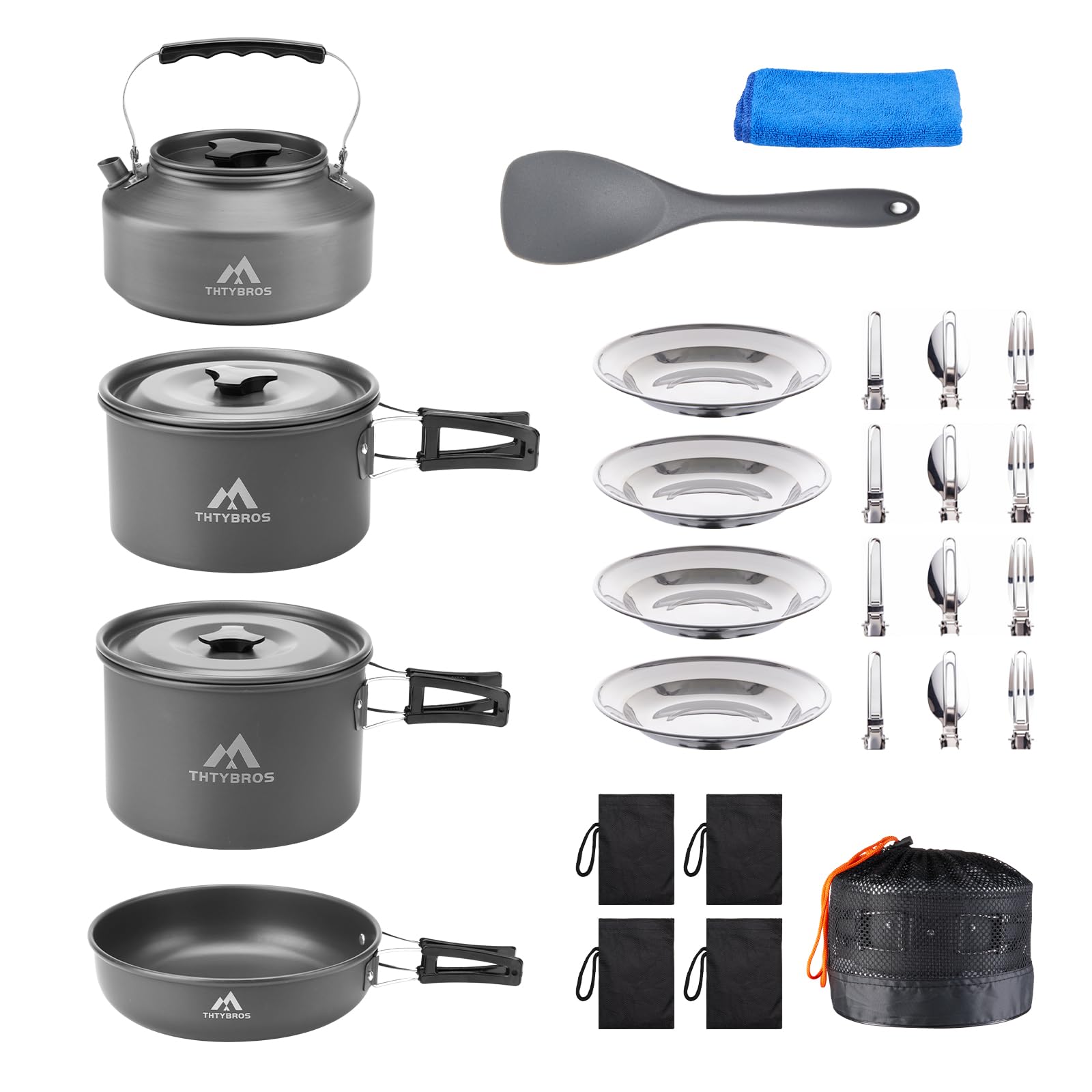
When traveling with a partner or planning meals for two to four people, the 27-Piece Camping Cookware Kit becomes valuable. This all‑in‑one set adds a non‑stick kettle, additional pots and pans, stainless‑steel plates, and a full complement of utensils, all designed to nest within each other for a footprint smaller than a football. Weighing under 4.1 lb, the kit remains ultralight, yet the 304 stainless‑steel components ensure food‑safe durability and resistance to corrosion. The included quick‑dry microfiber cloth and multiple storage bags simplify cleanup and organization, reducing the need for extra accessories. Although the price is not listed, the 4.4‑star rating from 130 reviewers indicates solid performance for small groups.
Step 4: Organize and Store Efficiently
After selecting the appropriate cookware, one should create a dedicated storage system that keeps each item accessible yet out of the way. Use the provided bags from each kit as primary containers, and place the bags inside a larger, breathable mesh sack for ventilation and quick identification. Position the cookware near the stove or portable burner so that the foldable handles do not interfere with other kitchen tools. For renters, store the entire kit in a closet shelf or under the bed, using the mesh bag to prevent dust accumulation. Label the zip‑lock bags with meal categories (e.g., breakfast, lunch) to streamline daily cooking routines.
Step 5: Add Multi‑Functional Accessories
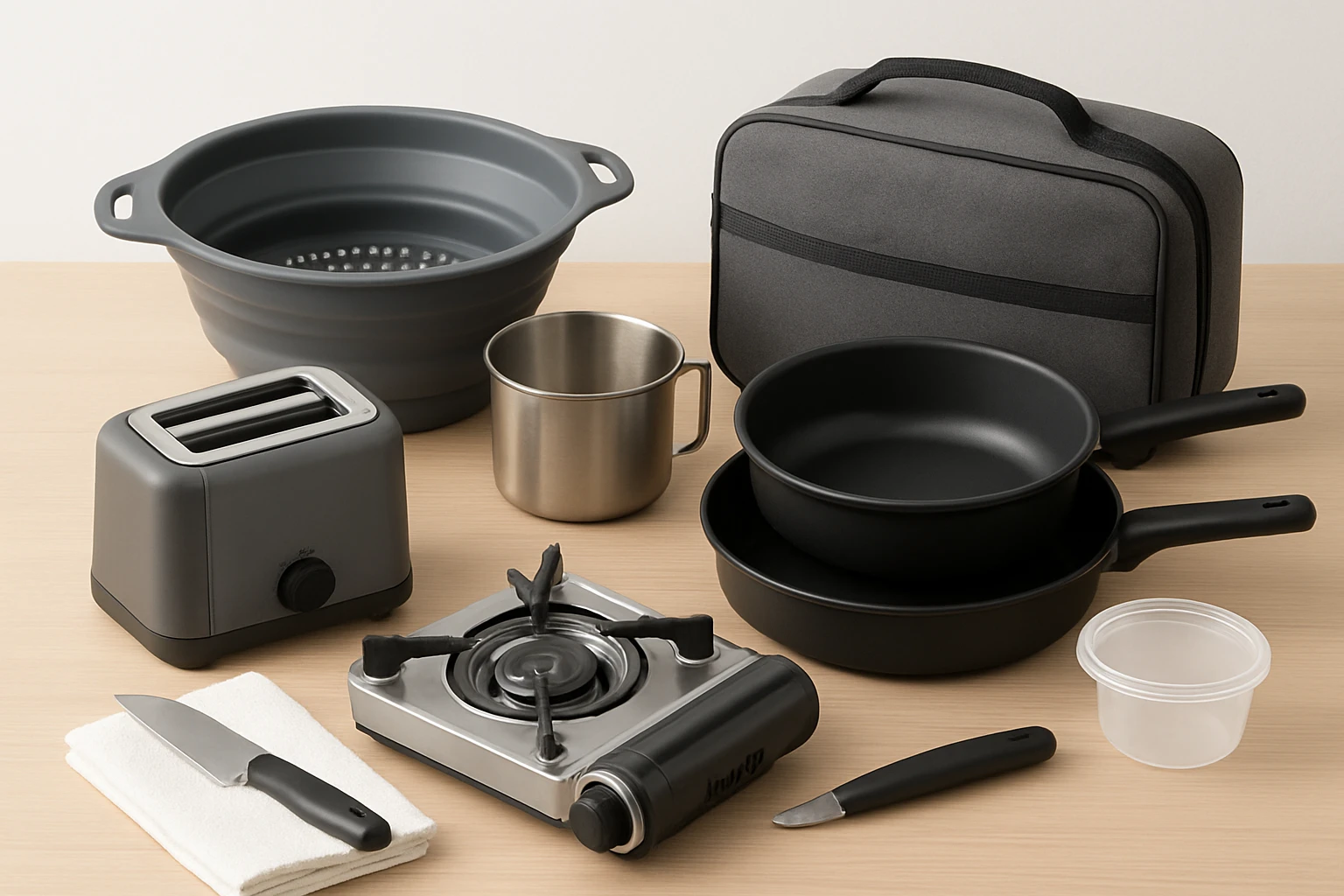
While the two recommended kits cover most cooking needs, adding a few multi‑purpose accessories enhances adaptability. A collapsible silicone container can serve as a mixing bowl, a storage vessel, or a makeshift steamer when placed over a pot. A compact cutting board with a built‑in groove for juices prevents spills on limited countertop space. Finally, a travel‑size knife set with a protective sheath ensures safe handling of ingredients without requiring a full kitchen knife block. These items occupy minimal volume and complement the cookware without redundancy.
Tips & Pro Tips
- Choose cookware with non‑stick surfaces only if you plan to use minimal oil; this reduces cleaning time in small spaces.
- When cooking on a portable induction burner, verify that the pot base is magnetic; the Solo set’s aluminum base works with most induction plates when paired with a magnetic disc.
- Pre‑measure spices and dry ingredients into small resealable packets to avoid clutter and speed up meal preparation.
- Use the microfiber cleaning cloth included in the 27‑Piece Kit to wipe surfaces immediately after cooking, preventing food residue from hardening.
- Consider a lightweight, collapsible silicone funnel for transferring liquids into narrow containers without spills.
Troubleshooting
Problem: Handles become too hot to hold during prolonged simmering.
Solution: Use a heat‑resistant silicone glove or place a thin wooden spoon between the handle and your hand; the anti‑heat design of the Solo set reduces risk but does not eliminate it entirely.
Problem: Nested pots do not fit into the storage bag after adding a new accessory.
Solution: Disassemble the nesting order and place the largest pot at the bottom, then re‑nest smaller items; if space remains insufficient, consider removing a non‑essential accessory such as the extra plate.
Conclusion
By following the steps outlined above, one can assemble a portable, adaptive kitchen kit that fits comfortably in a rental apartment, backpack, or car trunk. The guide emphasizes assessing space, selecting a core cookware set, expanding for group meals, and employing smart organization techniques. With the Solo Camping Cookware Set and the 27‑Piece Camping Cookware Kit as reliable tools, travelers and renters gain the flexibility to prepare nutritious meals anywhere, while maintaining a tidy living environment. One is now equipped to enjoy home‑cooked food without the burden of bulky equipment.
Products Mentioned in This Guide
Frequently Asked Questions
What are the essential items for a portable kitchen kit?
A lightweight cookware set, collapsible containers, a compact cutting board with a travel knife, microfiber cloth, and reusable zip‑lock bags cover most cooking needs.
How do I choose the right cookware for small spaces?
Look for solo or 27‑piece camping sets made of durable, nestable materials that stack or collapse to save space.
Can I keep my portable kitchen organized in a backpack?
Yes—use silicone bags for loose items, nest cookware inside each other, and pack a microfiber cloth and utensils in a dedicated pouch.
What cooking habits help maintain a tidy travel kitchen?
Clean as you go, wipe surfaces with a microfiber cloth after each meal, and store leftovers in zip‑lock bags to avoid spills.
Is a collapsible cutting board necessary?
A compact cutting board saves space and provides a stable surface, making it a worthwhile addition to any travel kitchen kit.