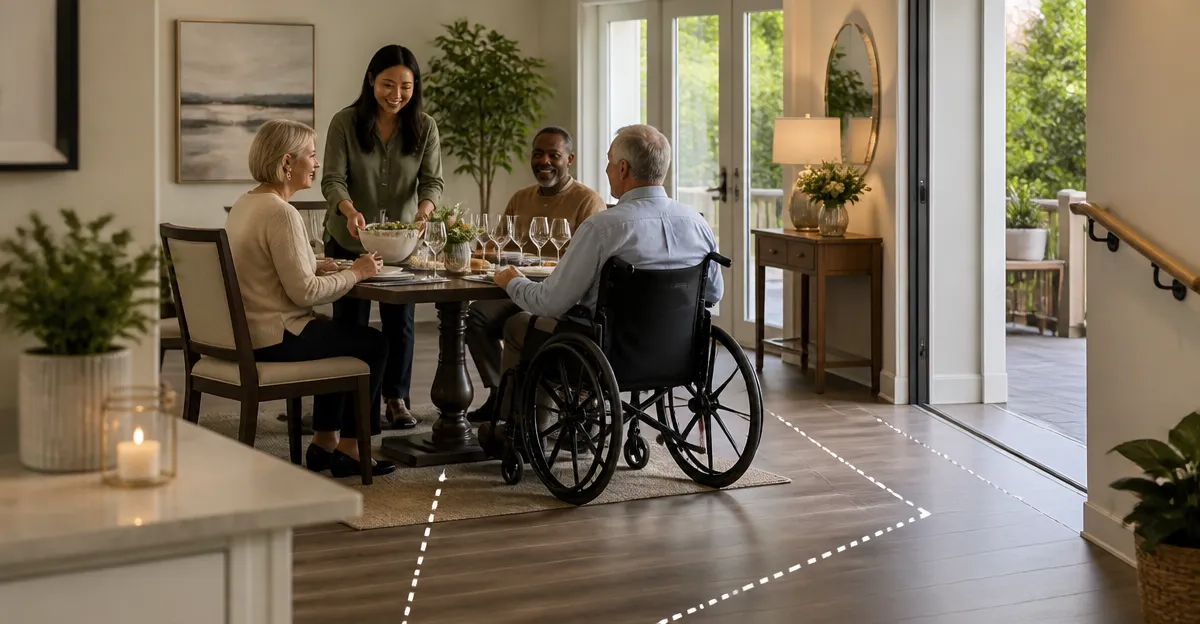
How to Host Accessible Dinner Parties with Limited Mobility: Practical Tips for Inclusive Entertaining
Introduction
One will discover how to design a dinner gathering that welcomes guests who experience limited mobility. The guide emphasizes safety, comfort, and dignity for all participants. By following the outlined procedures, the host can create an environment where conversation flows without physical barriers. The value of this approach lies in fostering social inclusion while reducing caregiver strain.
What You'll Need
- Liberty Lift Standing Aid – $19.97, 4.3/5 stars (493 reviews)
- Helavo 2-in-1 Walker – $208.90, 4.4/5 stars (670 reviews)
- Drive Medical Folding Transport Wheelchair – $103.94, 4.5/5 stars (10,545 reviews)
- Non‑slip tablecloths, adjustable lighting, and sturdy serving trays
- Clear signage and floor markers for pathways
Step‑by‑Step Instructions
1. Assess the Venue and Layout
The first step is to evaluate the dining area for potential obstacles such as narrow doorways or uneven flooring. Measure the width of all passages and ensure a minimum clearance of 36 inches to accommodate wheelchairs and walkers. Identify any low‑lying furniture that could impede the use of a standing aid or transport chair. Document the findings so that modifications can be planned systematically.
2. Prepare Accessible Seating Options
Providing comfortable seating is essential for guests who cannot stand for extended periods. The Liberty Lift Standing Aid offers a stable platform that allows a user to rise with the assistance of a caregiver, reducing strain on both parties. Its injection‑molded solid material and non‑slip rubber grip ensure safety, while the ability to stand independently respects the guest’s dignity. The device supports up to 450 lb, making it suitable for most adults, and is priced at $19.97 with a rating of 4.3 stars, indicating reliable performance.
For guests who prefer seated mobility, the Helavo 2-in-1 Walker serves as both a rollator and a transport chair. When used as a walker, it provides sturdy support with ergonomic handle grips that reduce hand fatigue. The dual‑braking system allows the user to stop securely, preventing accidental movement during conversation. Should assistance be required, the chair conversion can be completed within seconds, offering a comfortable seat with a wide, water‑resistant backrest. Priced at $208.90 and rated 4.4 stars, this product balances versatility with durability.
3. Arrange Tables and Pathways for Ease of Movement
Tables should be positioned to create clear, straight pathways that align with the measured clearance from step one. Use round or oval tables when possible, as they eliminate sharp corners that could obstruct a wheelchair’s turning radius. Place the non‑slip tablecloths on the surface to prevent dishes from sliding, which is especially important for guests using a standing aid. Ensure that serving trays are lightweight yet sturdy, allowing a caregiver to transport food without excessive effort.
4. Provide Assistance Tools for Guests
In addition to seating, guests may require personal mobility devices to navigate the space safely. The Drive Medical Folding Transport Wheelchair offers a lightweight, steel‑frame solution that folds flat for storage when not in use. Its 8‑inch wheels roll smoothly on indoor surfaces, and the swing‑away footrests simplify transfers in and out of the chair. At $103.94 with a 4.5‑star rating, this wheelchair provides reliable support without imposing a high cost.
When deploying the wheelchair, position it near the entrance to allow guests to approach the dining area without navigating tight corners. The adjustable height feature of the Helavo 2-in-1 Walker can be set to match the table height, reducing the need for guests to reach excessively. This adjustment promotes ergonomic posture and minimizes the risk of strain. Both devices complement each other, offering options for standing assistance and seated mobility.
5. Adapt Food Service and Presentation
Food should be presented on stable, low‑height serving stations that are reachable from a seated or standing position. Use trays with raised edges to prevent dishes from sliding when a guest uses a standing aid. Offer pre‑cut portions to reduce the need for guests to manipulate knives, which can be challenging for individuals with limited hand strength. Provide a designated area where caregivers can place plates and utensils within easy reach of the guest.
6. Manage Safety and Emergency Preparedness
Safety protocols must be communicated to all attendees before the event begins. Identify the nearest exits and ensure that pathways remain unobstructed throughout the evening. Keep a first‑aid kit readily available and assign a responsible person to monitor the well‑being of guests who use mobility aids. In case of an emergency, the portable nature of the Drive Medical Folding Transport Wheelchair enables rapid evacuation without compromising the guest’s comfort.
7. Create an Inclusive Atmosphere
Inclusive entertaining extends beyond physical accommodations; it also involves respectful communication. Encourage conversation that includes all guests, and avoid placing the host’s attention solely on those requiring assistance. Offer a variety of seating options so that each participant can choose the arrangement that best fits their needs. By fostering an environment of respect, the host reinforces the dignity of every guest.
Tips & Pro Tips
- Test all mobility devices in the actual venue a day before the event to confirm smooth operation.
- Label pathways with contrasting colors to aid guests with visual impairments.
- Provide a small, portable stool with a backrest for guests who need occasional seated rest while standing.
- Keep a spare set of batteries for electronic assistive devices, if any are used.
Troubleshooting
Problem: The standing aid feels unstable on a polished floor.
Solution: Place a non‑slip mat beneath the device to increase friction and prevent sliding.
Problem: The walker wheel squeaks on carpeted areas.
Solution: Apply a silicone-based lubricant to the wheel bearings, ensuring quiet, smooth movement.
Conclusion
The host now possesses a comprehensive framework for organizing dinner parties that are accessible to guests with limited mobility. By assessing the venue, providing appropriate seating, arranging clear pathways, and employing reliable mobility tools, the event can proceed smoothly and safely. The inclusion of practical tips and troubleshooting advice ensures that unforeseen challenges are addressed promptly. Ultimately, the guide empowers the host to create memorable, inclusive gatherings that celebrate all participants.
Products Mentioned in This Guide
Frequently Asked Questions
What essential equipment should I have for an accessible dinner party?
Include non‑slip tablecloths, adjustable lighting, sturdy serving trays, clear signage, and mobility aids such as a standing aid, walker, or folding wheelchair.
How can I arrange seating to accommodate guests with limited mobility?
Place chairs and tables at waist height, leave ample space between them, and use chairs with arms or lift‑assist features for easy transfers.
What lighting adjustments improve accessibility during a dinner gathering?
Use adjustable, glare‑free lighting and ensure pathways are well‑lit so guests can see obstacles and read menus comfortably.
How do I ensure safe navigation around the dining area?
Keep floors clear of cords, use non‑slip mats, and provide clear signage to guide guests to the restroom, kitchen, and seating zones.
Are there affordable alternatives to the recommended mobility aids?
Yes, budget-friendly options like basic walkers, portable seat lifts, and reusable wheelchair cushions can provide similar support without high cost.