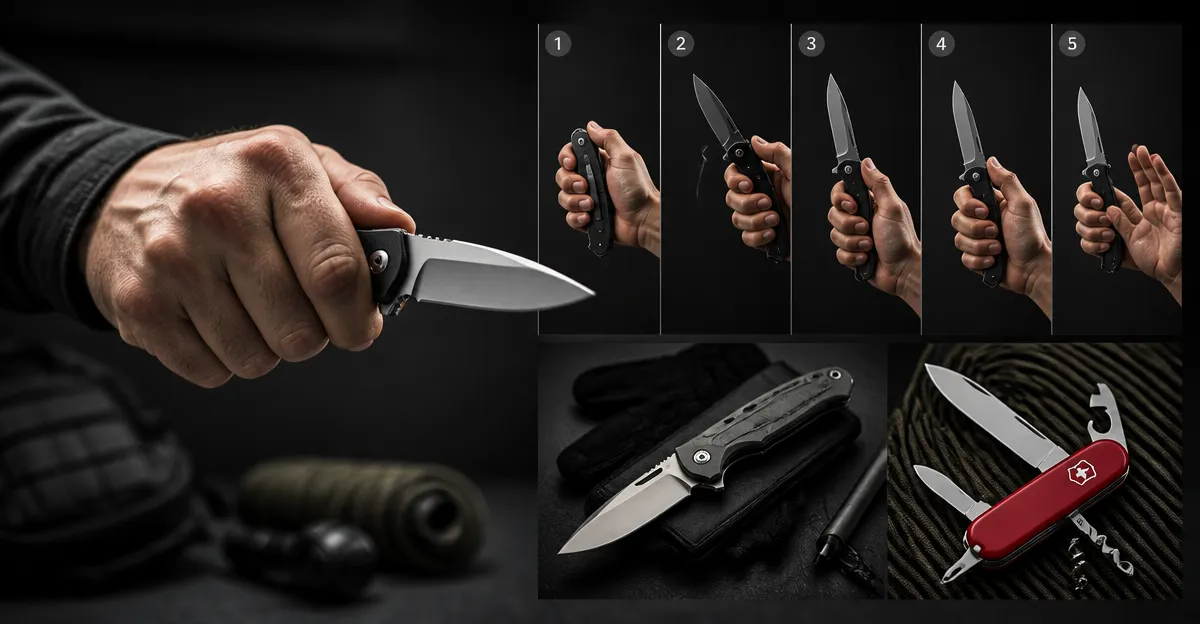
How to Master Advanced One-Handed Knife Techniques Safely
Introduction
One‑handed knife work is a hallmark of skilled outdoorsmen, tactical practitioners, and culinary professionals. This guide explains how to develop precise, reliable movements while maintaining the highest safety standards. Readers will learn grip fundamentals, controlled opening, cutting precision, defensive maneuvers, and structured practice drills. Mastering these techniques will increase confidence, reduce the risk of accidental injury, and expand the range of tasks that can be performed with a single hand.
What You’ll Need
- A high‑quality folding knife with assisted opening and a secure frame lock.
- A durable cutting surface such as a rubberized mat or thick cardboard.
- Protective gloves for initial practice sessions.
- Safety glasses to protect the eyes from stray debris.
While many knives can serve these purposes, two models stand out for their reliability and ergonomic design.
The first recommendation is the Kershaw Outright Folding Pocket Knife. It features an 8Cr13MoV stainless steel blade with a blue PVD coating, a contoured stainless‑steel handle, and an assisted opening mechanism that enables rapid deployment with a single thumb press. Priced at $28.52, it holds a 4.7‑star rating from over 3,000 reviewers, indicating strong performance and durability.
The second recommendation is the Victorinox Huntsman Swiss Army Knife. This multi‑tool includes a large blade, wood saw, scissors, and 13 additional functions, making it ideal for practice scenarios that require quick tool changes. It is priced at $40.00 and enjoys a 4.8‑star rating from more than 8,000 users, reflecting its versatility and Swiss‑made quality.
Step 1: Grip Fundamentals
Begin by establishing a secure yet relaxed grip. Hold the knife with the thumb positioned on the thumb stud or flipper, depending on the model, while the remaining fingers wrap around the handle. The Kershaw Outright Folding Pocket Knife offers a contoured stainless‑steel handle with black G10 scales, providing a textured surface that reduces slippage during rapid movements. Its deep‑carry pocketclip also allows for convenient carry during training sessions without compromising grip integrity.
When using the Victorinox Huntsman Swiss Army Knife, the ABS/Cellidor scales give a slightly softer feel, which can be advantageous for beginners who need to develop finger strength without excessive fatigue. The multi‑tool’s compact size encourages proper hand positioning, ensuring that the thumb remains free to engage the opening lever when required.
Practice the grip by rotating the knife in the palm, feeling the balance point, and confirming that the blade aligns naturally with the forearm. A well‑balanced grip reduces the torque needed for opening and closing, which is essential for one‑handed control.
Step 2: Controlled Opening and Closing
Assisted opening mechanisms allow the blade to deploy quickly while maintaining control. To open the Kershaw Outright, place the thumb on the flipper and press firmly; the spring‑assisted action will complete the opening within a fraction of a second. This rapid deployment is crucial for tactical scenarios where speed and safety are paramount.
For the Victorinox Huntsman, the large blade is manually opened, which provides a slower, more deliberate motion. This slower pace is beneficial during early training because it forces the practitioner to focus on hand positioning and thumb pressure, reducing the likelihood of accidental snap‑open events.
After the blade is fully extended, engage the frame lock on the Kershaw or the liner lock on the Victorinox to secure the blade. Verify that the lock clicks into place before applying any cutting force. To close the knife, push the release lever with the thumb while maintaining a firm grip on the handle, then fold the blade back into the handle until it clicks shut.
Step 3: Precision Cutting Motions
Advanced one‑handed techniques rely on controlled slicing, push cuts, and pull cuts. Position the knife tip at the start of the cut, then use a smooth, continuous motion to guide the blade through the material. The 3‑inch blade of the Kershaw Outright offers a trailing point that excels in fine slicing tasks such as filleting or detailed carving.
When practicing on a rubber mat, start with shallow cuts to develop muscle memory. Gradually increase the depth while maintaining a steady hand. The blue PVD coating on the Kershaw blade reduces glare and hides wear, allowing the practitioner to focus on the cut line rather than visual distractions.
The Victorinox Huntsman includes a large blade that is slightly longer, making it suitable for broader strokes such as cutting rope or fabric. Its additional tools, like the scissors and wood saw, enable seamless transitions between cutting tasks without switching tools, reinforcing the one‑handed workflow.
Step 4: Defensive Maneuvers
One‑handed knife work is not limited to cutting; it also encompasses defensive techniques useful in self‑defense or tactical environments. The first maneuver is the “reverse grip thrust,” where the blade is held with the tip pointing upward and the edge facing the practitioner. This grip provides a natural alignment for a forward thrust while keeping the thumb free to control the opening mechanism.
Using the Kershaw Outright, the assisted opening allows the blade to be deployed instantly, which is essential when a rapid response is required. The frame lock ensures the blade remains rigid during impact, preventing accidental closure.
The Victorinox Huntsman offers a secondary edge on the small blade and a hook tool that can be used to create leverage during defensive grips. Its compact size makes it easy to conceal and draw with a single hand, an advantage in surprise situations.
Step 5: Structured Practice Drills
Consistent practice is the cornerstone of mastery. Design a daily routine that includes grip warm‑ups, opening/closing repetitions, precision cuts, and defensive motions. Aim for three sets of ten repetitions for each component, focusing on smoothness rather than speed.
Incorporate the Kershaw Outright for drills that emphasize rapid deployment and controlled slicing, such as cutting a series of thin cardboard strips in one continuous motion. Track the time taken to complete each set to monitor improvement.
Use the Victorinox Huntsman for multi‑tool transitions, for example, cutting a rope with the large blade, then immediately switching to the saw to cut a wooden dowel, all while maintaining a single‑handed grip. This drill reinforces the concept of tool versatility without sacrificing safety.
Tips & Pro Tips
- Always keep the blade pointed away from the body and bystanders during practice.
- Maintain the knife’s edge with a fine ceramic stone; a dull blade requires more force and increases slip risk.
- Practice on a stable surface; an unstable mat can cause unintended blade movement.
- When transitioning between tools on the Victorinox Huntsman, use the thumb to lock the current tool before deploying the next.
- For tactical drills, simulate real‑world scenarios such as opening the knife from a pocket while seated or standing.
Troubleshooting
Problem: The blade does not fully open on the first attempt.
Solution: Ensure the thumb pressure is applied directly to the flipper and that the spring mechanism is not obstructed by debris. Clean the pivot area with a soft brush and apply a drop of light oil if the movement feels sticky.
Problem: The frame lock feels loose.
Solution: Tighten the lock screw using a precision screwdriver. If the lock still feels insecure, consider replacing the lock spring, which is available as a replacement part from the manufacturer.
Conclusion
Advanced one‑handed knife techniques combine precise grip, controlled deployment, accurate cutting, and defensive readiness. By following the structured steps, utilizing the recommended tools, and adhering to safety protocols, one can develop proficiency that translates to outdoor, tactical, and everyday scenarios. Continued practice will solidify muscle memory, increase confidence, and ensure that the knife remains a reliable extension of the hand.
Products Mentioned in This Guide
Frequently Asked Questions
What grip should I use for safe one‑handed knife work?
Use a firm, thumb‑over‑handle grip with the index finger on the blade’s spine for control and quick deployment.
Why are protective gloves recommended when learning advanced techniques?
Gloves protect your hand from accidental cuts while you develop muscle memory and confidence.
What type of cutting surface is best for practicing one‑handed drills?
A rubberized mat or thick cardboard provides a forgiving surface that reduces blade wear and slip risk.
How does a frame‑lock mechanism improve safety?
A frame lock securely locks the blade in place, preventing accidental closure during high‑speed or defensive maneuvers.
Can one‑handed knife techniques be used for self‑defense?
Yes, controlled opening and precise thrusts can create effective defensive options when trained properly.