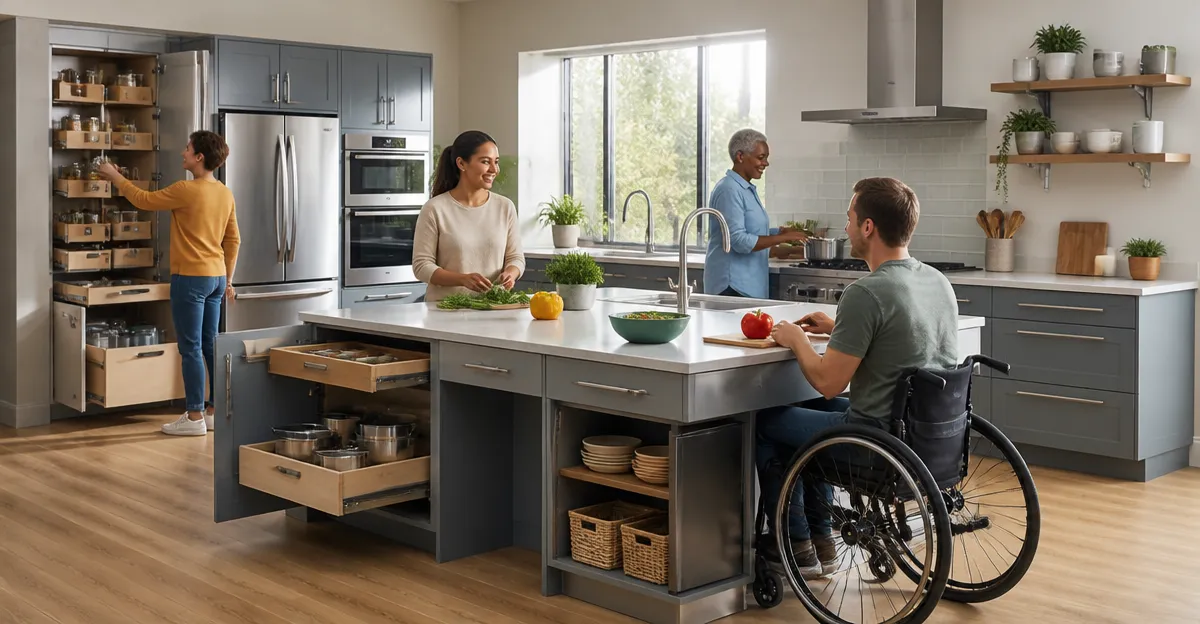
The Ultimate Guide to Creating a Shared Accessible Kitchen for Multi‑User Households: Inclusive Design, Organization & Safety Tips
Introduction
Designing a kitchen that serves the needs of every household member requires thoughtful planning, inclusive principles, and practical organization solutions. This guide explains the essential concepts of accessibility, presents strategies for efficient layout, and highlights products that simplify shared use while maintaining safety. Readers will learn how to evaluate space, select appropriate storage accessories, and implement daily habits that promote independence for all users. By the end of this article, one will possess a comprehensive roadmap for transforming a standard kitchen into a universally usable environment.
Background and Context
Accessible kitchen design originates from universal design theory, which advocates environments usable by people of all ages and abilities without the need for adaptation. Key elements include reachable countertop height, clear floor space for mobility devices, tactile controls, and organized storage that reduces bending and stretching. In multi‑user households, conflicting habits and varied physical capabilities often create bottlenecks that lead to frustration or accidents. Understanding these challenges enables the creation of a kitchen that supports independence, reduces clutter, and enhances overall safety.
Inclusive Layout Planning
Effective layout begins with a measured floor plan that identifies work triangles, traffic flow, and clearance zones. The classic work triangle—connecting the sink, stove, and refrigerator—should remain intact while allowing at least 36 inches of clear aisle space for wheelchair navigation. Countertop height can be standardized at 34–36 inches, but a lowered section at 28–30 inches accommodates seated users. Lighting should be layered, combining ambient, task, and accent sources to improve visibility for users with low vision.
When space permits, consider a single‑wall or L‑shaped configuration that minimizes crossing paths. Install pull‑out shelves and sliding drawers to reduce the need for reaching into deep cabinets. Incorporate lever‑style faucet handles, which require less grip strength than traditional knobs. These design choices create a foundation upon which organizational products can further enhance accessibility.
Strategic Storage Solutions
Organizing pantry items, cookware, and everyday supplies is critical for a shared kitchen. Products that maximize vertical space and provide clear visual access reduce the cognitive load on users who must locate items quickly. The following recommendations integrate the three featured products into a cohesive storage system.
The Moforoco Over‑the‑Door Pantry Rack offers nine adjustable shelves that hang on a standard door, freeing cabinet space for larger appliances. Each shelf measures between 15.3 and 14.5 inches in length, providing ample room for spice jars, canned goods, and small containers. Constructed from durable metal, the rack supports the weight of heavy items, and its tool‑free installation prevents damage to door surfaces. With a 4.6‑star rating from over four thousand reviewers, users praise its stability and ease of use.
For countertop organization, the Vtopmart Stackable Storage Drawers present a clear, acrylic solution that encourages visual identification of contents. Each drawer features a groove‑based stacking system, allowing up to four layers to occupy a single footprint. The drawers measure 12 × 7.5 × 7 inches externally and hold up to 15 pounds, making them suitable for pantry snacks, bathroom toiletries, or craft supplies. Their high‑quality PET construction resists cracking, and the anti‑slip silicone pads keep the stack stable during use. The product holds a 4.7‑star rating from more than five thousand reviews, highlighting its durability and aesthetic appeal.
When floor space is limited, the Sakugi Heavy‑Duty Shelving Unit delivers robust vertical storage capable of bearing up to 1,000 pounds in total. Its five‑tier metal frame spans 33 inches in width and 72 inches in height, providing ample room for bulk pantry items, cookware, and seasonal supplies. The unit includes non‑slip leveling feet and a wall‑fixing kit to ensure stability, a crucial safety feature for households with children or mobility devices. With a 4.5‑star rating from 3,738 reviewers, customers commend its strength and straightforward assembly.
Comparison and Selection Guide
Choosing the appropriate storage accessory depends on the specific constraints of the kitchen and the needs of its users. The table below summarizes the core attributes of each featured product, allowing readers to match features with personal requirements.
| Product | Primary Use | Dimensions | Load Capacity | Installation | Rating |
|---|---|---|---|---|---|
| Moforoco Over‑the‑Door Pantry Rack | Door‑mounted pantry organization | 9 tiers, 15.3‑14.5 in length per shelf | Supports heavy cans and jars | No tools, hangs on standard door | 4.6/5 (4,057 reviews) |
| Vtopmart Stackable Storage Drawers | Clear countertop or cabinet drawers | 12 × 7.5 × 7 in (external) | 15 lb per drawer | Slide‑in assembly with silicone pads | 4.7/5 (5,665 reviews) |
| Sakugi Heavy‑Duty Shelving Unit | Free‑standing floor shelving | 33 × 12.6 × 72 in (W × D × H) | Up to 1,000 lb total | Tool‑free assembly, leveling feet | 4.5/5 (3,738 reviews) |
Households with limited cabinet space benefit most from the door‑mounted rack, while those seeking transparent organization for quick visual identification should consider the acrylic drawers. Families requiring heavy storage for bulk items or equipment will find the metal shelving unit indispensable. Assessing the kitchen’s layout, user strength, and preferred storage locations will guide the optimal selection.
Best Practices & Practical Tips
Beyond product selection, several habits reinforce an accessible kitchen environment. First, label all shelves and drawers with tactile or high‑contrast symbols to aid users with visual impairments. Second, keep frequently used items at waist height to minimize bending; reserve upper shelves for occasional or decorative items. Third, maintain a clear 36‑inch pathway around the work triangle to accommodate wheelchairs or walkers.
Regularly inspect hardware such as hinges, drawer slides, and leveling feet to ensure they remain secure. Replace worn components promptly to avoid sudden failures that could cause injury. Additionally, store knives and sharp tools in a dedicated block with a magnetic strip placed at an accessible height, reducing the need to reach into deep drawers.
Implement a weekly decluttering routine where each household member returns items to their designated spot. This practice reinforces shared responsibility and prevents the accumulation of obstacles. Finally, incorporate smart appliances with voice‑activated controls, which enhance independence for users with limited dexterity.
Frequently Asked Questions
- How high should pantry shelves be placed for wheelchair users? The top of the highest shelf should not exceed 48 inches from the floor, allowing the user to reach items without excessive extension.
- Can the Moforoco pantry rack be used on interior cabinet doors? Yes, the rack is compatible with any standard door that can support its weight, including interior cabinet doors, provided the door is firmly hinged.
- Do the Vtopmart drawers slip when the stack is tall? The inclusion of anti‑slip silicone pads on the bottom of each drawer prevents sliding, even when multiple layers are stacked.
- What is the recommended spacing between the Sakugi shelving unit and the wall? A clearance of at least two inches is advised to allow the leveling feet to adjust and to prevent wall damage.
- Are there any maintenance requirements for the metal shelving unit? Periodic cleaning with a damp cloth removes dust; the rust‑proof coating eliminates the need for frequent re‑coating.
- How can I make cabinet handles more accessible? Replace traditional knobs with lever‑style handles that require a simple push or pull motion, reducing grip strain.
- Is it safe to store heavy items on the top tier of the shelving unit? Distribute weight evenly across all shelves and keep the heaviest items on lower tiers to maintain a low center of gravity.
Conclusion
Creating a shared accessible kitchen involves a blend of universal design principles, strategic organization, and reliable products that support diverse user needs. By applying the layout guidelines, selecting appropriate storage accessories, and fostering consistent habits, households can enjoy a safer, more efficient cooking environment. The recommendations presented herein empower readers to make informed decisions that enhance independence for every family member.
Products Featured in This Guide
Moforoco Over‑the‑Door Pantry Rack
Price: $39.99 | Rating: 4.6/5 (4,057 reviews)
Featured for its space‑saving nine‑tier design, durable metal construction, and tool‑free installation that maximizes pantry accessibility.
Vtopmart Stackable Storage Drawers
Price: $34.99 | Rating: 4.7/5 (5,665 reviews)
Featured for its clear acrylic construction, groove‑based stacking system, and anti‑slip pads that provide visual organization and stability.
Sakugi Heavy‑Duty Shelving Unit
Price: $44.98 | Rating: 4.5/5 (3,738 reviews)
Featured for its five‑tier metal frame, 1,000‑lb load capacity, leveling feet, and wall‑fixing kit that ensure safe, stable floor storage.