Introduction
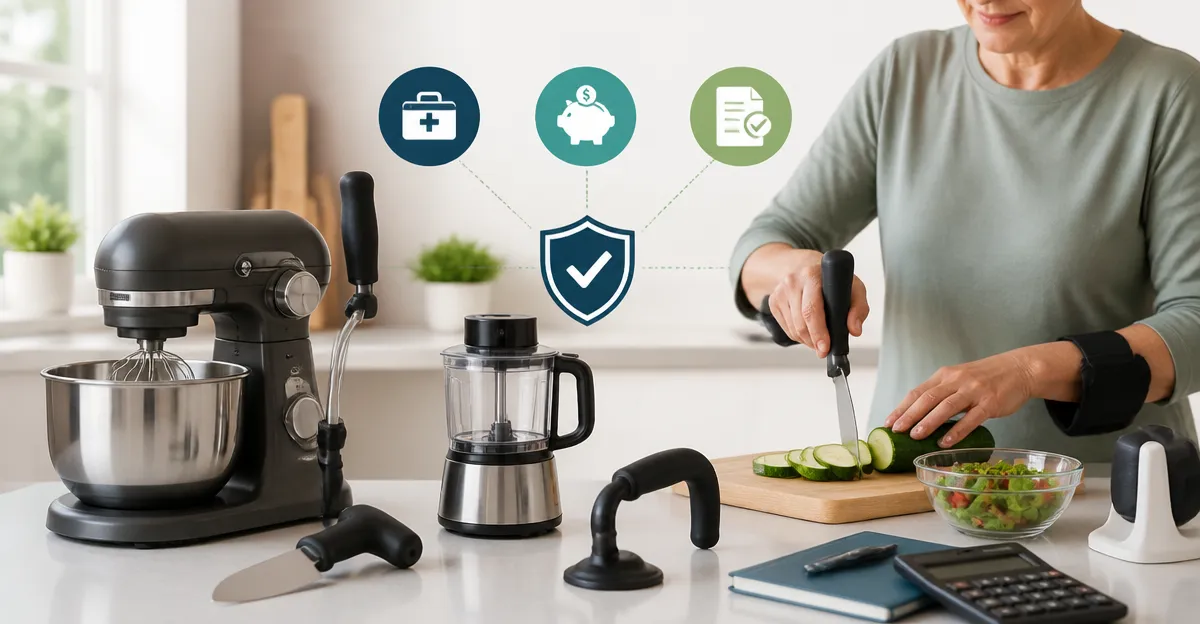
This guide explains how Health Savings Accounts (HSAs) and Flexible Spending Accounts (FSAs) can be used to purchase adaptive kitchen tools. Readers will learn the eligibility criteria, reimbursement procedures, and strategies for selecting equipment that enhances accessibility in the kitchen. The article also recommends two high‑performance stand mixers that meet the medical‑necessity standard for many adaptive cooking scenarios. By the end of the guide, one will be equipped to make informed purchasing decisions and submit successful reimbursement claims.
Background and Context
HSAs and FSAs are tax‑advantaged accounts designed to cover qualified medical expenses. Under the Internal Revenue Code, a qualified expense includes items that alleviate a diagnosed medical condition or improve functional ability. Adaptive kitchen tools—such as mixers with ergonomic handles, tilt‑head designs, and hands‑free operation—often qualify when prescribed by a healthcare professional for conditions like arthritis, limited grip strength, or mobility impairments.
To claim a reimbursement, the purchaser must retain receipts, a letter of medical necessity, and any supporting documentation that links the tool to the diagnosed condition. The claim is submitted to the plan administrator, who verifies eligibility before issuing payment. Understanding these steps reduces the likelihood of claim denial.
Key Concepts for Purchasing Adaptive Kitchen Tools
Before selecting a product, one should evaluate three core concepts: medical relevance, functional features, and cost‑effectiveness. Medical relevance requires a clear connection between the tool and the user’s condition. Functional features focus on design elements that reduce strain, such as tilt‑head access, low‑profile controls, and stable bowls. Cost‑effectiveness considers the long‑term value of the tool, including durability and the availability of compatible accessories.
When a product satisfies these criteria, it is more likely to be approved for HSA/FSA reimbursement. The following sections illustrate how two KitchenAid stand mixers align with these concepts.
Product Recommendations
KitchenAid Artisan Mixer
The KitchenAid Artisan Mixer offers a 5‑quart stainless‑steel bowl, ten speed settings, and a tilt‑head design that provides unobstructed bowl access. Its durable metal construction includes 59 touchpoints around the bowl, ensuring thorough mixing while minimizing the need for manual intervention. The mixer supports a wide range of optional hub‑powered attachments, enabling users to create pasta, grind meat, or shred vegetables without additional strain.
Key specifications include:
- 5‑quart stainless‑steel bowl with comfortable handle
- Ten speed options for gentle kneading to rapid whipping
- Tilting head for easy ingredient addition
- Compatible with over ten optional attachments sold separately
Because the Artisan model features a larger capacity, it can handle up to nine dozen cookies in a single batch when using the flat beater (28 g dough per batch). This capacity reduces the number of mixing cycles required for large families or batch‑cooking scenarios, which is beneficial for users with limited endurance.
KitchenAid Classic Mixer
The KitchenAid Classic Mixer provides a 4.5‑quart stainless‑steel bowl, ten speed controls, and a similar tilt‑head mechanism. It is powered by a 275 W motor and includes a 67‑point planetary mixing action that delivers consistent results with less manual effort. The Classic model is rated 4.8 out of 5 stars by more than twelve thousand reviewers, indicating high user satisfaction.
Key specifications include:
- 4.5‑quart stainless‑steel bowl suitable for up to eight dozen cookies
- Ten speed settings for precise control
- Easy‑access tilt‑head for hands‑free ingredient addition
- Includes flat beater, dough hook, 6‑wire whip, and pouring shield
- Price: $349.99
The Classic mixer’s slightly smaller footprint makes it an excellent choice for kitchens with limited counter space, while still delivering the ergonomic benefits required for adaptive cooking.
Comparison and Selection Guide
| Feature | KitchenAid Artisan Mixer | KitchenAid Classic Mixer |
|---|---|---|
| Bowl Capacity | 5 quart | 4.5 quart |
| Motor Power | Not specified (standard KitchenAid) | 275 W |
| Speed Settings | 10 | 10 |
| Tilt‑Head Access | Yes | Yes |
| Attachments Included | Bowl, flat beater, dough hook, 6‑wire whip, pouring shield | Bowl, flat beater, dough hook, 6‑wire whip, pouring shield |
| User Rating | Not listed | 4.8/5 (12,119 reviews) |
| Price | Not listed | $349.99 |
When choosing between the two models, consider the following decision factors:
- Capacity Needs: Users who regularly prepare large batches may benefit from the 5‑quart bowl of the Artisan model.
- Budget Constraints: The Classic model provides a competitive price point with a strong user rating.
- Counter Space: The Classic’s slightly smaller footprint suits compact kitchens.
- Medical Recommendation: If a healthcare professional emphasizes maximum bowl size to reduce mixing cycles, the Artisan model aligns better with that recommendation.
Best Practices and Tips for Successful Reimbursement
To maximize the likelihood of reimbursement, follow these best practices:
- Obtain a Letter of Medical Necessity: The letter should specify the diagnosed condition, describe how the mixer’s features address functional limitations, and be signed by a qualified practitioner.
- Keep Detailed Receipts: Include the product name, price, date of purchase, and the Amazon order confirmation.
- Document Usage: Maintain a brief log of how the mixer is used to manage the condition (e.g., reduced joint pain during dough preparation).
- Submit Claims Promptly: Most plans have a 90‑day window for claim submission; filing early prevents denial due to timing.
- Verify Plan Guidelines: Some plans require pre‑approval for high‑cost items; review the summary of benefits before purchasing.
When multiple mixers are considered, submit the product that best matches the medical recommendation. If the practitioner emphasizes a larger capacity, the Artisan model should be the primary claim. Conversely, if cost is a primary concern, the Classic model may be more appropriate.
Frequently Asked Questions
1. Can I use an HSA to purchase a kitchen mixer without a prescription?
No. The IRS requires that the expense be medically necessary. A prescription or a letter of medical necessity is essential for claim approval.
2. Are accessories such as pasta rollers covered under HSA/FSA?
Only if the accessory is directly tied to the treatment of a diagnosed condition. For example, a pasta roller used to prepare soft foods for a dysphagia patient may qualify.
3. How long does the reimbursement process typically take?
Most administrators process claims within 15‑30 business days after receipt of complete documentation.
4. What if my claim is denied?
Review the denial reason, provide any missing documentation, and resubmit. Many denials result from incomplete medical justification.
5. Can I combine HSA and FSA funds for a single purchase?
No. Each account must be used separately, and the same expense cannot be claimed twice.
6. Do I need to keep the original packaging for proof?
Retaining the packaging is not mandatory, but it can serve as additional evidence of the product’s features and condition.
7. Are there any tax implications for using HSA funds?
Qualified medical expenses paid with HSA funds are tax‑free. Non‑qualified expenses may incur taxes and penalties.
Conclusion
This guide has outlined how HSAs and FSAs can be leveraged to acquire adaptive kitchen tools that improve daily living for individuals with physical limitations. By understanding eligibility requirements, documenting medical necessity, and selecting products such as the KitchenAid Artisan Mixer or the KitchenAid Classic Mixer, one can achieve both functional benefits and financial reimbursement. Adhering to the best‑practice tips and submitting thorough claims will increase the probability of successful reimbursement.
Products Featured in This Guide
KitchenAid Artisan Mixer
Price: Not listed
Rating: Not listed
Why featured: Provides a 5‑quart capacity, ten speed settings, and tilt‑head access that align with medical‑necessity criteria for users with limited strength or endurance.
KitchenAid Classic Mixer
Price: $349.99
Rating: 4.8/5 (12,119 reviews)
Why featured: Offers a slightly smaller 4.5‑quart bowl, strong user satisfaction, and a competitive price, making it suitable for budget‑conscious consumers seeking adaptive functionality.